Why 2026 Is A Strong Year For Northern Lights In Fairbanks
The claim that 2026 is the best year in a generation to see the northern lights is everywhere in travel content. The reality is more interesting, and for Fairbanks, more favorable, than most of those headlines suggest.
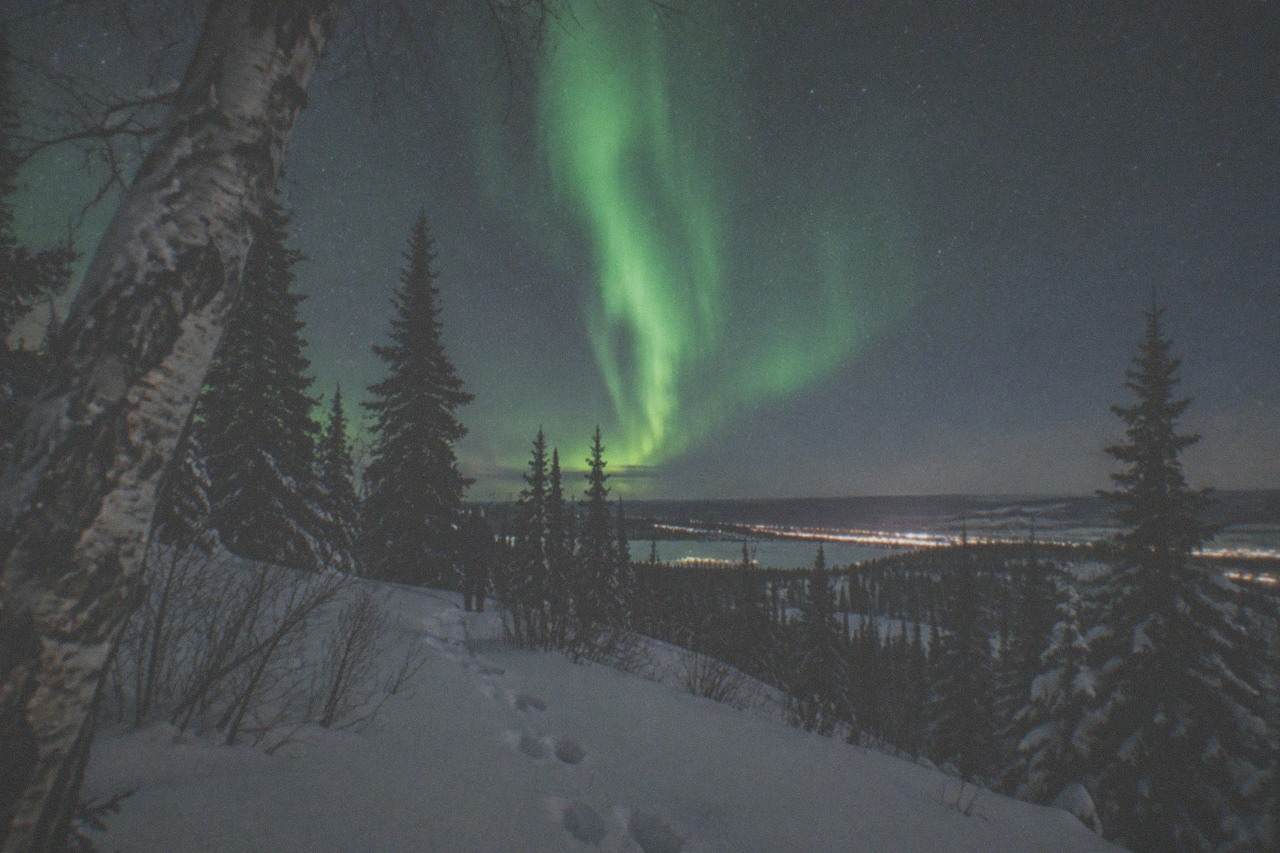
Short answer
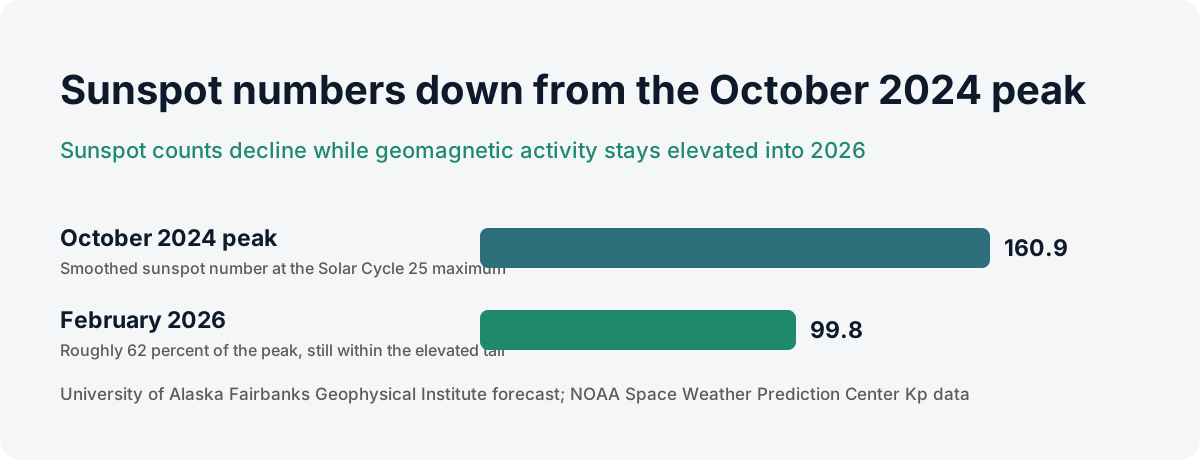
Solar Cycle 25 peaked in sunspot terms in October 2024 at a smoothed number around 160.9 and has been declining since, standing near 99.8 by February 2026. However, geomagnetic activity, the driver that actually produces auroras, has remained relatively elevated into 2026, and significant storms are expected to become less frequent only after 2026.
Travel headlines spent 2024 and 2025 telling readers that the northern lights were at a once-in-a-generation maximum, and that anyone who missed it had blown their chance. The story changed tone in 2026. Sunspot counts are now falling from the October 2024 peak, and some outlets have flipped to warning that the show is ending. Neither framing survives contact with the actual data, and neither is the right way to plan a trip to Fairbanks.
The sunspot count is one number. The geomagnetic activity that actually pushes the aurora oval around over your head is a different number, and through 2026 it has stayed relatively strong even as sunspots decline. For a city that sits directly under the auroral oval at roughly 64.8 degrees north, that distinction is the whole ballgame. This guide lays out what Solar Cycle 25 is really doing, what it means for a Fairbanks winter, and how to book around it without believing either the hype or the doom.
Why Is 2026 Called A Big Aurora Year Around Fairbanks?
The label comes from Solar Cycle 25's unusually strong maximum, which peaked in October 2024 at a smoothed sunspot number around 160.9, the highest in decades. The cycle has been declining since, measuring about 99.8 by February 2026. The catch is that geomagnetic activity, which produces the visible aurora, has remained relatively elevated into 2026, so strong displays are still realistic over Fairbanks even as the sunspot count falls.
The 11-year solar cycle tracks sunspots, dark magnetic blemishes on the sun's surface. More sunspots mean more solar flares and more coronal mass ejections, and those eruptions fling charged particles at Earth. When the particles arrive and strike the magnetosphere, the result is geomagnetic disturbance, and the visible result of that disturbance is the aurora.
The strong part of the story is real. The maximum that arrived in 2024 ran hotter than the consensus forecasts issued a few years earlier, and the 2024 calendar year delivered several extreme geomagnetic storms, including displays seen at unusually low latitudes. That is where every "best year in a generation" headline came from, and it was not wrong at the time.
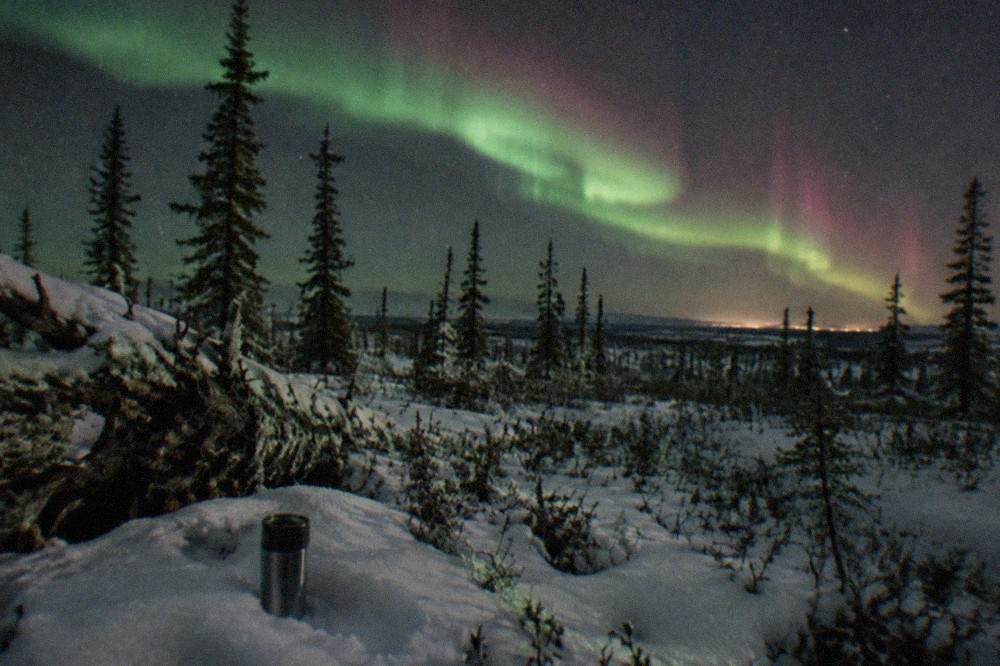
The decline part is also real, and honest planners should sit with it. Sunspot numbers slid through 2025 and into 2026, standing near 99.8 by February 2026, roughly 62 percent of the peak. The cycle is projected to keep falling toward a minimum around 2030. But the aurora does not read sunspot tables. It responds to geomagnetic storms, and those depend on coronal holes and other mechanisms that persist well past the sunspot peak. Through 2026, measured geomagnetic activity has stayed above where it sat in 2024, and twin coronal hole streams have kept producing G1 storm windows into the current season.
For a Fairbanks-specific answer to the timing question, see our longer breakdown of the best months for northern lights in Fairbanks, which covers darkness, weather and tour logistics month by month.
What Is Solar Cycle 25 And How Does It Affect Fairbanks Aurora?
Solar Cycle 25 is the current roughly 11-year cycle of the sun's magnetic activity, which peaked in sunspot terms in October 2024 and is now declining toward a minimum projected around 2030. For Fairbanks, the practical effect is that 2026 still sits in the elevated-activity tail of the maximum, meaning strong aurora nights remain common under the oval, while the years after 2026 should gradually see fewer significant storms.
A solar cycle is the sun flipping its magnetic field, in slow motion, about every 11 years. Activity ramps up to a maximum, then falls to a quiet minimum where sunspots nearly vanish and geomagnetic storms become rare. The previous minimum preceded the current cycle, which is why aurora chasers had lean years before the climb and a growing feast as the cycle built toward its 2024 peak.
The University of Alaska Fairbanks Geophysical Institute has run a public aurora forecast for decades, publishing both a 3-day and a 27-day outlook built on Kp index data from the NOAA Space Weather Prediction Center, refreshed daily. Fairbanks viewers are unusually well served by it because the city sits directly beneath the typical auroral oval, the ring of aurora that circles the geomagnetic pole.
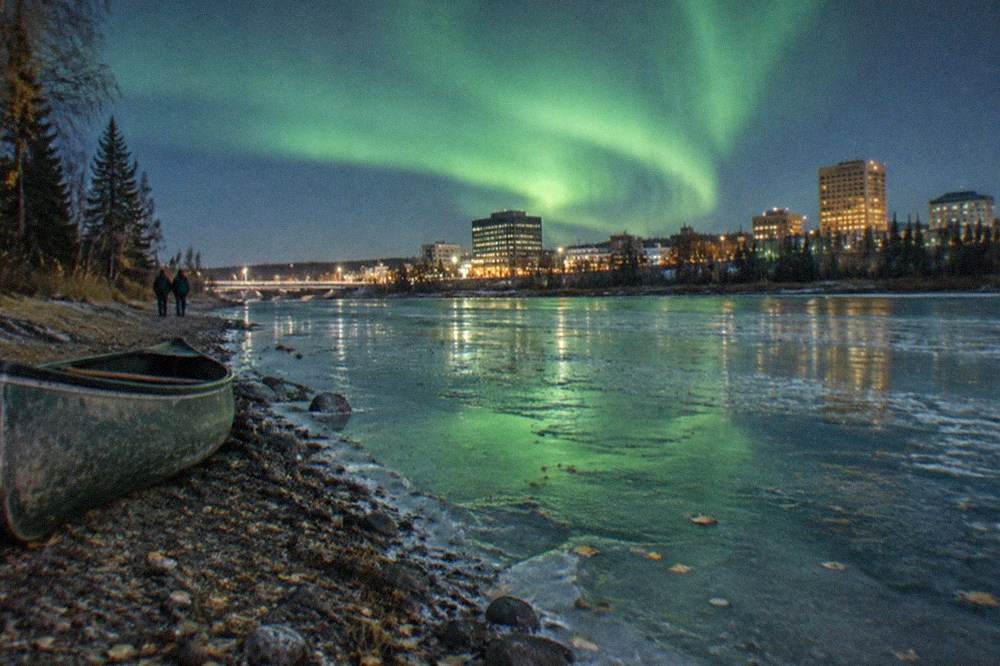
The important nuance for 2026 planning is that geomagnetic storms do not switch off the moment sunspots decline. Coronal holes, dark regions of open magnetic field on the sun, send fast solar wind streams that can keep the Kp index elevated for years after the sunspot peak. That is exactly the pattern observed through 2026: sunspots well down from their maximum, geomagnetic activity still running relatively hot. A detailed look at the Fairbanks aurora forecast and Kp index covers how to read those numbers on a nightly basis.
Here is the honest timeline as the data currently reads it:
| Period | Sunspot level | Geomagnetic activity | What it means for aurora over Fairbanks |
|---|---|---|---|
| Previous cycle minimum | Cycle minimum, very low | Quiet | Lean years, few significant storms |
| The run-up to the peak | Rapid rise | Increasing | Strong displays becoming common again |
| 2024 | Peak, smoothed number near 160.9 in October | Very elevated | The famous extreme storm year |
| 2025 | Declining, well past peak | Elevated | Continued strong aurora season |
| 2026 | Near 99.8 by February and falling | Still relatively elevated | Good displays likely, tail of the maximum |
| After 2026 toward 2030 | Continued decline toward minimum | Gradually easing | Significant storms expected to become less frequent |
No one can promise you a storm on your dates, and no honest source will. What the data supports saying is that 2026 remains a favorable year, sitting in the elevated tail of a strong maximum rather than already in its shadow.
If you want a spot under the oval with a guide handling the forecast and the driving, these are the three formats worth comparing first:
All three chase rather than wait, which matters in a declining cycle. A fixed lodge gives you a comfortable window and the sky you get; a mobile tour can reposition toward clear sky when a cell of activity shows up. On a night when the Kp forecast reads moderate, a chase substantially improves your odds, and the drivers watch the same UAF and space weather feeds you can read yourself at the UAF Geophysical Institute aurora forecast page.
How Does The Kp Index Translate Into Aurora Over Fairbanks?
The Kp index is a global 0 to 9 scale of geomagnetic activity, averaged from magnetometer stations worldwide every three hours. Fairbanks, under the auroral oval at roughly 64.8 degrees north, often sees visible aurora at Kp 2 to 4, values that would produce nothing at mid-latitudes. The index is a global average rather than a local promise, so it is used alongside cloud cover and darkness, never alone.
This is the part of the story where Fairbanks quietly wins against every headline about needing a "solar maximum year." A Kp 3 night is unremarkable globally. In Fairbanks it can produce a full overhead corona, because the oval sits over the city almost by default. The same Kp 3 night in, say, the northern United States outside Alaska typically produces nothing visible at all (see Aurora Timing Tonight).
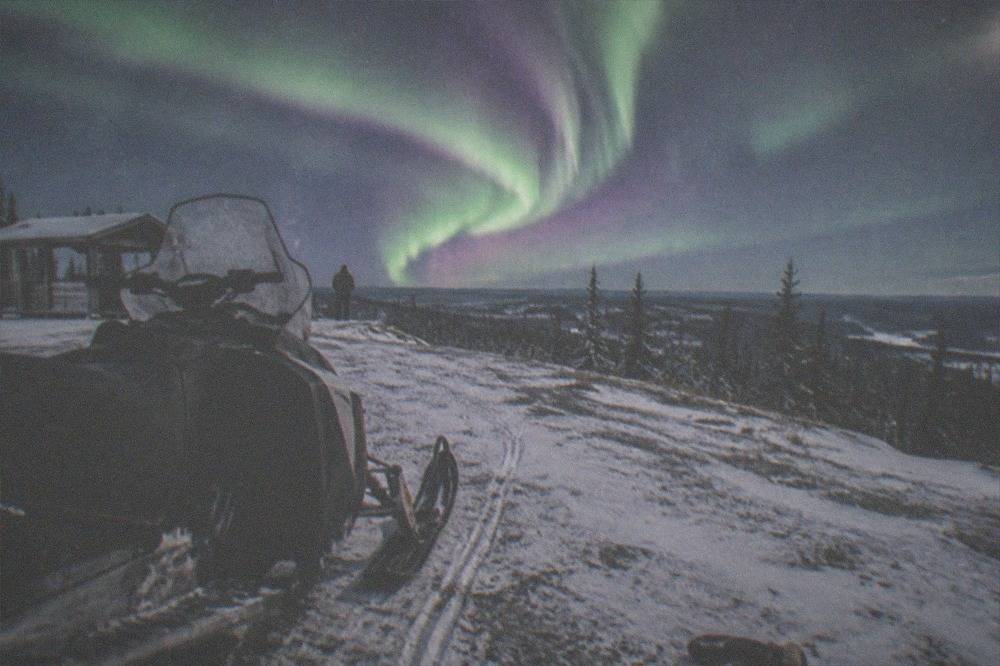
That geography is why the solar cycle question matters less for Fairbanks than for anywhere else. During the leanest years of a solar minimum, mid-latitude viewers see nothing and Fairbanks still sees aurora a large share of clear, dark nights. During a strong maximum, Fairbanks gets more extreme storm nights on top of its already generous baseline. A commonly cited figure from the destination marketing organization holds that visitors staying three or more nights during the season have roughly a 90 percent chance of seeing the aurora, weather permitting, with the lights visible on about four of five clear nights. That figure is reported by the official season page rather than measured by this site, and it reflects ordinary season conditions rather than any special 2026 effect.
The cycle does still matter here, just differently. Its biggest practical influence is on the ceiling: during the maximum and its tail, storm nights that fill the entire sky and push the oval far southward become more common. Those are the nights people travel for.
One caution worth carrying into any booking decision: a high Kp forecast does not guarantee a show, because cloud cover can erase a major storm night entirely, and Fairbanks winter cloud is a real factor. Our guide on cloudy nights and cancellation on Fairbanks aurora tours covers what operators actually do when the sky closes in.
When During 2026 Are Aurora Chances Strongest In Fairbanks?
Fairbanks' aurora season runs August 21 to April 21, per the official destination marketing organization, and the strongest viewing windows sit around the equinoxes and midwinter. The equinoxes benefit from a statistical boost in geomagnetic activity, while December through February offer the longest darkness hours, meaning more viewing time each night rather than a higher chance of clear sky.
The season window is a darkness constraint, not an activity constraint. From late April into August, twilight and eventually the midnight sun prevent viewing even when the aurora is active overhead. Outside that blackout, Fairbanks averages strong hours of usable darkness, peaking around the winter solstice when daylight shrinks to roughly 3 hours 41 to 42 minutes on December 21, with sunrise near 10:58am and sunset near 2:40pm, and lengthening to about 10 hours by late February. The wider set of guides lives on Fairbanks Aurora Borealis Tours.
The premium small-group chase referenced above is the format that exploits this best on a strong forecast night: from $335 per person with a 5.0 rating from 789 reviews, and a guide who moves the group toward open sky. For a deeper treatment of month-by-month tradeoffs between darkness, cold and tour availability, the season dates guide for Fairbanks works through the whole calendar.
| Window in the season | Darkness | Typical geomagnetic context | Practical character |
|---|---|---|---|
| Late August to September | Long dark nights return | Equinox activity boost often helps | Mild temperatures, shoulder-season crowds |
| October to early November | Long nights | Ordinary storm mix | Cold but often clearer, good value window |
| December to February | Maximum darkness, over 20 hours daily | Ordinary storm mix | Coldest and often clearest, most viewing hours |
| March | Nights still long, milder days | Equinox activity boost often helps | Popular month, book lodging early |
The equinox effect is a real, long-observed statistical tilt, not folklore: geomagnetic activity has a documented tendency to run higher around the spring and autumn equinoxes, which is one reason late September and March are popular with serious chasers. Midwinter buys sheer hours instead. Both are good answers to "when," and neither requires a solar maximum to work.
How Do Fairbanks Aurora Tours Use The Solar Cycle In Practice?
Tour operators in Fairbanks do not sell a solar-cycle promise, they sell mobility, warm shelter and local forecast judgment on any given night. In a declining but still active cycle, that matters more than in a storm year: guides chase clear sky and moderate activity rather than waiting for a headline event, and formats range from hilltop lodges at from $99 per person to private tours and photography trips.
The roster on this site spans the whole spread. At the budget end, hilltop viewing at Murphy Dome runs from $99 per person with a 4.5 rating from 317 reviews. The premium small-group chase runs from $335 per person with a 5.0 rating from 789 reviews. A guided lodge night with commentary sits between at from $200 per person, 4.5 from 286 reviews. Every price here is per person, from $99 to $385 across the 13 tours.
For many visitors, the question is not which tour but which format. Lodges give you heated rooms with big north-facing windows, so you watch in comfort and step outside for photos. Chases keep you mobile, trading some comfort for the ability to outrun cloud. Photography tours add instruction and, on some listings, portraits under the lights, at from $385 per person for the photo lessons and portraits option with a 5.0 rating from 245 reviews.
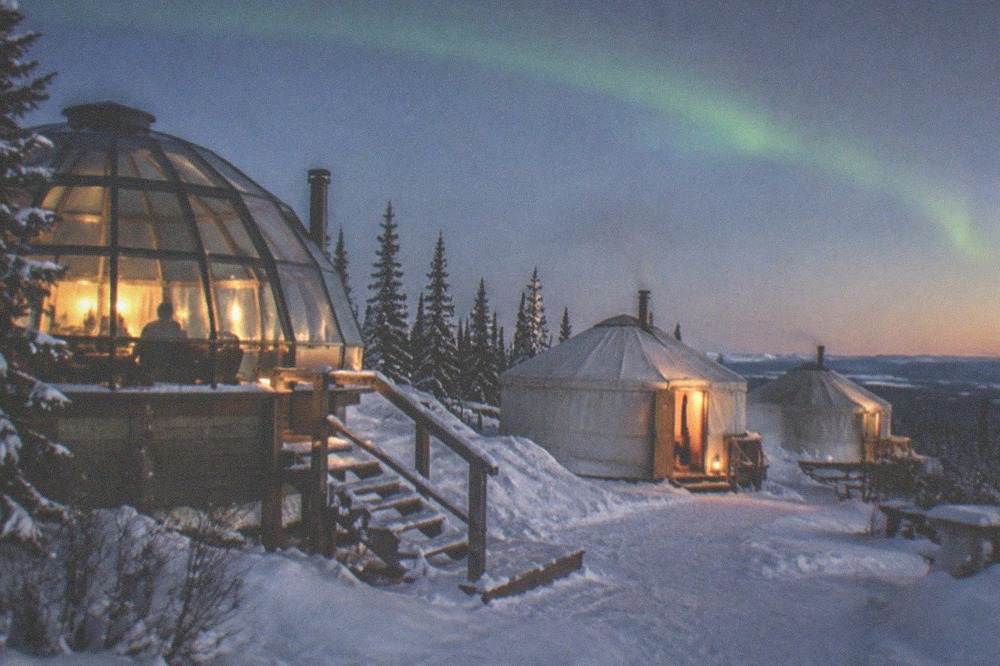
The hot springs combo deserves a specific mention in any 2026 planning conversation. The Chena Hot Springs tour bundles the resort visit with aurora viewing, from $275 per person with a 4.5 rating from 1,342 reviews, the deepest review pool on this roster. The resort sits roughly 60 miles northeast of Fairbanks, about 1 to 2 hours by road, and the combination of a soak and a dark-sky viewing position makes it a natural fit for travelers who want more than a cold hilltop.
The same resort logic applies to the glass house format: the Cleary Summit glass house runs from $179 per person, 4.4 from 38 reviews, and carries a "Likely to sell out" badge on its listing, one of only two on this roster. That badge is the operator's own signal, not this site's invention, and it reflects the small capacity of a glass-walled room.
What none of these operators can do is promise the aurora, and the honest ones say so plainly. The lights are a natural phenomenon. What a tour changes is your probability and your comfort: a guide who reads the forecast, a vehicle that moves, and a warm place to wait while the sky decides.
What Happens To Fairbanks Aurora After 2026?
Significant geomagnetic storms are expected to become less frequent after 2026 as Solar Cycle 25 continues toward a projected minimum around 2030. That is a gradual easing, not a switch: Fairbanks sits under the auroral oval, so aurora remains visible on ordinary nights there even in quiet years, and mid-latitude locations, not Fairbanks, feel the decline first and hardest.
If you are choosing between traveling in 2026 and waiting a few years, the data leans toward sooner rather than later, stated without drama. The tail of a strong maximum is the cheapest access to storm-class nights you will get for the rest of the decade. After 2026 the ceiling drops, slowly, and the extreme displays that fill the entire sky become rarer, even though Fairbanks keeps its baseline.
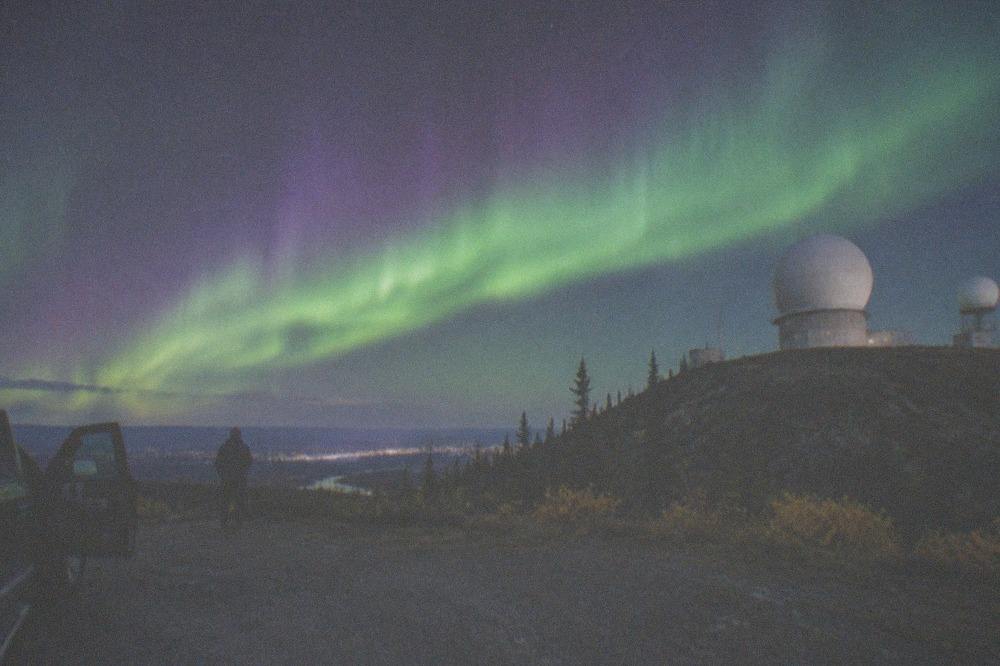
The contrast with mid-latitudes is the part worth internalizing. A solar minimum year kills aurora tourism in, for example, the contiguous United States, where a Kp 7 or higher storm is needed to push the oval that far south. In Fairbanks, a solar minimum year still delivers regular displays, just fewer of the extraordinary ones. That asymmetry is the permanent advantage of watching from under the oval, and it is why the city anchors the Alaska aurora scene year after year.
A practical way to hold all of this in your head: book 2026 for the best remaining shot at storm-class nights, and if life makes that impossible, Fairbanks at any point later in the decline still outperforms almost anywhere else on Earth during those same years.
How Should You Plan A Fairbanks Trip Around Solar Cycle 25?
Plan around season window and staying power rather than around catching a specific storm: visit between August 21 and April 21, stay three or more nights for the commonly cited 90 percent sighting odds, watch the UAF forecast and cloud cover in your final days, and book a chase-format tour so the operator can reposition on moderate activity nights. That plan works in 2026 and keeps working as the cycle eases.
The single biggest lever any visitor controls is trip length, not timing perfection. Aurora over Fairbanks is visible on roughly four of five clear nights in season, so the mathematics of a short trip are mostly the mathematics of cloud. A two-night trip gambles everything on two skies; a four-night trip lets you lose a night or two and still win. Our piece on how many nights to stay in Fairbanks for the lights works through the arithmetic in detail.
| Planning decision | What the cycle data says | Practical move |
|---|---|---|
| Trip year | 2026 sits in the elevated tail of the maximum | Book sooner rather than later for storm-class odds |
| Month within the season | Equinoxes tilt statistically active, midwinter maximizes darkness | September, March or December to February all work |
| Trip length | Sighting odds scale with number of clear dark nights | Three or more nights, four is better |
| Tour format | Moderate Kp nights reward mobility | Chase or combo formats over fixed single spots |
| Forecast watching | Kp is global, cloud is local | Read UAF forecast plus cloud cover, not Kp alone |
The premium chase is the single listing on this roster that best matches the cycle reality, which is why it anchors this guide.
Two smaller cautions close out the planning picture. First, winter in Interior Alaska is genuinely cold, with January normals around a high of 1 to 2F and a low of -16 to -17F, so layering per our what to wear on a Fairbanks aurora tour guide is not optional. Second, never buy an aurora product that promises a sighting; the correct seller posture is mobility, warmth and honest odds, and every operator serious about the business states plainly that the lights are a natural phenomenon.
For the full selection, here are the three formats this guide returns to:
Whichever you choose, the year matters less than the city. Under the oval, even a declining sun still puts on a show.
Common Questions About Solar Cycle 25 And Northern Lights In Fairbanks
Why is 2026 the best year to see the northern lights?
Calling 2026 "the best" overstates it. Solar Cycle 25 peaked in sunspots in October 2024 and has declined since, to about 99.8 by February 2026. What supports the label is that geomagnetic activity, the actual aurora driver, has stayed relatively elevated through 2026, so strong displays remain realistic. Significant storms are expected to become less frequent after 2026, which makes 2026 a genuinely good year rather than a definitive best.
Is 2026 the last good year for the northern lights?
No. The cycle eases gradually toward a projected minimum around 2030, and significant storms are expected to become less frequent after 2026. Fairbanks sits under the auroral oval, so aurora remains visible on ordinary nights there even in quiet years. The decline is felt first at mid-latitudes, not in Fairbanks.
Does a solar maximum matter more in Fairbanks than elsewhere?
It matters differently. Fairbanks sees aurora under the oval even at low Kp, roughly 2 to 4, so the baseline is strong in any year. What the maximum and its tail add is a higher ceiling: more storm-class nights that fill the entire sky. Mid-latitude locations need those storms to see anything at all.
What Kp value do I need to see aurora in Fairbanks?
Roughly Kp 2 to 4 often produces visible aurora over Fairbanks because the city sits at about 64.8 degrees north under the auroral oval. The Kp index is a global 0 to 9 average rather than a local promise, so it should be read alongside cloud cover and darkness, never alone.
When does the aurora season end in Fairbanks?
The season runs August 21 to April 21, per Explore Fairbanks. Outside that window, twilight and eventually the midnight sun prevent viewing even when the aurora is active overhead. The window is about darkness, not about solar activity.
Can any tour guarantee I will see the northern lights in 2026?
No tour can guarantee a sighting in any year. The aurora is a natural phenomenon. What good tours provide is mobility toward clear sky, warm shelter while you wait, and local forecast judgment, which measurably improves your odds on a given night without promising an outcome.