What Time Will The Northern Lights Be Visible Tonight In Alaska?
The northern lights over Alaska appear in the hours of true darkness, which during the August 21 to April 21 season means late evening into early morning. Here is how to read the timing for tonight.
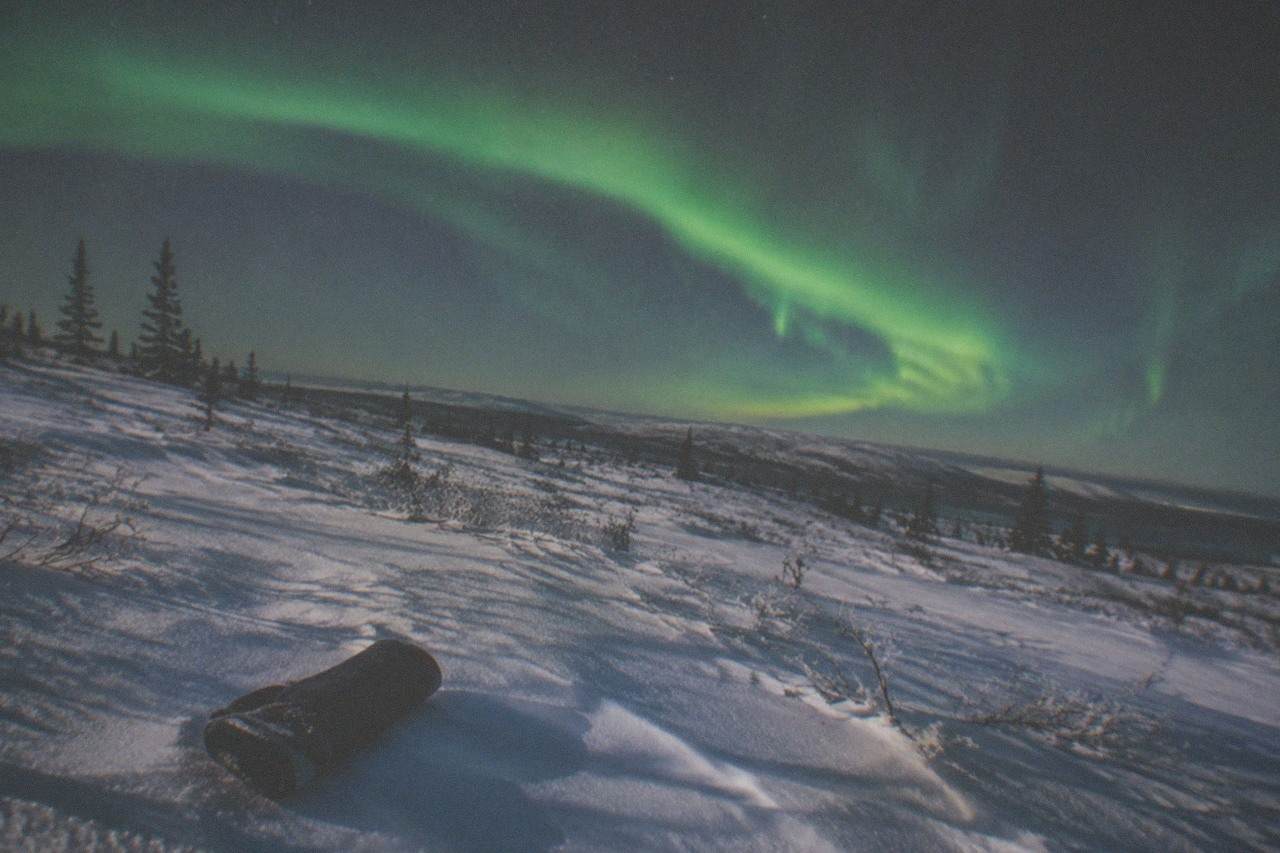
What Time Will The Northern Lights Be Visible Tonight In Alaska?
The northern lights do not keep office hours, but darkness does. Over interior Alaska, the aurora becomes visible only once the sky reaches true astronomical darkness, because the same sunlight that fades the blue of twilight fades the aurora with it. In practice, during Fairbanks' viewing season of August 21 to April 21, that window runs from late evening into the early morning hours, with the deepest and longest hours in midwinter.
No article, forecast service, or tour operator can honestly name an exact minute for "tonight." What can be pinned down is the structure of the night: when darkness begins, when it is deepest, which hours carry the best historical odds, and how the Kp index published by the University of Alaska Fairbanks Geophysical Institute changes the picture for a given evening. This page works through each of those pieces so the timing question can be answered with real information instead of a guess.
What Time Will The Northern Lights Be Visible Tonight In Alaska?
The realistic answer is a window from roughly two hours after sunset until two hours before sunrise, with the strongest odds traditionally centered between late evening and the early hours after midnight. The lights can appear at any point of true darkness during the August 21 to April 21 season, and no source can honestly promise a specific clock time for one named night.
The reason the answer is a range rather than a number comes down to how aurora visibility works. The aurora is caused by charged particles striking the upper atmosphere, and that process runs day and night, all year. What changes is whether a viewer on the ground can see it. During Alaska's summer, the sun never drops far enough below the horizon for the sky to darken, and even a strong display overhead goes unseen. The season opens on August 21 and closes on April 21 for exactly this reason, as Explore Fairbanks, the official destination marketing organization, explains on its aurora season page.
A useful rule of thumb many Fairbanks guides repeat is the "midnight plus or minus" pattern: activity often builds through the evening, and the hours around and after midnight frequently deliver the strongest displays. That pattern reflects how the auroral oval shifts and intensifies with geomagnetic activity through the night side of Earth. It is a tendency, not a schedule, and plenty of memorable displays have started at 10pm or flickered to life at 3am.
For a traveler standing in a hotel parking lot in Fairbanks tonight, the practical sequence looks like this: check that the date falls inside the season, check that the sky is clear, check the Kp forecast, and then plan to be out during the dark hours rather than at one magic time. Patience matters more than precision. A widely reported figure from the season's promoters holds that visitors who stay three or more nights during the season see the aurora roughly 90 percent of the time, weather permitting, and that the lights are visible on about four of five clear nights. That figure is a commonly cited statistic, not a guarantee for any single night.
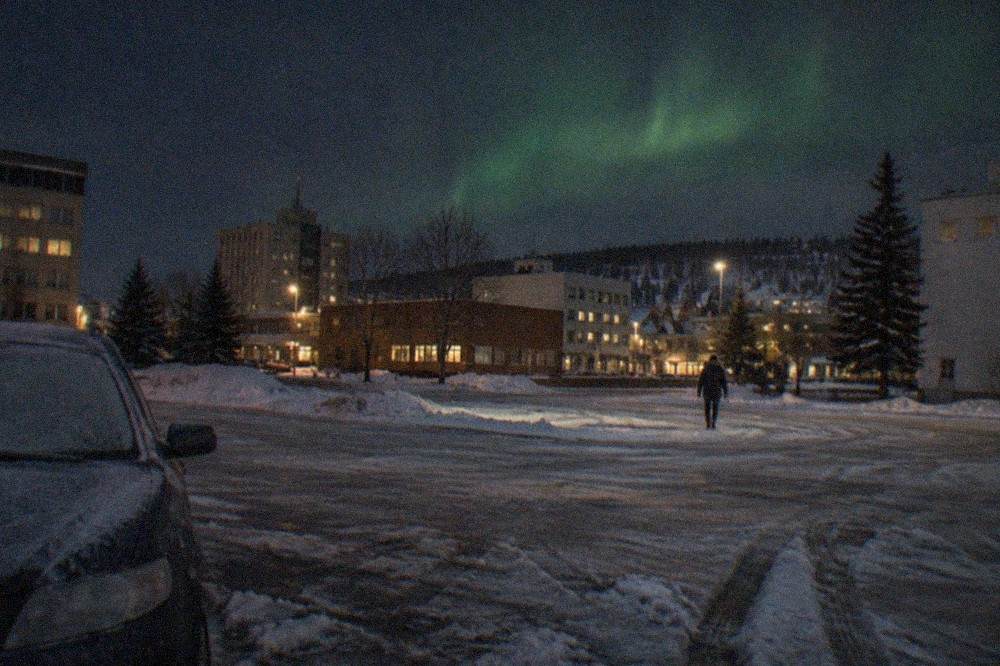
Tour operators build their schedules around this dark window rather than around a promise. The listings on this site, for example, describe evening and overnight departures, and the full-day Arctic Circle trip even times its return aurora hunt for around 3am, precisely because that stretch of the night is worth planning around. Comparing a few formats side by side is often the fastest way to see which one fits a given night's timing.
Each of those three products answers the timing question differently. The Premium Aurora Viewing Tour is built to chase: a small group moves to where the sky is clear, which suits a night when cloud cover is fragmented. Lodge and yurt viewing parks you under a large north-facing window and lets the night come to you. The Aurora Glass House at Cleary Summit wraps the whole viewing position in 270-degree floor-to-ceiling glass, with hot drinks and snacks on hand, so the wait itself becomes comfortable (see Tours For Seniors).
When Does The Sky Get Dark Enough For Aurora Around Fairbanks?
Darkness arrives earlier and lasts longer the deeper the season goes. At the winter solstice on December 21, Fairbanks receives only about 3 hours and 41 minutes of daylight, with sunrise near 10:58am and sunset near 2:40pm, leaving roughly twenty dark hours in which the lights are physically viewable.
That solstice number is worth sitting with for a moment. In much of the world, "night" means ten or twelve hours. In interior Alaska in late December, night is the default state. The sun rises before eleven in the morning and sets shortly after two in the afternoon, and everything outside that brief arc is darkness of varying depth. By late February, daylight has lengthened back to about ten hours, so the viewing window tightens considerably as spring approaches.
Not all darkness is equal, though. Astronomers divide twilight into civil, nautical, and astronomical phases, and aurora viewing really needs the deepest of these, true astronomical darkness, when no trace of sunlight brightens the sky. Around the equinoxes in late September and late March, that deep darkness begins a couple of hours after sunset and ends a couple of hours before sunrise, just as it does at lower latitudes. In midwinter, deep darkness dominates so completely that the "when does it start" question almost dissolves.
The table below collects the season's timing milestones. These are fixed astronomical facts, not predictions, and they hold for every year.
| Timing milestone | Date | What it means for aurora hours |
|---|---|---|
| Season opens | August 21 | Deep darkness returns late at night; viewing resumes |
| Autumn equinox period | Around September 22 | Often-cited strong window, with the equinoxes linked to enhanced geomagnetic activity |
| Winter solstice | December 21 | Roughly 3 hours 41 minutes of daylight; about twenty hours of darkness |
| Late February | Around February 28 | Daylight back to about 10 hours; viewing window tightens |
| Season closes | April 21 | Twilight and approaching midnight sun end viewing |
One caution deserves emphasis because it trips up a lot of first-time visitors: longer nights mean more viewing hours, not a better chance of clear sky. A twenty-hour night in January still needs a gap in the clouds, and midwinter cloud cover over Fairbanks varies night to night. Conversely, a September night with only a few dark hours can deliver a spectacular display if the sky is clean and the geomagnetic forecast cooperates. The two variables, darkness and weather, are independent, and both have to line up.
How Does The Kp Index Shape Tonight's Forecast For Alaska?
The Kp index runs from 0 to 9 and measures planetary geomagnetic activity, with higher values pushing the auroral oval farther south. Fairbanks sits at roughly 64.8 degrees north, under the typical oval, so the lights are often visible here at Kp 2 to 4, values that would produce nothing at mid-latitudes, though the index is a global measure rather than a local promise.
The forecast that most Alaska visitors actually use comes from the University of Alaska Fairbanks Geophysical Institute, which publishes a 3-day forecast updated daily, along with a 27-day outlook, on its aurora forecast page. The 3-day product is the one to check the afternoon before a viewing night, because it tells you whether the coming night carries elevated activity or quiet conditions. The 27-day outlook is better for choosing which week to travel than which hour to stand outside.
Reading the index correctly matters. A Kp of 3 might sound middling on a 0 to 9 scale, but from a location under the auroral oval it can mean a good display. The same Kp of 3 over, say, the northern tier of the lower 48 states often means nothing visible at all. This is the structural advantage of Fairbanks as a viewing base: the city does not need a strong storm to see the lights, it needs only ordinary activity plus a clear sky. Travelers who fixate on high Kp numbers sometimes talk themselves out of perfectly good local nights.
The index also has limits worth knowing. It is planetary, an average built from magnetometer stations around the globe, so local conditions can run stronger or weaker than the headline number suggests. Substorm behavior, the sudden brightening and expanding of an aurora arc, is not precisely predictable by any index; a quiet Kp 2 night can still produce a burst that fills half the sky for twenty minutes. Forecasters call the general window; the sky writes the specifics.
Solar Cycle 25 adds useful context for anyone planning around the index. The cycle's smoothed sunspot number peaked around 160.9 in October 2024 and has been declining since, falling to about 99.8 by February 2026. But sunspot count and geomagnetic activity are not the same thing, and the geomagnetic activity that actually drives auroras stayed relatively elevated into 2026. Honest framing, then: the cycle is past its sunspot peak, yet the aurora engine has kept running hot, and significant storms are expected to become less frequent after 2026 as the cycle slides toward its next minimum around 2030.
| Solar Cycle 25 reference point | Figure |
|---|---|
| Smoothed sunspot peak | 160.9 in October 2024 |
| Smoothed sunspot number | 99.8 in February 2026 |
| Average planetary Ap index, first eight months of 2026 | 12.6, above 2024 levels |
| Projected cycle minimum | Around 2030 |
For tonight's decision, the sequence is simple: read the 3-day forecast for the activity level, cross it against a local cloud forecast, and if both look reasonable, commit to the dark hours. Guides do exactly this, and a good one will move the group if the first location clouds over.
A guided chase earns a place in this timing discussion precisely because the Kp number only opens the door. The forecast says the night is worth standing outside for; a guide decides where, when to arrive, and when to hold or move. That second layer of judgment is what turns a good forecast into a good night, and it is the part no index supplies.
Which Hours Of The Night Give The Best Odds Near Fairbanks?
The hours from roughly 10pm to 3am carry the best historical odds in interior Alaska, with the period around and just after midnight most often cited as peak. Displays can and do start earlier or flare later, so on a strong-forecast night it pays to be outside from full darkness onward rather than arriving only for the middle stretch.
The "around midnight" tendency has a physical basis. The auroral oval tends to be most active on the night side of Earth, and for a viewer at Fairbanks' longitude the deepest part of that activity window lands in the hours flanking midnight. Substorms, the bright fast displays people travel for, cluster in this stretch. This is why so many Fairbanks tour products run evening departures and why the Arctic Circle full-day trip schedules its return aurora hunt near 3am: the operators are aiming their guests at the hours that matter.
The lodging format takes this logic to its extreme. Aurora viewing lodges and yurts with large north-facing windows, like the Lodge and Yurt Aurora Viewing product from $160 per person, rated 4.5 from 34 reviews, are designed so guests never have to choose an hour at all. You sit indoors in warmth, the window faces the sky, and if the lights ignite at 1am or 3am you are already there. For travelers who cannot face standing in the cold at midnight, this format converts the whole night into watchable time.
The glass house at Cleary Summit refines the same idea. The Aurora Glass House Experience, from $179 per person and rated 4.4 from 38 reviews, seats guests inside a 270-degree structure of floor-to-ceiling glass at Cleary Summit, with hot drinks and snacks included, and its listing carries a "Likely to sell out" badge, so the date needs locking in ahead of the night. It is a middle path between a lodge stay and a mobile chase: a fixed, sheltered viewing position with the comfort of a heated interior.
Chasing tours make the opposite trade. A small-group chase such as the Premium Aurora Viewing Tour, from $335 per person with a 5 rating across 789 reviews, spends the night moving between spots to dodge cloud and find clear sky. That mobility costs more and demands more from the traveler, but it directly addresses the single biggest risk to any planned hour: a cloud parked over your chosen hill. The right format depends on weather patterns on the night, fitness for cold, and budget, and the cost picture across formats is covered in detail in the Fairbanks aurora tour pricing guide.
A few practical habits sharpen any hour choice. Keep watches in blocks of at least two hours rather than dashing out for ten minutes; substorms can arrive without warning and pass quickly, and the most common mistake reported by disappointed viewers is going in too early. Face north when choosing a spot, since the oval sits that way from Fairbanks. And let the eyes adapt: twenty minutes away from headlights and phone screens changes what the eye can pick up, and many faint displays are missed simply because nobody's eyes had adjusted.
How many nights to budget is really the same question stretched over days, since each extra night is another set of dark hours. The three-night stay question for Fairbanks aurora trips has its own answer grounded in that widely cited 90 percent figure, and it is worth reading before locking in a short visit.
The premium chase format earns its solo mention here because timing is the whole product. A guide tracking forecast and sky can hold the group back at the lodge, or push out early on a strong-forecast night, or extend the hunt when the data says the substorm window is still open. For a visitor with only one or two nights, that flexibility is often what converts a marginal night into a sighting.
What Changes For Late-Season Nights In Fairbanks?
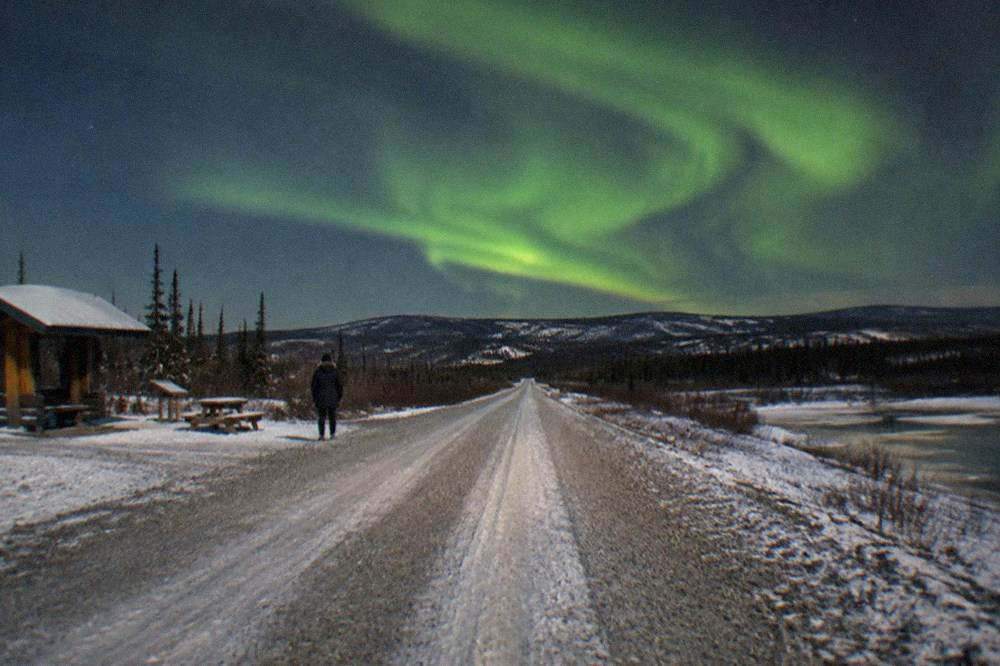
As the season runs toward April 21, darkness shrinks and starts later, pushing the usable viewing window toward and past midnight. By late February daylight stretches to about ten hours, and by April the deep darkness that aurora needs arrives only in the middle hours of the night, so spring viewing means fewer usable hours per night but often milder temperatures to wait in.
The arithmetic of late season is unforgiving. Every minute of daylight added in spring is a minute removed from the dark window, and it is the dark window, not the total night, that counts. A March visitor still has a genuine chance on any clear night, but the productive hours compress toward the middle of the night, and an April visitor is working with a window that may not open until well after midnight and closes sooner before dawn. The lights do not get weaker in spring; the time available to see them simply narrows.
There are compensations. Late-season nights are warmer than the deep-winter ones, which makes long watches easier to endure, and the equinox period around late March is one of the two equinox windows often linked to enhanced geomagnetic activity. Travelers who cannot face a January night at all sometimes do best in early spring, accepting the tighter hours in exchange for comfort. The deeper cold of midwinter, and what to wear while standing in it, is covered in the layering guide for Fairbanks aurora nights.
Late season also changes which tour format works. When the window is narrow, lodge-based viewing, which keeps you inside and warm until the moment arrives, can outperform a chase that spends half its hours in transit. When the window is generous, as in midwinter, mobile formats get more room to work. And on any night in any month, the question of what happens when clouds roll in has real answers, since several listings on this roster carry free cancellation and operators handle cloudy nights in defined ways; the cancellation and cloudy-night policies guide walks through them.
For a sense of how the main formats compare on price and review pool, the table below pulls the roster's verified figures for three of the most-booked styles.
| Tour format | From price per person | Rating and reviews |
|---|---|---|
| Premium small-group aurora chase | $335 | 5 from 789 reviews |
| Lodge and yurt viewing with north-facing windows | $160 | 4.5 from 34 reviews |
| Chena Hot Springs resort combo with aurora viewing | $275 | 4.5 from 1,342 reviews |
The Chena combo deserves a note on timing specifically. The resort sits about 60 miles northeast of Fairbanks, a drive of roughly 1 to 2 hours each way, so an evening departure from town becomes a full night by the time transport, resort time, and viewing are counted. Travelers who want the springs themselves, the ice museum held at a constant 25F, and the aurora in one package are trading a long night for breadth of experience, and the resort's own pool house stays open from 7:00am to 11:45pm daily for guests who would rather soak than stand.
How To Plan Tonight Around The Real Answer
Plan to be outside for a block of at least two dark hours, ideally spanning midnight, on any clear night between August 21 and April 21 with a Kp forecast of 2 or higher. Skip the night entirely only if clouds cover the sky or the date falls outside the season, since no clock time, tour, or index can make lights visible through sunlight or overcast.
That decision rule compresses everything above into one sentence, and it is as honest as the question allows. The visitor asking about tonight wants a number, and the sky does not deal in numbers. What the sky deals in is a window, a forecast, and odds, and those three tools, used together, put a viewer in the right place at the right hour far more reliably than any fixed time could.
The planning order matters. First confirm the date is inside the season window. Second, read the UAF Geophysical Institute's 3-day forecast for the activity level and check the Kp value against Fairbanks' low threshold. Third, look at cloud cover, which on any given night is more often the deciding factor than geomagnetic activity is. Fourth, pick the format that fits the night: mobile if the cloud picture is broken, stationary and warm if it is clear. Fifth, budget enough nights that one clouded-out evening does not end the trip.
Travelers who want the fuller odds picture, including the frequently asked follow-up about what percentage of visitors actually see the lights, can find it in the odds of seeing the northern lights in Alaska piece. The short version: the odds are good over multiple nights and honest over a single one. Sites like Fairbanks Aurora Borealis Tours exist largely because that single-night risk is real, and a guided product is one way to spend the dark hours well even when the lights stay faint.
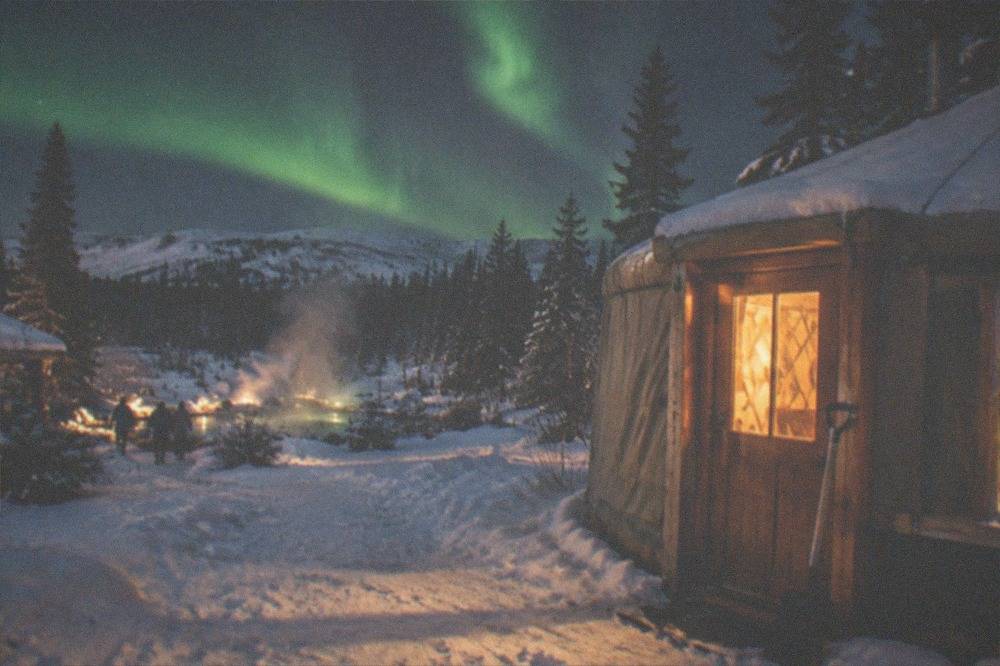
Whichever format a traveler picks, the underlying answer does not change. The lights are possible from darkness to dawn, likeliest around and after midnight, and honest about nothing more. Nights differ. Forecasts guide. The window is the answer.
Any of those three products turns the timing window into a plan: the chase moves with the sky, the lodge keeps you warm inside it, and the glass house frames it from Cleary Summit. Whichever one fits, the dark hours between late evening and early morning remain the hours that matter, and the forecast check the afternoon before remains the one step that separates a good night from a long cold one.
Common Questions About Aurora Viewing Times In Alaska
What Time Will The Northern Lights Be Visible Tonight In Alaska?
From roughly two hours after sunset until about two hours before sunrise, with the hours around and after midnight historically the most productive. The lights can appear at any point of true darkness between August 21 and April 21, and no honest source can name an exact clock time for one night.
When does aurora season start and end in Fairbanks?
The season runs August 21 to April 21, per Explore Fairbanks. Outside that window, twilight or the midnight sun prevents viewing even when the aurora is active overhead.
What Kp value do I need to see the lights from Fairbanks?
Fairbanks sits under the auroral oval at roughly 64.8 degrees north, so visible aurora is often possible at Kp 2 to 4. The index is a global measure, not a local guarantee, and clear sky matters as much as the number.
Do I need to stay up until 3am to see the aurora?
No, but the hours between roughly 10pm and 3am carry the best odds, with the stretch around midnight most often cited as peak. On a strong-forecast night, being outside from full darkness onward covers the whole range.
Is midnight really the best time for the northern lights?
Statistically it tends to be, because auroral substorms cluster in the hours flanking midnight. Displays do start earlier and flare later, so midnight is a tendency rather than a schedule.
Can the lights be seen in April in Alaska?
Yes, through April 21. The usable dark hours shrink and shift later as spring advances, so late-season viewing compresses toward the middle of the night, but the season stays open until that date.