Aurora Forecast And Kp Index Explained For Fairbanks Viewing
Fairbanks sits directly under the auroral oval, which changes how the Kp index should be read. Here is how the UAF forecast works, what a Kp number actually predicts, and how to use both when planning a night at Chena Hot Springs or anywhere in the Interior.
Short answer
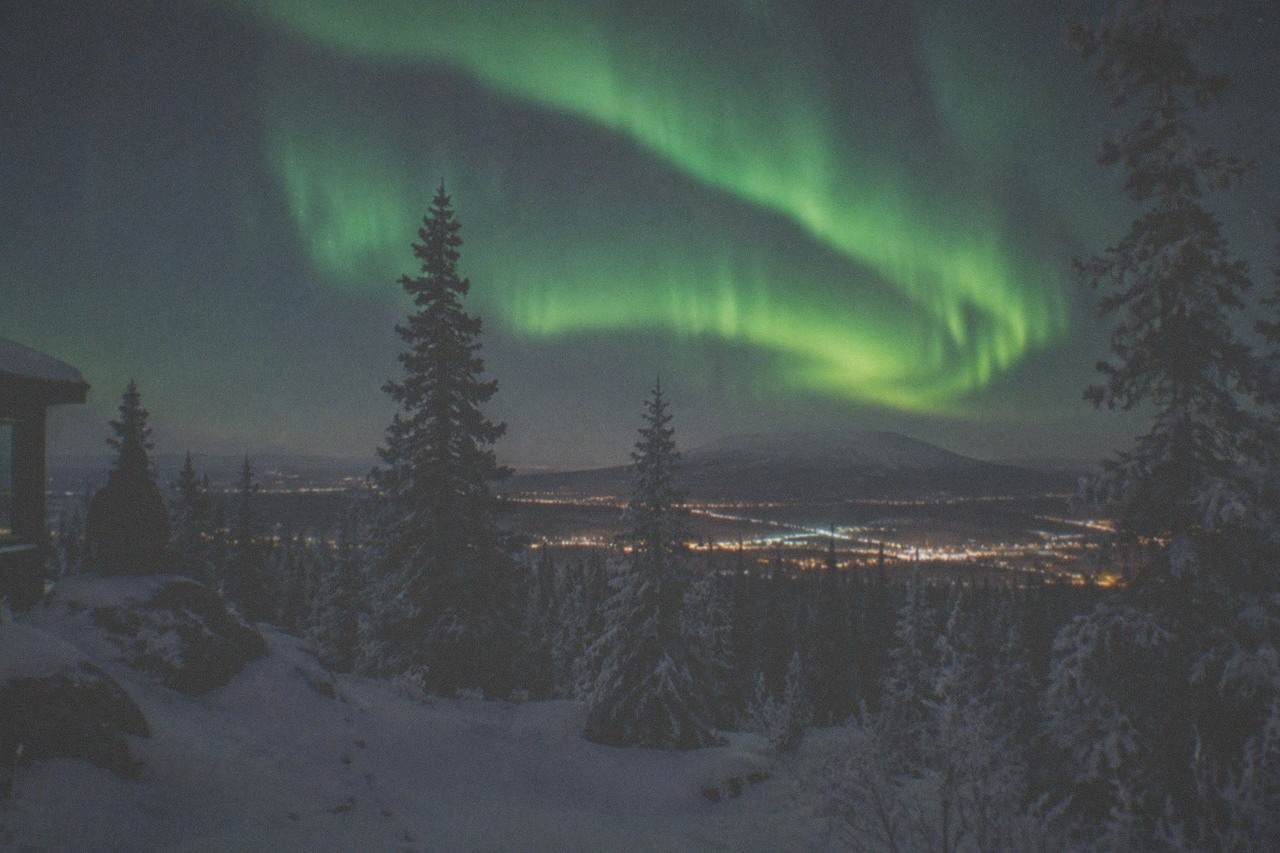
The UAF Geophysical Institute publishes a free 3-day and 27-day aurora forecast built on the Kp index, a 0 to 9 planetary geomagnetic scale. Because Fairbanks sits under the auroral oval at about 64.8 degrees N, visible aurora is often possible at Kp 2 to 4, values that would mean nothing at mid-latitudes.
Green light over the Interior is a coin with two sides: geomagnetic activity, which the forecast estimates, and local weather, which it does not. The University of Alaska Fairbanks Geophysical Institute publishes a public aurora forecast every day, built on the Kp index, and Fairbanks has a structural advantage that makes those numbers read differently here than almost anywhere else in the United States. The city sits at roughly 64.8 degrees north, directly beneath the auroral oval, the ring of auroral activity that circles the magnetic pole. A Kp value that would be invisible from Seattle or Minneapolis can still fill a Fairbanks sky. That single fact is the reason visitors fly here rather than gamble from farther south, and it is the reason the forecast deserves a careful read rather than a glance at a phone widget.
This page explains the forecast itself, what the Kp index measures and does not measure, how to translate a Kp number into realistic expectations for the Fairbanks area, and how the same numbers apply to a viewing night at Chena Hot Springs, roughly 60 miles northeast of the city. For help choosing a night rather than reading a chart, a premium small-group chase such as the Premium Aurora Viewing Tour puts the forecast work in the operator's hands, with 5 from 789 reviews and from $335 per person on the listing.
How Does The UAF Aurora Forecast Work For Fairbanks?
The UAF Geophysical Institute publishes a free aurora forecast every day, covering both a 3-day outlook and a 27-day outlook, built on the Kp planetary geomagnetic index drawn from NOAA Space Weather Prediction Center data. The 3-day product tells you what is likely tonight and tomorrow, while the 27-day product exists because geomagnetic activity partially repeats on a solar rotation cycle, which helps with booking a trip week by week.
The 3-day forecast is the practical tool. It is updated daily, and it maps expected activity in broad bands: low, active, storm. A visitor in Fairbanks should treat the forecast as a schedule of probabilities rather than a promise. The aurora is a natural phenomenon, and no forecast, however good, guarantees a sighting on any given night. Local cloud cover matters as much as the magnetic numbers, and Interior Alaska weather can change faster than geomagnetic predictions do.
The program itself is older than most visitors assume. The Geophysical Institute has run aurora forecasting in some form for decades, with online forecasts available since at least the mid-1990s, and its forecast page remains the reference most Interior lodges and tour operators check first. You can view it directly at the Geophysical Institute's aurora forecast page, which shows the expected activity levels alongside the institute's own explanatory notes.
The 27-day outlook deserves a comment, because it is widely misused. Recurring coronal holes, which are open magnetic regions on the sun that stream solar wind toward Earth, can persist across one or more 27-day solar rotations. When one of these regions fired a strong aurora display this month, there is a statistical chance of a repeat about 27 days later. That is a booking signal, not a viewing plan. Serious operators treat the 27-day product as a rough scheduling aid and then firm up plans on the 3-day numbers and the evening's sky.
A note on scale: the Kp index is one thing, the local College K-index another. The Geophysical Institute's own materials point out that Kp is a global average drawn from magnetometer stations worldwide, while a local index such as the College K-index can differ from it on any given night. Fairbanks viewing sometimes outperforms the Kp number, and occasionally underperforms it, which is exactly what you would expect from a global predictor applied to one place.
What Is The Kp Index And How Should Fairbanks Read It?
The Kp index is a 0 to 9 planetary geomagnetic activity scale, computed from 3-hour measurements averaged across magnetometer stations around the world, introduced by Julius Bartels in 1939. Higher values mean stronger disturbance and an auroral oval pushed farther south. Fairbanks sits under that oval, so the same number means something different here than it does in the lower 48.
The mechanics are simple enough to state in one breath. Solar wind strikes Earth's magnetic field; the field distends and stores energy; the energy releases into the upper atmosphere near the poles, where it excites oxygen and nitrogen and produces the green, and sometimes red or purple, light visitors come to see. The Kp index summarizes how hard the magnetic field is being hit. A Kp of 0 means a very quiet field. A Kp of 9 means an extreme geomagnetic storm, the kind that puts aurora over Arizona and makes national news.
Because the auroral oval sits over Fairbanks rather than far north of it, the ring does not need to travel to reach this latitude. At mid-latitudes, a Kp of 5 or higher is typically needed before the oval's edge reaches the sky. In Fairbanks, activity is often visible at Kp 2 to 4, and on genuinely quiet nights the aurora can appear directly overhead as a faint band or corona. This is the core of the city's aurora reputation, and the reason our best time to see the lights guide treats timing and latitude as one subject rather than two.
That advantage has a mirror image, though. The Kp number is planetary, an average across the whole globe, so it cannot tell you what will happen above one hilltop at one hour. A strong Kp night can be cloudy in the Tanana Valley, and a weak Kp night can produce a slow, photogenic arc if the sky is clear. Any forecast reading in Fairbanks should be paired with a cloud forecast, and with the patience to stay out for more than one hour of the night.
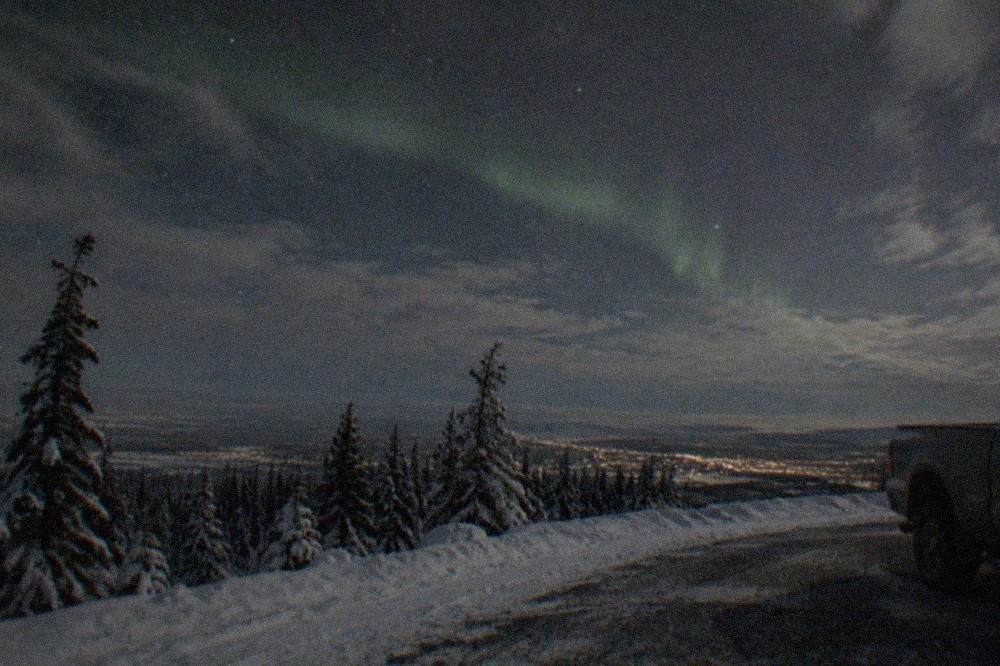
A tour that chases rather than parks exists precisely because of this. The Premium Aurora Viewing Tour, 5 from 789 reviews and from $335 per person on the listing, uses the forecast and the cloud map to move toward clearing skies rather than wait under the wrong one. The Small-Group Aurora Chase covers the same logic in a smaller vehicle, from $215 per person.
What Kp Value Do You Need To See Aurora From Fairbanks Or Chena Hot Springs?
For Fairbanks and the Chena Hot Springs area, visible aurora is often possible at Kp 2 to 4, and even quiet sub-2 conditions can produce a faint arc overhead because both sit under the auroral oval. The index is a global rather than purely local predictor, so treat any Kp-to-odds mapping as a planning guide, not a guarantee, and always pair it with the local cloud forecast.
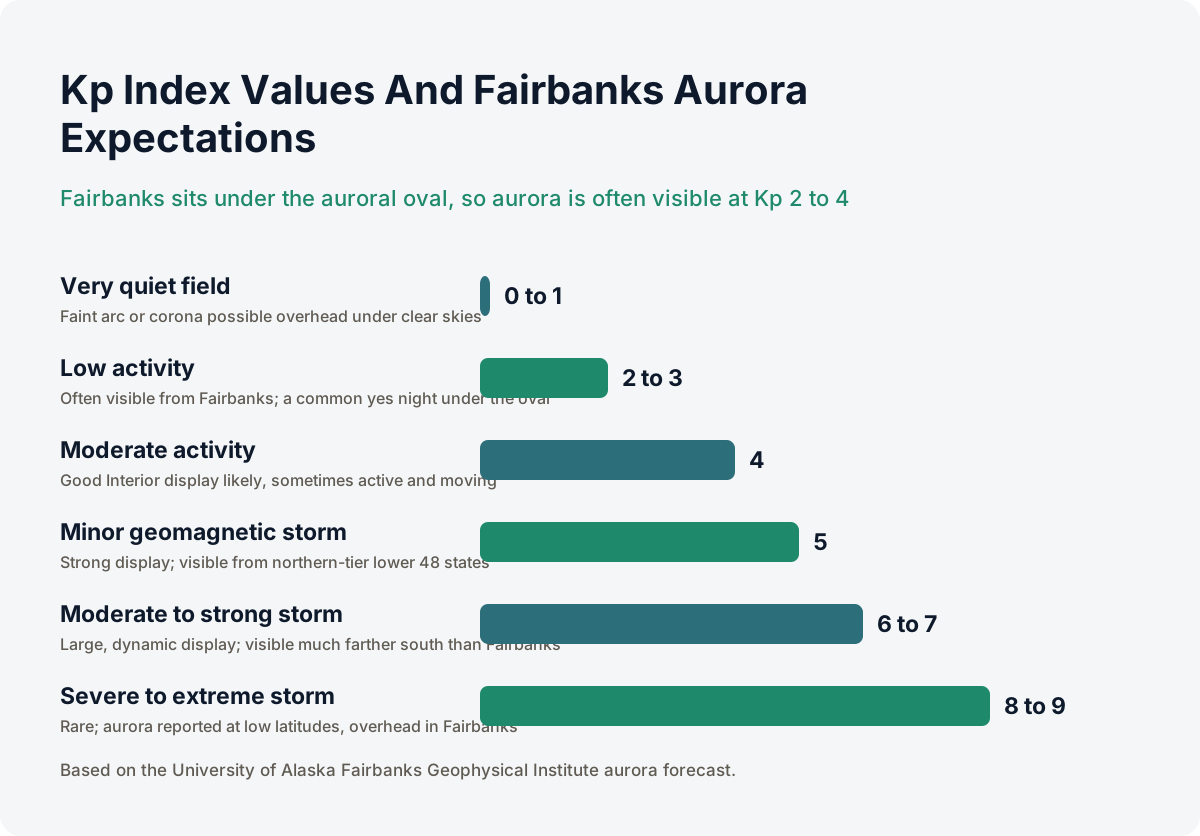
The table below translates the index into realistic Interior expectations, using the verified framing that Kp is planetary in scope. It is deliberately cautious, because the most common visitor mistake is over-reading a single number.
| Kp value | What it means globally | Typical Fairbanks-area expectation |
|---|---|---|
| 0 to 1 | Very quiet field | Faint arc or corona possible overhead under clear skies |
| 2 to 3 | Low activity, below storm level | Often visible from Fairbanks; a common "yes" night under the oval |
| 4 | Moderate activity | Good Interior display likely, sometimes active and moving |
| 5 | Minor geomagnetic storm | Strong display for Fairbanks; now visible from northern-tier lower 48 states |
| 6 to 7 | Moderate to strong storm | Large, dynamic display; visible much farther south than Fairbanks |
| 8 to 9 | Severe to extreme storm | Rare; aurora reported at low latitudes, Fairbanks sees it overhead |
Two cautions go with that table. First, the difference between Kp 3 and Kp 5 matters far less in Fairbanks than the difference between a clear sky and a cloudy one. Second, Kp is quoted in 3-hour blocks, so a night is not one number but four or eight; activity often arrives in bursts between midnight and 3am regardless of what the evening's first reading suggested.
The Chena Hot Springs question deserves its own paragraph, since it is a frequent search: does the chena hot springs aurora forecast differ from the Fairbanks one? Geomagnetically, no. The resort is roughly 60 miles northeast of the city, about 1 to 2 hours by road, at a latitude whose difference from Fairbanks is irrelevant to an oval hundreds of miles wide. A Kp 3 night is a Kp 3 night in both places. What does differ is terrain and sky. Chena Hot Springs sits at the end of its road in the Chena River valley, ringed by hills including the dome the resort's own viewing tour climbs, so local cloud and valley fog, not geomagnetic latitude, is the variable worth checking. The resort's own Aurora Viewing Tour to Charlie Dome runs about 5 hours, with round-trip transport from the resort in a tracked vehicle, heated yurts, hot drinks and 360-degree views, listed at $110 to $125 per person in 2026 resort materials; those are the resort's own prices, separate from any Fairbanks tour listing. More detail on that whole destination sits in our Chena Hot Springs aurora tours guide.
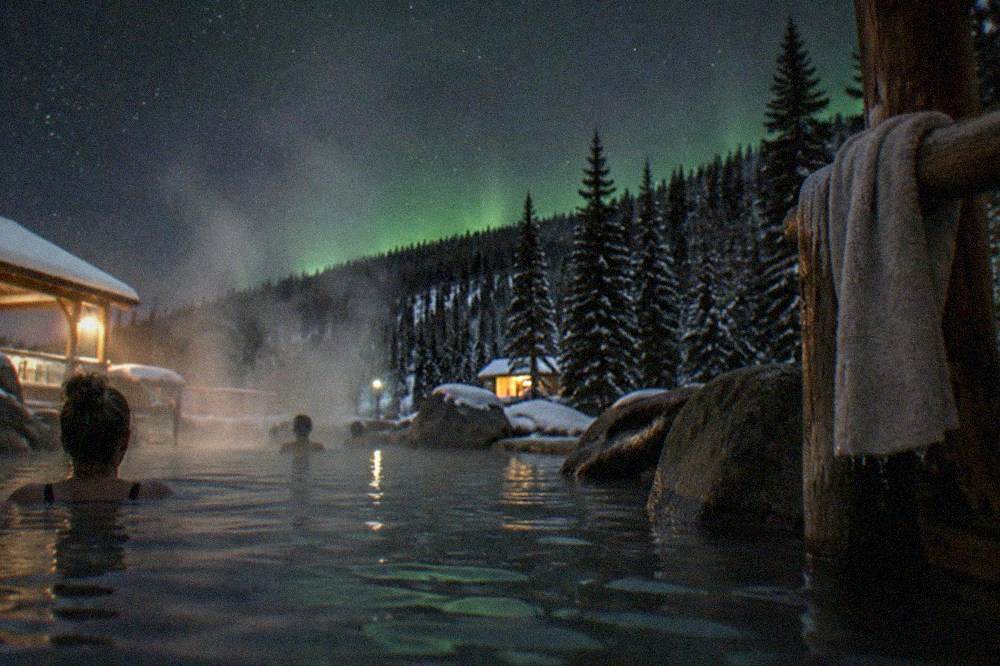
For travelers who would rather not drive the Chena road at night, a lodge-based product such as the Lodge and Yurt Aurora Viewing tour, 4.5 from 34 reviews and from $160 per person, keeps you indoors behind large north-facing windows between sky checks, with transport from major Fairbanks hotels included on the listing.
Which Forecast Tools Should You Check Before An Aurora Night In Fairbanks?
Check three things in order: the UAF Geophysical Institute 3-day forecast for activity level, a cloud-cover map for the Interior for sky, and the Explore Fairbanks season window for whether darkness even exists. On the night itself, the live 3-hour Kp readings and your own eyes beat any app, because the forecast updates on a delay and bursts can arrive between updates.
The toolset falls into two groups: what tells you the sky will be active, and what tells you the sky will be open. Most failed aurora nights in Fairbanks are cloud failures, not magnetism failures. A visitor who checks Kp 6 and skips the satellite loop may sit under a solid deck of clouds while a Kp 2 clearing a hundred miles away delivers the better show.
| Tool | What it answers | How to use it |
|---|---|---|
| UAF 3-day forecast | Expected activity level for tonight through tomorrow | Read the activity band, not a single Kp guess |
| UAF 27-day forecast | Recurring activity from solar rotation | Booking signal only; confirm on the 3-day product |
| Live Kp readings | Activity right now, in 3-hour blocks | On the night; expect bursts and lulls between updates |
| Satellite cloud loop | Where skies are clearing over the Interior | The most decision-relevant map on any given night |
| Local radar or NWS Fairbanks | Valley fog, snow, blowing snow | Winter nights in the Tanana Valley especially |
Beyond the tools themselves, the deeper companion read is the odds: a widely reported figure from the destination's own season materials holds that visitors who stay three or more nights during the season see the aurora roughly 90 percent of the time, weather permitting, with the lights visible on about four of five clear nights. That figure, which our odds of seeing the lights post unpacks, is not a per-night guarantee; it is what multiple nights buy you, letting the forecast and the weather average out.
Season framing comes from the official source: Fairbanks' aurora season runs August 21 to April 21, per Explore Fairbanks' aurora season page. Outside that window, twilight or the midnight sun prevents viewing even when the aurora is active overhead; the lights do not stop, the darkness does. That is why a chena hot springs aurora forecast read in June is meaningless, and the same forecast read in January is a plan.
How Do Solar Cycle Conditions Change The Forecast In 2026?
Solar Cycle 25 peaked in sunspot terms around October 2024, with a smoothed sunspot number near 160.9, and was declining through 2025 and 2026, about 99.8 by February 2026. Geomagnetic activity, the more direct aurora driver, stayed relatively elevated into 2026, so the honest read is: past the sunspot peak, still a good viewing period, with major storms expected to become less frequent after 2026.
The distinction between sunspots and geomagnetic activity is the most useful piece of solar-cycle literacy a visitor can carry. Sunspot counts describe the sun; geomagnetic indices describe what actually hits Earth's magnetic field. The first eight months of 2026 averaged a planetary Ap index of about 12.6, above 2024 levels, which means aurora-relevant disturbance has not faded in step with the sunspot count. Coronal holes, which persist and rotate regardless of the cycle phase, kept producing storm windows through 2026.
What this means for a trip is a calibrated expectation rather than a headline. Do not believe any page telling you 2026 is definitively the best year ever to see the northern lights; that framing is not supported by the data, and the solar-cycle decline is real (see Solar Cycle 25 And 2026). Equally, do not postpone on the theory that the show is over: the geomagnetic numbers held up well past the sunspot peak, and Fairbanks' latitude means the baseline show, the quiet-night arc overhead, does not require a storm at all.
A common follow-on question is whether storm-chasing the forecast is worth booking around. On genuinely active nights, a chase tour earns its price by moving to clearing sky, since a big storm spent under cloud is the worst outcome in aurora travel. On quiet nights, a fixed lodge with warm space and windows is often the better buy, because the faint overhead arc rewards stillness more than driving. The lodge and cabin options near Fairbanks cover that side of the decision in detail.
What Should The Kp Forecast Change About Your Tour Booking In Fairbanks?
Book by season, cloud and trip length first, and let the Kp forecast adjust the type of tour rather than the decision to take one. Under the oval, a low-Kp clear night beats a stormy cloudy one, so a multi-night stay with one flexible chase night and one lodge night uses the forecast better than gambling everything on a single high-Kp date that may arrive overcast.
The practical sequence for most travelers looks like this. Choose dates inside the August 21 to April 21 window, weighted toward months with long nights and statistically clearer Interior skies, which our season dates guide breaks down month by month. Book two or three aurora nights rather than one, in line with the widely cited three-night 90 percent figure. Then, as the dates approach, let the forecast split your nights between formats: the chase for clearing skies, the lodge or glass house for warmth and stillness.
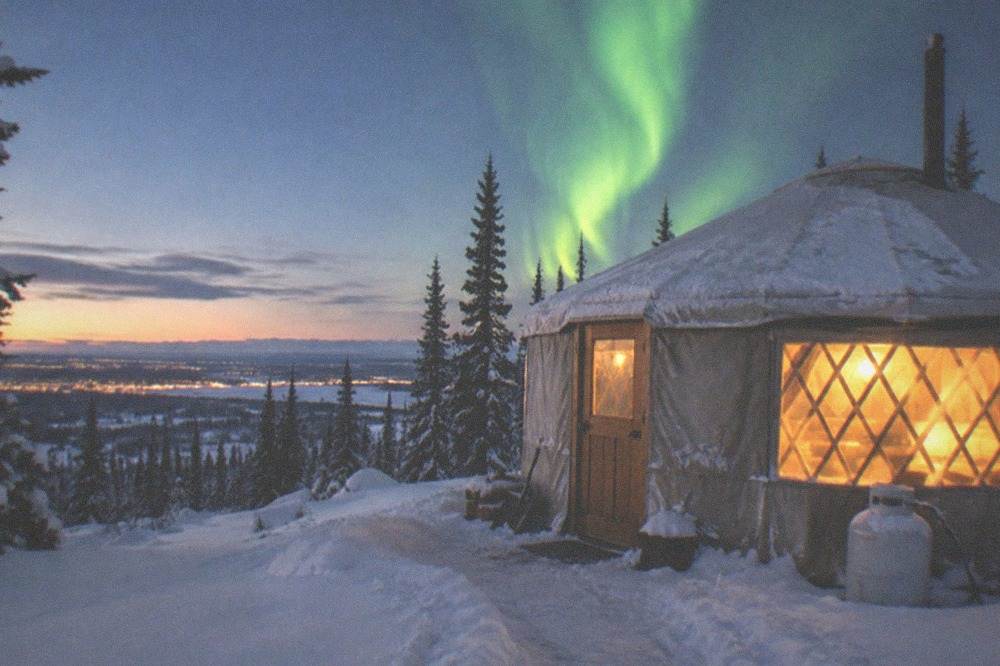
Cancellation terms matter more in aurora travel than in most bookings, because the product depends on a sky nobody controls. On this site's roster, the Lodge and Yurt Aurora Viewing listing carries free cancellation, as do the aurora lodges tour and the glass house experience at Cleary Summit; the guided lodge listing from the other operator does not, so check the terms on whichever listing you book before assuming. Our full guide to cloudy nights and cancellation policies walks through which operators rebook and which refund.
| Forecast situation | Best-matched format on this roster | Why |
|---|---|---|
| Moderate Kp, clear Interior sky | Lodge or yurt viewing, from $160 per person | Warm base, big north windows, arc overhead under the oval |
| Low Kp but fully clear night | Glass house at Cleary Summit, from $179 per person | Comfort for a long, patient watch for a faint display |
| Active Kp, patchy or moving cloud | Small-group chase, from $215 per person | Mobility is the whole product when sky is the variable |
| Storm-level Kp anywhere | Premium chase, from $335 per person | Maximize a rare event by reaching open sky fast |
| Full-day trip already planned | Arctic Circle trip with 3am aurora hunt, from $330 per person | Latitude plus a second viewing window after midnight |
One number that surprises many first-time visitors: the winter solstice gives Fairbanks only about 3 hours and 41 minutes of daylight, sunrise near 10:58am, sunset near 2:40pm, lengthening to about 10 hours by late February. Long nights mean more viewing hours per night, not a higher chance of clear sky; the two variables are independent, and conflating them is the most common planning error. The monthly breakdown of darkness, cold and activity sits in our guide on the best time to see the northern lights in Fairbanks.
How Do You Read The Forecast On The Night Itself Near Fairbanks?
On the night, use the live 3-hour Kp readings and the cloud loop together, stay out past midnight, and treat the first quiet hour as normal rather than a failure. Aurora bursts often arrive between midnight and 3am, forecasts update on a delay, and the most reliable instrument under the oval is a dark sky with a clear northern horizon and your own eyes on it.
The night-level method is unglamorous. Arrive at your viewing spot with darkness to spare. Check the current Kp block once, note it, and then stop refreshing for an hour. Watch the northern sky, but under the oval also watch directly overhead: Fairbanks displays frequently begin as a zenith arc or corona that a visitor staring at the horizon will miss entirely. Green is the common color, produced by oxygen at upper-atmosphere heights; a strong display can add red and purple at the fringes.
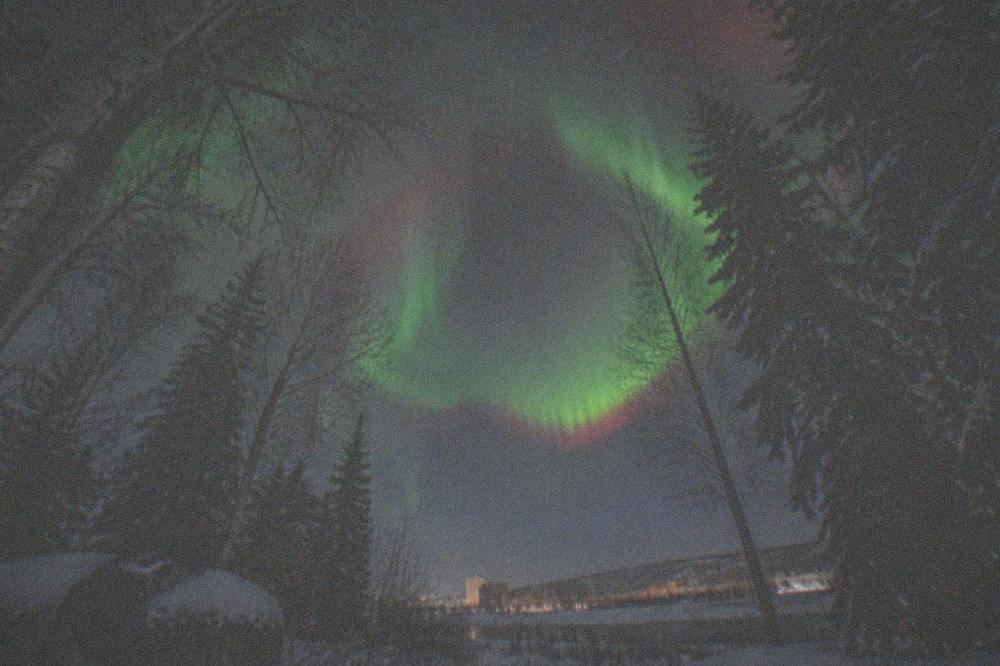
Photographers should read the forecast one way and the camera another. A Kp 2 night that looks faint gray to the eye can photograph as a saturated green curtain, because sensors collect light longer than the human retina does. The Fairbanks aurora photography tours guide covers camera settings and tripod logistics, including a tour with photo lessons and portraits included, 5 from 245 reviews and from $385 per person on the listing. Mobile phones, for what it is worth, now manage respectable aurora frames in night mode, which is one reason so many visitors come home with better pictures than memories of what their eyes saw.
Cold is the other forecast-independent variable. Interior winter nights run well below freezing, with January the coldest month on average, and standing still in the dark makes cold worse than any daytime chart suggests; layers, hand warmers and a snack matter more to a successful night than the difference between Kp 3 and Kp 4. Our what to wear guide for aurora tours goes through the layering system in full.
For the widest frame of the decision, the best northern lights tours in Fairbanks compares every format on this roster, and the choice between the state's two aurora cities, with the Interior's cloud statistics against the coast's, is settled in our Fairbanks versus Anchorage comparison.
The forecast, in the end, is a tool with a modest job. It tells you when the sky is likely to be active; it cannot tell you where you will be standing or whether the clouds will cooperate. Fairbanks' position under the auroral oval is what converts that modest tool into a reliable trip: the baseline activity here is high enough that clear, dark and patient covers most nights. The season-by-season breakdown and full tour roster at Fairbanks Aurora Borealis Tours picks up where this forecast guide leaves off. Bring the forecast, bring the layers, and give the sky more than one hour of your attention.
Common Questions About Reading The Aurora Forecast And Kp Index In Fairbanks
What is the Kp index?
The Kp index is a 0 to 9 planetary geomagnetic activity scale, computed from 3-hour measurements averaged across magnetometer stations worldwide. Higher values indicate stronger disturbance that pushes the auroral oval southward, expanding where aurora is visible.
What Kp do you need to see the northern lights in Fairbanks?
Because Fairbanks sits under the auroral oval at about 64.8 degrees north, visible aurora is often possible at Kp 2 to 4. Values of 4 and below, which would mean nothing at mid-latitudes, can produce a good display overhead in the Interior under clear skies.
Is the chena hot springs aurora forecast different from the Fairbanks forecast?
Geomagnetically, no. The resort is roughly 60 miles northeast of Fairbanks, a latitude difference irrelevant to an auroral oval hundreds of miles wide. The real variable is local cloud and valley fog in the Chena hills, so check the satellite loop rather than a separate magnetic forecast.
How accurate is the UAF aurora forecast?
The 3-day forecast is a strong guide to activity level and updates daily, but it is a probability, not a promise, and no aurora sighting is ever guaranteed. Kp is a global average, so local conditions such as the College K-index can differ from the planetary number on any given night.
Does a low Kp mean no aurora in Fairbanks?
No. Under the oval, even Kp 0 to 1 nights can show a faint arc or corona overhead when skies are clear. The forecast should always be paired with a cloud forecast, since cloud cover, not the Kp value, is the most common reason a Fairbanks aurora night fails.
Is 2026 a good year to see the northern lights in Fairbanks?
Solar Cycle 25 passed its sunspot peak around October 2024 and was declining through 2026, but geomagnetic activity, the more direct aurora driver, stayed relatively elevated, with a planetary Ap index averaging about 12.6 over the first eight months of 2026. Significant storms are expected to become less frequent after 2026, so the honest answer is still a good period, not a once-in-a-lifetime peak.