Best Time To See The Northern Lights In Fairbanks, Month By Month
Fairbanks sits at roughly 64.8 degrees north, directly beneath the average position of the auroral oval, and its viewing season runs a full eight months, from August 21 to April 21. That season runs from August 21 to April 21, and the differences between its months are larger than most first-time visitors expect.
Short answer
The best time to see the northern lights in Fairbanks is late August through mid-April. Midwinter offers the longest nights, but January lows average -16 to -17F, so late February and March balance darkness with milder cold. A three-night stay is widely cited as giving roughly a 90 percent chance of a sighting, weather permitting.
Fairbanks sits at roughly 64.8 degrees north, under the average position of the auroral oval, the ring of charged particles that circles the geomagnetic pole. That single geographic fact is why the city keeps an aurora season of eight full months, August 21 to April 21, while destinations farther south measure theirs in weeks. The question for a visitor is never whether the lights are possible here. The question is which month serves your tolerance for cold, your appetite for darkness, and the number of nights you can realistically give the sky.
When Is The Best Time To See The Northern Lights In Fairbanks?
The strongest all-around window runs from late February through early April, when nights still hold roughly ten or more hours of usable darkness, monthly highs climb back toward 25 to 27F, and the March equinox often coincides with heightened geomagnetic activity. Midwinter trades comfort for raw viewing hours, and the shoulder months of September and late August trade cold for shorter nights. No month guarantees a sighting.
The honest answer has three parts, and every experienced Fairbanks planner weighs them together. First, darkness: the aurora is a nighttime phenomenon here, so the months with the longest dependable dark stretch, November through February, give you the most hours on the bench per night. Second, cold: those same months are the coldest of the year in interior Alaska, and January in particular averages lows around -16 to -17F, which changes what you can wear, how long you can stand outside, and what kind of tour format makes sense. Third, activity: the sun does not turn on and off with the calendar, but geomagnetic disturbance has a statistical lean toward the equinoxes, a pattern researchers attribute to the Russell-McPherron effect, where Earth's magnetic field aligns favorably with the solar wind near the equinoxes.
Most travelers land on a compromise. Late February and March keep nearly all of midwinter's dark hours while returning the daytime thermometer to something you can actually enjoy, and March adds the equinox activity lean on top. The pages that follow break the season down month by month, explain how the darkness window actually works, and compare the tour formats that suit each part of the calendar. For a broader comparison of operators, our best northern lights tours in Fairbanks roundup covers the full roster side by side.
Why Fairbanks Gets An Eight-Month Aurora Season
Fairbanks' season runs August 21 to April 21 because the limiting factor is darkness, not solar activity. The city sits at about 64.8 degrees north under the auroral oval, so faint aurora is often overhead even on quiet nights, but it is only visible when the sky is dark enough. Outside the window, summer twilight and the midnight sun wash the sky out entirely, even when the aurora is physically active above you.
The official window comes from Explore Fairbanks, the destination marketing organization for the region, which pegs the season at August 21 to April 21. The boundary is set by astronomical twilight: from late April through late August, the sky at Fairbanks' latitude never gets dark enough for a faint green band to register against it. Inside the window, the odds of an active overhead aurora are broadly similar across all eight months. What changes month to month is how many dark hours you get each night, how cold you will be while you use them, and how likely the sky is to be clear on any given evening.
This is the part of Fairbanks aurora planning that surprises people who have chased the lights in Norway or Iceland, both of which sit at comparable latitudes but under the same oval. Fairbanks is inland, dry and cold, and its winter climate produces long stretches of clear, stable air that coastal aurora towns would envy. The trade-off is temperature: the same interior valley that keeps the skies clean also pools Arctic air, which is why the coldest months here are genuinely cold rather than merely uncomfortable.
A second consequence of the eight-month season is that it overlaps almost every other winter experience in interior Alaska. Dog sledding, ice fishing, hot springs soaks and ice museums all run inside the same window, which is why so many Fairbanks listings are combos rather than pure viewing products. If you are building the trip around the lights but want the day hours filled, the season structure works in your favor.
Those three listings span the main formats this site covers, and the format matters more than the month when it comes to comfort. The Chena Hot Springs combo mixes a resort visit with a lights hunt, the lodge and yurt product keeps you behind north-facing glass, and the premium chase tour moves you to wherever the sky is clearest on the night. Each suits a different part of the season, and the month-by-month breakdown below shows where each one earns its price.
Month By Month Aurora Viewing In Fairbanks, From August To April
No single month dominates. September and March pair decent darkness with the equinox activity lean, November through January maximize dark hours at the cost of serious cold, and late February through early April offer the most balanced mix of long nights, tolerable temperatures and daytime usability. August and April are shoulder months with the shortest useful nights inside the season window.
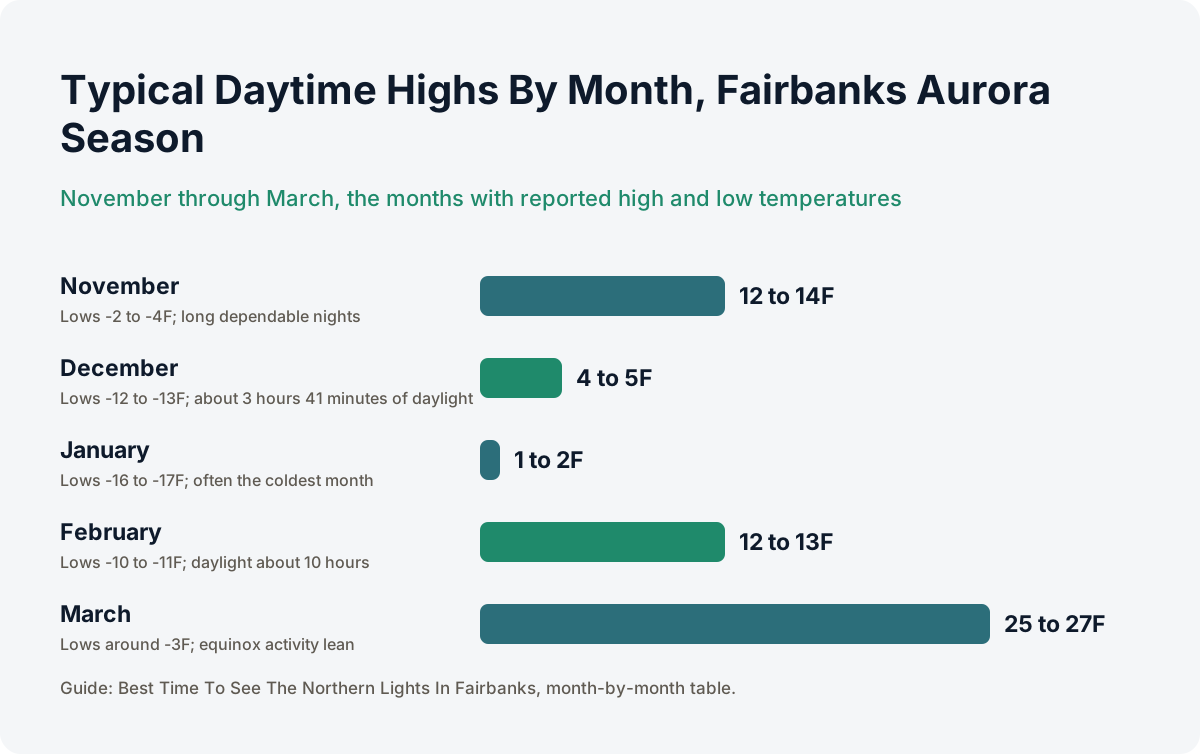
The table below reads the season the way a local would: by what the sky gives you, and what it charges you in return. Temperatures are the long-term monthly normals for the city, and the viewing notes draw on the season window and the widely reported activity patterns around the equinoxes.
| Month | Sky And Dark Hours | Typical Temperatures | The Trade-off |
|---|---|---|---|
| Late August (from Aug 21) | First dark-enough nights of the season; short usable window after midnight | Mild by interior standards | Darkness arrives late, so viewing nights start slowly |
| September | Nights lengthen quickly; equinox activity lean begins | Cool but not bitter | Popular month, so lodging and tours fill early |
| October | Full-length dark hours arrive | Cold settles in; first hard frosts | Transitional weather can be unsettled |
| November | Long dependable nights | Highs 12 to 14F, lows -2 to -4F | Real winter gear now required |
| December | Near the dark-hour maximum | Highs 4 to 5F, lows -12 to -13F | Solstice daylight shrinks to about 3 hours 41 minutes |
| January | The longest practical dark stretch of the year | Highs 1 to 2F, lows -16 to -17F; often the coldest month | Extreme cold limits standing outside |
| February | Dark hours still long; daylight back to about 10 hours by late month | Highs 12 to 13F, lows -10 to -11F | Midmonth cold snaps remain possible |
| March | Equinox activity lean; comfortable daytime touring | Highs 25 to 27F, lows around -3F | A strong all-around choice, and priced accordingly |
| Early April (to Apr 21) | Final nights of the season | Warming quickly | Twilight ends the season regardless of activity |
Reading the table, three clusters stand out. The first is the fall shoulder, September through October, which suits visitors who want aurora plus autumn color or early snow and who accept that the dark window each night is shorter than it will be six weeks later. The second is the midwinter core, November through January, which gives the most hours per night and the most brutal standing-around conditions. The third is the late-winter balance, February through early April, when the dark hours are still long but the thermometer retreats from its January lows and daytime activities become genuinely pleasant again.
One planning note for the late-season rows: some visitors use March or early April for a bigger itinerary, including the full-day Arctic Circle sign trip along the Dalton Highway. That road deserves respect in any month; per the Bureau of Land Management's Arctic Interagency Visitor Center, most national rental-car companies prohibit driving it or void insurance coverage, and winter conditions on it are a real hazard rather than a scenic inconvenience.
For travelers who want the full season context, including why the calendar boundaries sit exactly where they do, our Fairbanks aurora season dates guide covers the astronomy in more depth than this page needs to.
How Fairbanks Winter Darkness Sets The Viewing Window
On the winter solstice, December 21, Fairbanks receives about 3 hours 41 minutes of daylight, with sunrise around 10:58 to 10:59am and sunset around 2:39 to 2:41pm. By late February daylight has lengthened to about 10 hours, which still leaves roughly 14 hours of night. More darkness means more viewing hours per night, but it does not raise the chance of a clear sky on any particular evening.
The darkness arithmetic is the quiet superpower of a Fairbanks winter. A visitor in January has a window from late afternoon until mid-morning, in principle more than a dozen hours in which an active aurora overhead would be visible (see Aurora Timing Tonight). In practice, subarctic night does not stay fully dark across that whole span, and tours run a sensible slice of it, but the margin is enormous compared with, say, a September night where strong twilight eats the early hours. This is why the same Kp reading that produces a mediocre night in September can produce a memorable one in December.
| Benchmark Date | Daylight | Aurora Implication |
|---|---|---|
| August 21 | Season opens; short dark window after midnight | First possible viewing nights of the season |
| December 21 | About 3 hours 41 minutes; sunrise 10:58 to 10:59am, sunset 2:39 to 2:41pm | The year's longest stretch of potential darkness |
| Late February | About 10 hours (10 hours 1 minute by Feb 28) | Nights still run roughly 14 hours, with milder cold |
| April 21 | Season closes; twilight returns | Last viable viewing nights regardless of activity |
The important caveat, and one that marketing copy often blurs, is that longer nights change the number of hours you can watch, not the likelihood of clear sky. Fairbanks' clear-sky odds are a weather question, answered night by night, and the widely cited planning figure is that the aurora is visible on roughly four of five clear nights during the season. Darkness stacks your hours; clear sky decides whether those hours pay out.
If the cold side of this arithmetic worries you, warmth-focused formats exist. The hot springs and lodge products reviewed later in this guide were built precisely for the months when standing on a hilltop stops being fun.
A reasonable way to use this section is to pick your darkness budget first, then shop formats inside it. A December or January visitor who wants long hours but not long exposure should be looking at heated structures and vehicles, not open hilltops. A March visitor can stand outside comfortably for most of the night, which widens the choice to every format on the roster.
How The Kp Index And The UAF Forecast Shape An Aurora Night
The Kp index is a 0 to 9 global scale of geomagnetic disturbance, averaged from magnetometer stations worldwide, and higher values push the auroral oval southward. Fairbanks sits under the oval at about 64.8 degrees north, so visible aurora is often possible here at Kp 2 to 4, values that would show nothing at mid-latitudes. The index is a global rather than purely local predictor, so local forecasts matter more than the raw number.
The forecast most Fairbanks visitors actually use comes from the University of Alaska Fairbanks Geophysical Institute, which publishes a 3-day forecast updated daily, plus a 27-day outlook, built on NOAA geomagnetic data. The institute's program has run for decades, and it is the reference local operators and lodges check alongside their own weather apps. The right workflow on the ground is layered: check the Kp forecast for activity, check the Fairbanks cloud cover for sky, and only then decide whether to go out, where to stand, and whether to drive north or south of town.
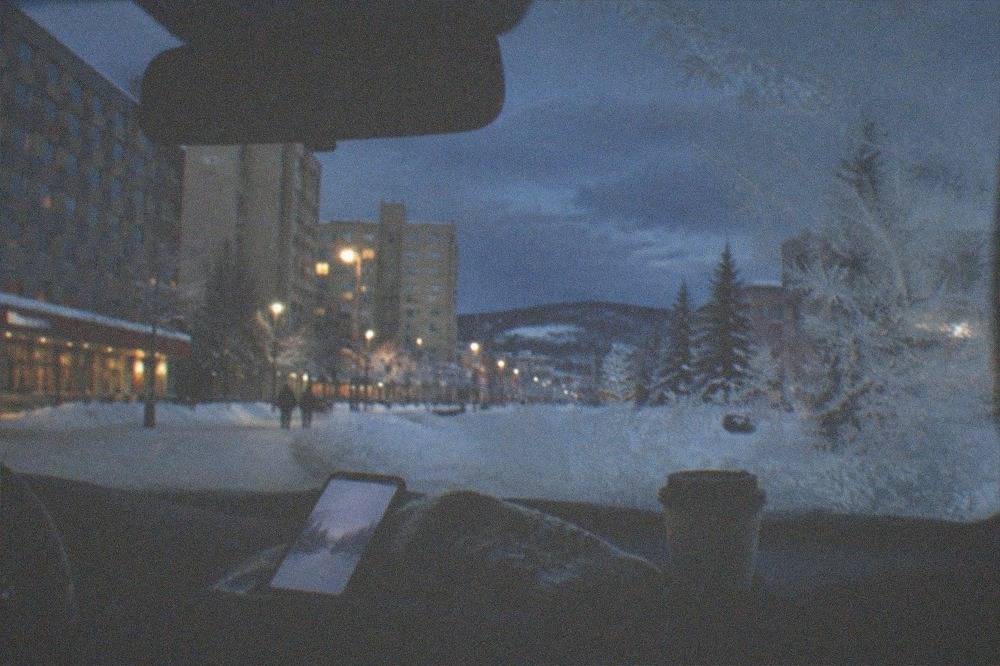
Two practical points follow from how the index works. First, a moderate Kp reading should never discourage a Fairbanks night out: at this latitude, quiet-condition aurora is a common overhead event, and the locals' phrase for it is that the lights show on most clear, active-enough nights, not only during storms. Second, a high Kp reading guarantees nothing on a cloudy evening, which is why chasing tours, products that relocate toward clear sky, exist at all.
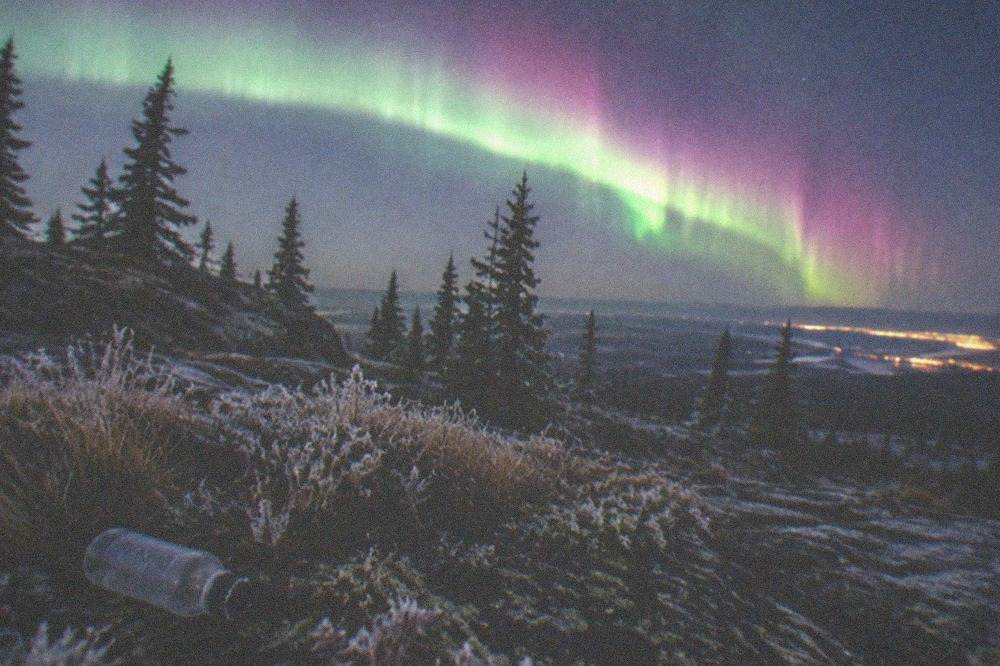
For a fuller walkthrough of reading the numbers, including how Kp maps to what you will actually see, our Fairbanks aurora forecast and Kp index explained guide goes deeper than this timing page can.
The Odds Of Seeing The Aurora From Fairbanks, By Stay Length
The most commonly cited Fairbanks figure, repeated across the destination's own season materials, is that a stay of three or more nights during the season gives roughly a 90 percent chance of seeing the aurora, weather permitting, and that the lights are visible on about four of five clear nights. The figure is a widely reported planning statistic, not a guarantee, and it is not this site's own data.
The number deserves its careful framing. It is an honest way of saying that over a few nights, the combination of overhead activity and at least one clear window almost always pays out somewhere in interior Alaska. What it quietly assumes is that you are here long enough to let the sky rotate through its weather. A single-night visitor is rolling one set of dice; a three-night visitor is rolling three, and the difference is the entire argument for building the trip around stay length rather than around a specific date.
| Stay Length | Commonly Cited Odds | Planning Note |
|---|---|---|
| One night | No single-night figure is widely cited; clear nights show the aurora roughly four times in five | One clear, active night is usually enough, but one cloudy night is a total loss |
| Two nights | Better than one, still exposed to a stalled weather pattern | Adds a spare evening without adding much cost |
| Three or more nights | Roughly 90 percent chance of a sighting during the season | The figure behind most Fairbanks itineraries |
Stay length is also where tour format earns its keep. A one-night visitor who wants to spend that night well is the natural customer for a premium chase product, which relocates toward clear sky rather than waiting for it. On this roster, the Premium Aurora Viewing Tour runs from $335 per person and carries a 5 rating from 789 reviews, the largest review pool of any chase-format listing here; the premium aurora viewing tour details page covers what that price includes, and you can also Check availability on the operator's live listing.
The solar-cycle picture is worth internalizing before you pick dates. The honest read is not that 2026 is the best aurora year ever, and no one tracking the numbers claims that. The honest read is that the sunspot peak has passed while geomagnetic disturbance has held above recent norms, which makes the coming seasons a good window without making them a once-in-a-lifetime one.
Equinoxes Or Midwinter: Which Fairbanks Months Win?
The equinox months, September and March, carry a statistical lean toward stronger geomagnetic activity through the Russell-McPherron effect, while midwinter carries the longest dark hours. March usually wins the combined contest: it keeps most of the darkness, adds the equinox lean, and lifts daytime highs to 25 to 27F against January's 1 to 2F, all with lows around -3F instead of -16 to -17F.
The equinox lean is real but easy to overweight. It is a tendency measured across many seasons, not a switch that turns displays on in late September and late March, and a strong substorm can light the sky over Fairbanks in any month of the window. What the lean reliably buys is a modestly better chance that a given active night falls inside your stay. Midwinter buys something different: sheer quantity of dark hours, which converts every active interval of the night into a possible sighting rather than only the ones after 10pm.
The coldest-season case needs a temperature warning attached. January is Fairbanks' coldest month on the long-term normals, with lows around -16 to -17F, and the winter of 2025-26 went beyond the normals entirely, averaging nearly -14F across December to March and setting the city's coldest winter on record, per the National Weather Service. Visitors who book deep January on the theory that darkest means best should plan for the cold as seriously as for the sky, starting with our what to wear on a Fairbanks aurora tour guide.
Chena Hot Springs For Warm Viewing In The Coldest Months
Chena Hot Springs Resort sits about 60 miles northeast of Fairbanks, a drive of one to two hours, with an outdoor hot springs pool open 7am to 11:45pm daily year-round and an Aurora Ice Museum held at a constant 25F. Pairing a resort soak with an evening lights hunt turns the coldest months from an endurance test into a comfortable night, and the combo is the featured tour on this site.
The resort is the region's best answer to the January problem. The official Chena Hot Springs site describes a 60-mile drive up Chena Hot Springs Road, with sources citing 56.5 to 61 miles depending on route and measure, and the hot springs pool itself runs long hours that conveniently overlap the aurora window. The Aurora Ice Museum, billed by the resort as the world's largest year-round ice environment, was built from more than 1,000 tons of ice and snow and holds 45-minute guided tours year-round, typically at 11am, 1pm, 3pm, 5pm and 7pm, at resort general-admission prices of $20 for adults and $15 for children. Those resort prices are separate from any tour listing price, and the two should never be confused.
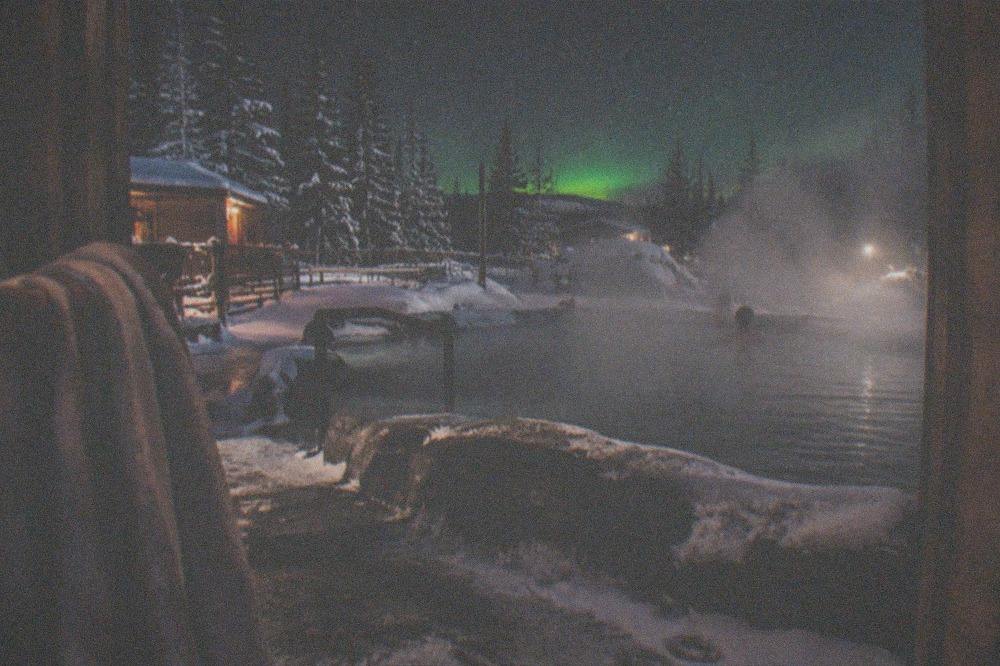
The tour that ties it together on this roster is the Hot Springs Combo, Chena Resort listing, from $275 per person, carrying a 4.5 rating from 1,342 reviews, the largest review count of any product on this site. It bundles resort access with aurora viewing, which makes it the natural fit for November through February, the months when a heated day activity and a warm soak matter most. The cancellation terms are not stated on the listing, so check them on the live listing before booking rather than assuming.
For a deeper comparison of the resort options, including its own in-house aurora tour up to Charlie Dome, our Chena Hot Springs aurora tours guide separates the resort's own products from third-party Fairbanks combos, and the Aurora Ice Museum at Chena Hot Springs guide covers the museum on its own terms.
How Many Nights To Stay And What To Pack For Fairbanks
Plan on at least three nights in Fairbanks, which the commonly cited figure puts at roughly a 90 percent chance of a sighting during the season, and pack for the specific month: deep-winter visits need serious insulated layers for lows around -16 to -17F in January, while March visits at highs of 25 to 27F can travel far lighter. Format matters as much as clothing, and heated or lodge-based tours absorb much of the cold problem.
The packing question is really a month question. A late-August or September visitor is packing for cool nights. A January visitor is packing for survival-adjacent cold, and the difference between those two suitcases is why the month-by-month table earlier in this guide belongs next to your packing list rather than in isolation. The month also picks your format. Open hilltop viewing is a March pleasure and a January gamble, while the lodge products keep the experience behind glass.
The lodge side of the roster is the clearest example. The Lodge and Yurt Aurora Viewing listing runs from $160 per person with a 4.5 rating from 34 reviews, and it includes transport from major hotels and large north-facing windows, which is exactly the package a December or January visitor wants when the outside option stops being fun. It carries free cancellation on the listing, a meaningful detail for a trip whose success depends on weather you cannot forecast at booking time.
Whatever month and format you settle on, the timing logic stays the same: pick your darkness budget, respect your cold tolerance, give the sky three or more nights where the calendar allows, and let the forecast make the final call on which evening you actually go out. The rest of this site, starting from Fairbanks Aurora Borealis Tours, is organized around exactly that decision.
The trio above covers the three timing strategies in one place: the heated combo for the coldest months, the glass-sided lodge for dark-hour comfort, and the premium chase for making a single night count. Match the listing to the month you chose from the table, and the timing question answers itself.
Common Questions About Timing The Northern Lights In Fairbanks
When can you see the northern lights in Fairbanks?
The official season runs August 21 to April 21. Outside that window, summer twilight and the midnight sun prevent viewing even when the aurora is active overhead, so there is no aurora viewing in May, June or July.
Is March a good month for the northern lights in Fairbanks?
Yes. March keeps long nights, averages highs of 25 to 27F with lows around -3F, and sits near the equinox, when geomagnetic activity is statistically leaner. Many experienced visitors consider it the best-balanced month of the season.
How cold is Fairbanks during aurora season?
It depends heavily on the month. November averages highs of 12 to 14F, January drops to highs of 1 to 2F and lows of -16 to -17F, and March moderates to highs of 25 to 27F. The winter of 2025-26 averaged nearly -14F and was the city's coldest on record.
How many nights should I stay in Fairbanks for the aurora?
Three or more. The commonly cited figure is that a three-night stay during the season gives roughly a 90 percent chance of a sighting, weather permitting, with the aurora visible on about four of five clear nights.
Do the northern lights appear every clear night in Fairbanks?
Not every night, but close to it on paper: the widely reported figure is visibility on about four of five clear nights during the season. The aurora is a natural phenomenon and no tour or date can guarantee a sighting.
Is a high Kp number needed to see the aurora from Fairbanks?
No. Fairbanks sits under the auroral oval at about 64.8 degrees north, so visible aurora is often possible at Kp 2 to 4, values that would show nothing at mid-latitudes. The index is global, so pair it with the local forecast and cloud cover.