Is Anchorage Or Fairbanks Better For The Northern Lights?
Fairbanks sits at roughly 64.8 degrees north, directly under the auroral oval, while Anchorage lies well to the south, and that single geographic fact shapes almost every part of the northern lights comparison between Alaska's two best known cities.
Short answer
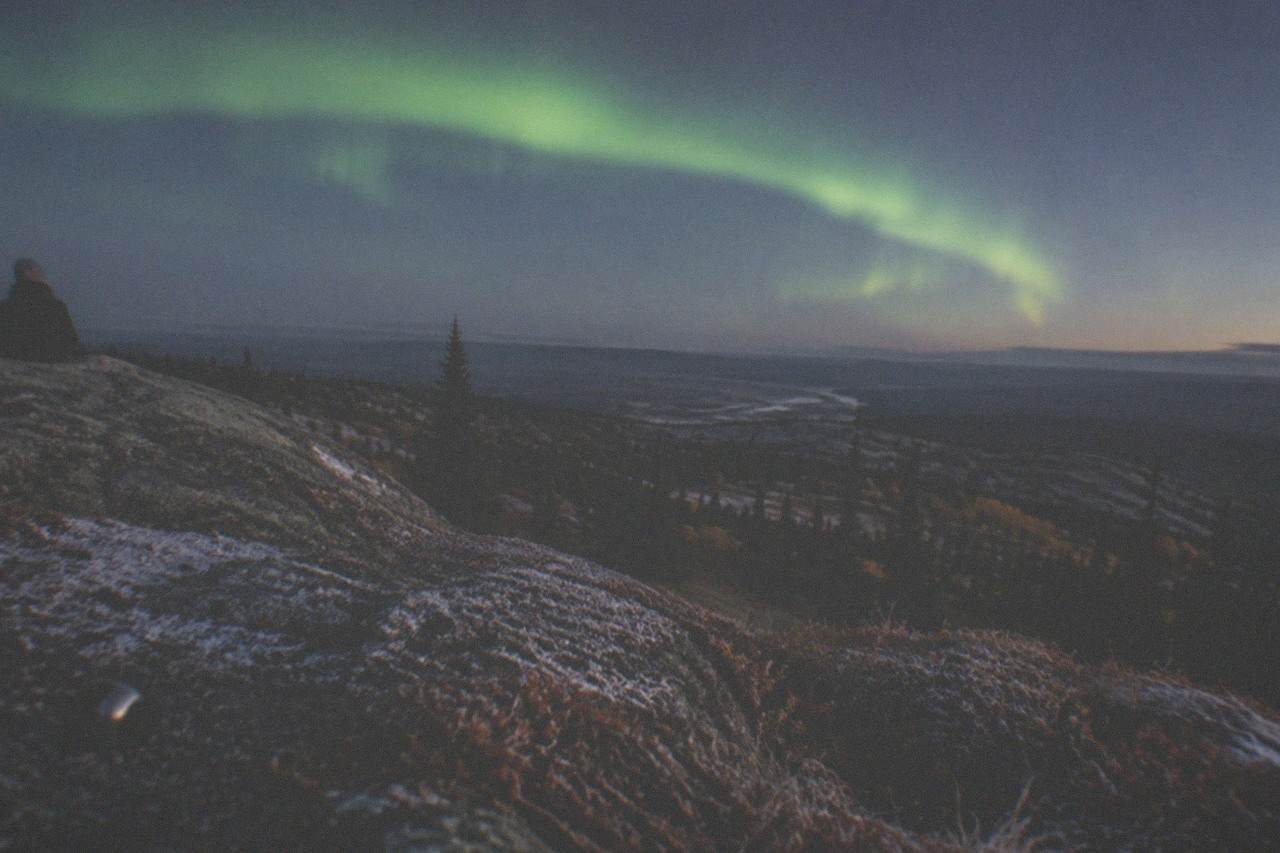
Fairbanks is generally the better base. It sits at about 64.8 degrees north under the auroral oval, so displays are often overhead rather than low on the horizon, and its season runs August 21 to April 21. Anchorage can still produce good viewing on active nights, but the same geomagnetic event usually reads better from Fairbanks.
Is It Better To See The Northern Lights In Anchorage Or Fairbanks?
For northern lights specifically, Fairbanks is the stronger choice of the two cities. It sits at roughly 64.8 degrees north, directly under the auroral oval, which means visible activity is often possible even at low Kp values of roughly 2 to 4. Anchorage, further south, generally needs stronger geomagnetic activity for a comparable display, and its lights typically hang lower on the northern horizon.
That is the short version, and it is grounded in geography rather than marketing. The auroral oval is a ring of auroral activity centered on the geomagnetic pole, and it drifts. When the geomagnetic field is quiet, the oval sits roughly over Fairbanks' latitude. When a storm arrives, the ring expands southward and cities far below it start to see the lights too. This is why the same night can deliver an overhead corona in Fairbanks and a dim green band near the horizon in a mid-latitude city, or in Anchorage, something in between the two.
The practical difference compounds. Because Fairbanks is under the oval in ordinary conditions, the UAF Geophysical Institute forecast, which is built on the Kp index and updated daily, is a reliable planning tool there: a modest forecast is often enough. From Anchorage, the same tool reads differently, since a viewer further south generally needs a higher Kp number before the oval reaches overhead.
There is a second, quieter advantage. Fairbanks' official aurora season runs from August 21 to April 21, per Explore Fairbanks, the destination's official marketing organization, and that window is a function of darkness rather than solar physics. Interior Alaska gets long, reliably dark nights through the core winter months. A viewer who spends three or more nights in Fairbanks during the season is widely reported to have roughly a 90 percent chance of seeing the aurora, weather permitting, with the lights visible on about four of five clear nights. That figure is commonly cited across sources, including Explore Fairbanks, and it reflects the compounding value of multiple dark nights in one place.
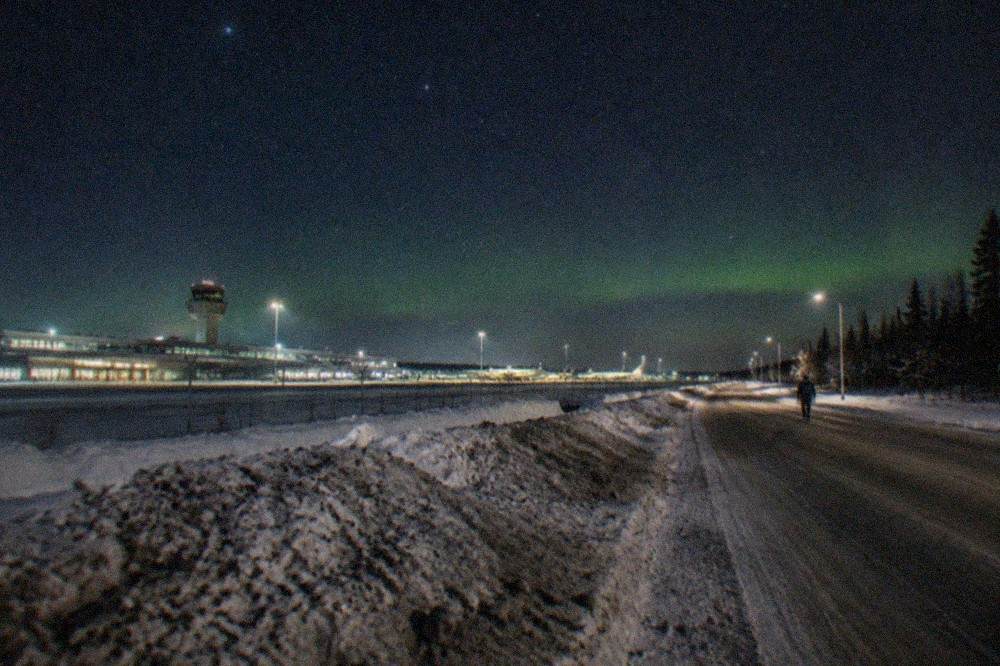
Anchorage is not a bad aurora city. On an active night, especially during the equinox periods when geomagnetic activity tends to run higher, residents and visitors there do see strong displays, and the city's own hilltops and coastal areas offer open northern sightlines. The honest framing is this: Anchorage can deliver the northern lights, Fairbanks is built for them. Fairbanks or Anchorage for the northern lights? Here is how the two cities stack up, section by section.
| Question | Fairbanks | Anchorage |
|---|---|---|
| Position relative to the auroral oval | Directly beneath it at roughly 64.8 degrees north | Well south of it, lights usually appear on the northern horizon |
| Typical forecast needed for a display | Low to moderate activity, Kp roughly 2 to 4 can be visible | Generally needs stronger activity for a comparable overhead show |
| Official season window cited for the area | August 21 to April 21 | Long dark winters, but no comparable city-specific window is verified here |
| Best known viewing setup | Lodges, hilltops, glass houses and chase tours | Hilltops and coastal areas with open northern views, commonly described in general terms |
Why Fairbanks Sits Under The Auroral Oval And Anchorage Does Not
The auroral oval is a ring of auroral activity that, in quiet conditions, hovers near 64 to 66 degrees north. Fairbanks, at roughly 64.8 degrees north, sits beneath it, so even modest geomagnetic activity can produce a visible display. Anchorage, lying hundreds of miles to the south, sits below the ring, so its displays generally depend on the oval expanding toward it.
The Kp index, the 0 to 9 planetary geomagnetic scale behind most aurora forecasts, measures global disturbance, not local sky conditions. A Kp of 2 to 4 is unremarkable on paper, yet from Fairbanks it is frequently enough to put visible aurora in the sky, because the oval is already overhead. The same number read from a mid-latitude city suggests nothing at all. Anchorage occupies the middle ground: strong enough events push the oval far enough south to matter there, and Kp 5 and above, roughly storm-level activity, is the kind of event that tends to make Anchorage's local news.
This is also why the forecast behaves differently for the two cities. The Geophysical Institute's 3-day and 27-day forecasts are tuned to the region and refreshed daily, and from Fairbanks they read as a dependable schedule of probabilities. A viewer in Anchorage using the same page has to mentally add a buffer: take the forecast level, and ask whether the oval would reach that far south.
None of this makes Anchorage's skies bad. It makes them conditional. A strong storm night in Anchorage can be genuinely spectacular, and coastal viewers sometimes catch the lights over the water, which is a composition Fairbanks' boreal ridgelines cannot offer. But conditional viewing is a different product from routine viewing, and the traveler whose whole trip is built around the aurora should know which one they are buying.
The compounding effect on trip length matters too. Since Fairbanks sees visible aurora on roughly four of five clear nights in season, each additional night there adds real probability. A three-night stay is the commonly cited threshold for roughly 90 percent odds, weather permitting, and that statistic belongs to a city where the oval is already overhead. Stretching those same three nights in Anchorage does not compound the same way, because the base rate of overhead activity is lower to begin with.
What Aurora Viewing From Anchorage Actually Involves
Anchorage aurora viewing usually means driving out of the city to a dark hilltop or coastal viewpoint and watching the northern horizon. Because the oval sits north of the city, displays tend to appear as bands low in the sky rather than overhead, and viewers there commonly plan around stronger forecast nights rather than treating any clear dark night as a candidate.
In general, honest terms: Anchorage's viewing culture is real but opportunistic. Local photographers chase clear skies to the north and east of the city, and on active nights, particularly around the equinoxes, they get results. The city's own light dome is a factor, which pushes serious viewers toward hill parks and coastal flats outside town. Winter cloud cover off the inlet is a known frustration, and it is the reason many Anchorage-based aurora plans become driving plans.
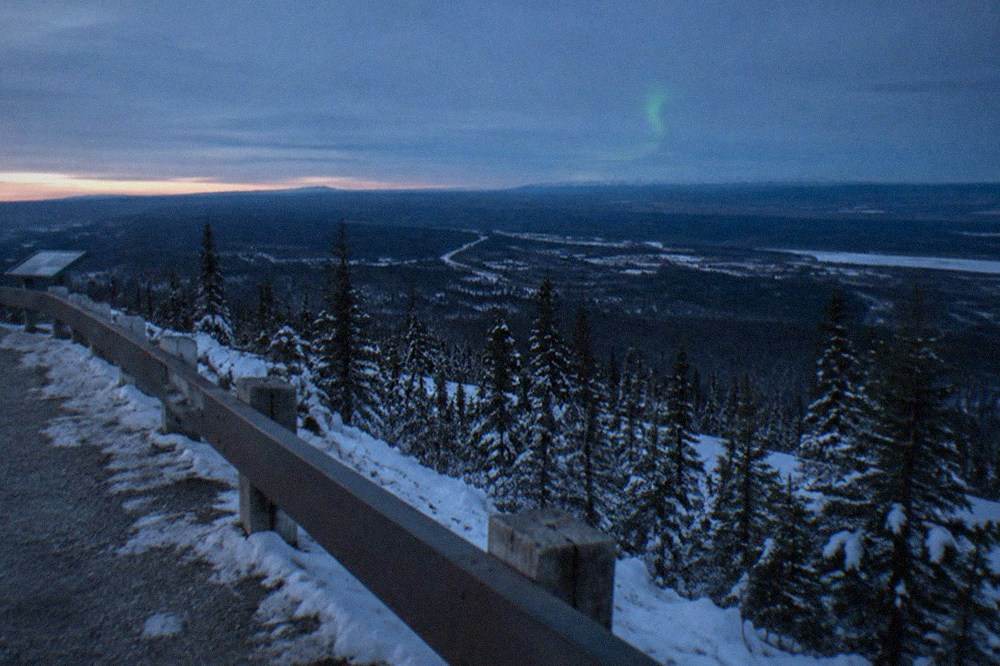
What Anchorage cannot easily replicate is the infrastructure Fairbanks has built for this exact purpose. Interior Alaska supports a genuine aurora tourism economy: heated lodges with large north-facing windows, glass houses on hilltops, guided chase tours that drive toward clear sky, and resort-based viewing at Chena Hot Springs. Anchorage's aurora scene runs on personal vehicles and local knowledge, while Fairbanks' runs on purpose-built product.
That difference shows up in how a night actually unfolds. From Fairbanks, a visitor can sit indoors at a lodge with a direct northern view, hot drink in hand, and wait in comfort. The aurora does not require standing in a wind-scoured parking lot at midnight. From Anchorage, comfort viewing of that kind is scarce, and the standard experience is closer to a self-driven stakeout. Neither is wrong, but they suit different travelers, and the difference is worth naming before a flight is booked.
The planning math also differs. Anchorage trips are often built around a strong forecast: a traveler there may watch the Kp index for days and time a night out around a predicted storm. Fairbanks trips are built around darkness: pick any clear stretch in season, stack a few nights, and let the odds work. The first approach yields spectacular results when it works. The second yields results more often.
Tour Costs And Viewing Formats From Fairbanks
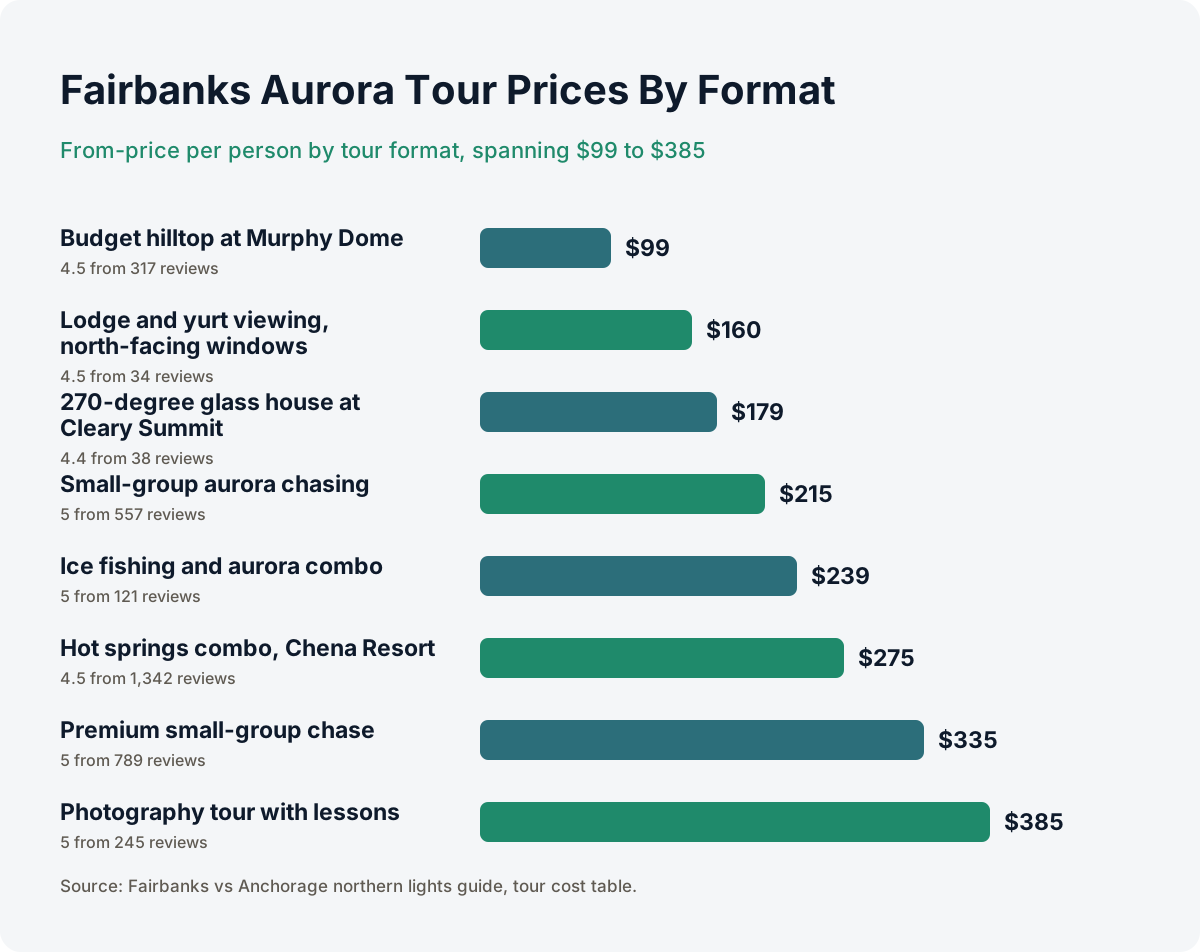
Fairbanks aurora tours run from $99 to $385 per person depending on format, from a budget hilltop at Murphy Dome to a photography tour with lessons and portraits. The most reviewed option on this site is the Chena Hot Springs combo, from $275 per person, rated 4.5 across 1,342 reviews, which pairs the resort with a night of aurora viewing.
Anchorage, by contrast, does not offer a comparable ecosystem of dedicated aurora tours on this site's roster; the purpose-built product lives in the Interior. That is worth weighing when comparing the two cities, because a traveler who does not want to self-drive to a dark hilltop at midnight in winter is choosing between cities and formats at the same time.
| Format | Listing | From price per person | Rating and reviews |
|---|---|---|---|
| Budget hilltop viewing at Murphy Dome | Budget Hilltop, Murphy Dome | $99 | 4.5 from 317 reviews |
| Lodge and yurt viewing with north-facing windows | Lodge and Yurt Aurora Viewing | $160 | 4.5 from 34 reviews |
| Private tour with hotel pickup | Private Tour, Hotel Pickup | $160 | 4.4 from 18 reviews |
| 270-degree glass house at Cleary Summit | 270-Degree Glass House, Hot Drinks | $179 | 4.4 from 38 reviews |
| Small-group aurora chasing | Small-Group Aurora Chase | $215 | 5 from 557 reviews |
| Ice fishing and aurora combo | Ice Fishing and Aurora Combo | $239 | 5 from 121 reviews |
| Hot springs resort combo | Hot Springs Combo, Chena Resort | $275 | 4.5 from 1,342 reviews |
| Premium small-group chase | Premium Aurora Viewing Tour | $335 | 5 from 789 reviews |
| Photography tour with lessons and portraits | Photo Lessons and Portraits Included | $385 | 5 from 245 reviews |
The spread tells its own story. A visitor can enter Fairbanks aurora tourism at under $100 or spend close to $400, and the differences are structural, not cosmetic. Hilltop and lodge viewing is stationary: you are taken somewhere dark with a good horizon and you wait in place. Chasing is mobile: the guide drives toward the clear sky, which is a meaningful advantage in a region where coastal and valley cloud can sit in one place all night. Photography formats add instruction and portraits to the viewing.
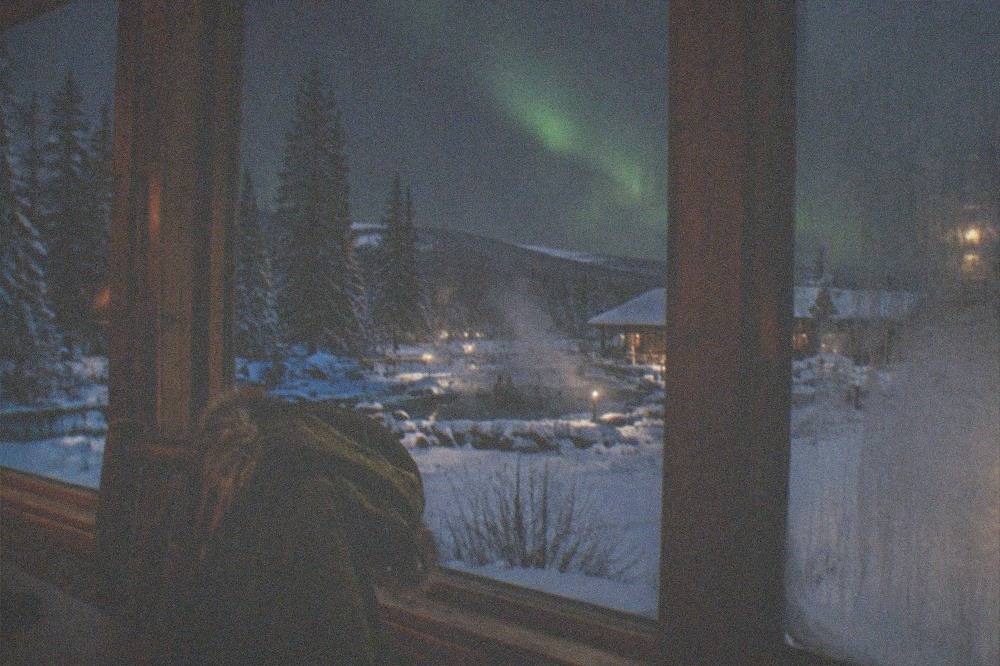
The Chena Hot Springs combo deserves its own paragraph, because it is the one product that bundles an entire destination into the aurora night. The resort sits roughly 60 miles northeast of Fairbanks, about a 1 to 2 hour drive via Chena Hot Springs Road, and the resort's own pages describe a full complex: an outdoor hot springs pool open 7am to 11:45pm daily year-round, and the Aurora Ice Museum, held at a constant 25F, with 45-minute guided tours where adults pay $20 and children $15. The combo tour from Fairbanks ties that resort visit to a night of aurora viewing, and with 1,342 reviews behind a 4.5 rating, it has the deepest review pool on this entire roster.
For travelers weighing Anchorage against Fairbanks, that single listing illustrates the gap. Anchorage's strength is that it is Alaska's transport hub, with the state's biggest airport and easy access to Kenai and Mat-Su viewpoints. Fairbanks' strength is that dedicated, reviewed, bookable aurora infrastructure exists there, at every price point from a $99 hilltop to a $385 photography night. The city that is easier to fly into is not the city built for the thing you are flying in for.
Winter Weather And Night Length In Fairbanks Compared With Anchorage
Fairbanks winters are colder and darker than Anchorage's, and both facts favor aurora viewing. Midwinter brings roughly 3 hours 41 minutes of daylight on December 21, lengthening to about 10 hours by late February. Interior cold also means often-stable, clear inland air, while Anchorage's coastal position commonly brings maritime cloud, though this site has no verified Anchorage weather statistics to print.
The temperature facts for Fairbanks are sourced from long-term monthly normals. Average January highs run around 1 to 2F with lows around -16 to -17F, often the coldest month; December highs sit around 4 to 5F with lows near -12 to -13F; November and February are milder, with February highs around 12 to 13F and lows near -10 to -11F, and March highs around 25 to 27F. The winter of 2025-26, December through March, was Fairbanks' coldest on record, averaging nearly -14F, per the National Weather Service. None of that is a reason to avoid the Interior, but it is a reason to plan clothing seriously; the dedicated guide on what to wear on a Fairbanks aurora tour covers that decision in full.
| Month | Fairbanks average high | Fairbanks average low | Night length context |
|---|---|---|---|
| November | 12 to 14F | -2 to -4F | Long nights, lake-effect cloud risk early in the month |
| December | 4 to 5F | -12 to -13F | About 3 hours 41 minutes of daylight on December 21 |
| January | 1 to 2F | -16 to -17F | Often the coldest month, maximum darkness |
| February | 12 to 13F | -10 to -11F | Roughly 10 hours of daylight by late February, still deep night viewing hours |
| March | 25 to 27F | around -3F | Milder days, strong late-season viewing |
For Anchorage, this site's research did not verify specific climate normals, so the honest comparison stays general: Anchorage winters are commonly known to be milder and snowier, and the coastal influence brings more variable cloud. Cloud, not cold, is the aurora viewer's real enemy, and that cuts in both directions. Fairbanks' interior position often means cold, stable, transparent air, but interior ice fog and valley cloud happen too, and a chase tour exists precisely because sitting in one spot does not always work.
One caution belongs here for anyone comparing the cities by driving themselves: winter roads in Alaska are a real planning subject, covered in detail in the Fairbanks winter driving conditions guide. A traveler flying into Anchorage and driving north, or heading out of either city to a dark viewpoint, faces the same advisories: snow, refreeze and reduced visibility. The difference is that in Fairbanks, a bookable heated option exists for nearly every budget, so self-driving at night is a choice rather than a necessity.
How Many Nights To Stay In Fairbanks For A Real Chance
Three nights is the widely cited minimum for a roughly 90 percent chance of seeing the aurora in Fairbanks during the season, weather permitting, with the lights visible on about four of five clear nights. Anchorage trips have no comparable verified statistic, and stacking extra nights there does not compound the same way, because fewer nights qualify as candidate viewing nights to begin with.
The math behind the three-night rule is simple geography plus patience. Each Fairbanks night offers a real chance, and cloud rather than the aurora itself is the usual spoiler, so consecutive nights are effectively repeated draws. That is why multi-night product exists: lodge-based viewing, where the room faces north and the aurora can appear over the trees while the guest is still in a heated building. The lodge and yurt aurora viewing option on this roster runs from $160 per person, rated 4.5 from 34 reviews, with transport from major Fairbanks hotels and large north-facing windows as its core feature.
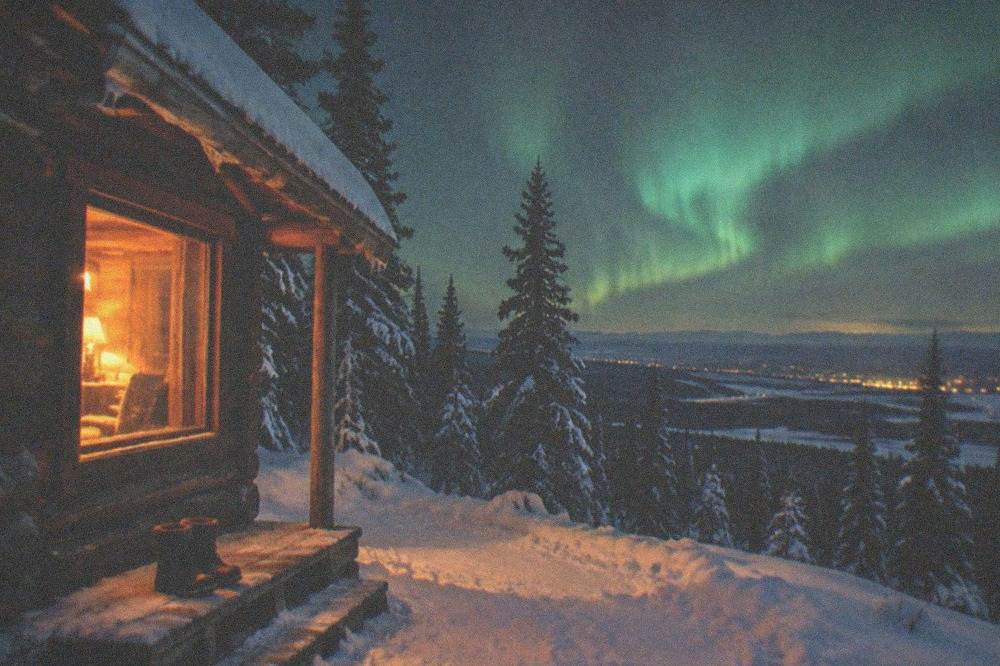
Travelers coming from an Anchorage-anchored trip should read that number differently. If the plan is two nights in Anchorage and one in Fairbanks, the aurora budget is effectively one night, and one night is a coin flip shaped by weather. The better structure for an aurora-first trip is to treat Anchorage as a stopover, if at all, and give Fairbanks the multi-night block. The question of how many days to stay in Fairbanks gets its own treatment elsewhere on this site, but the short version is that three nights is the floor, not the ideal.
Two structural notes on lodging in Fairbanks itself: staying outside the core reduces light pollution, and some lodges are built specifically for northern viewing. The where to stay in Fairbanks for northern lights guide breaks down the areas. None of that infrastructure exists at scale in Anchorage, which is a city organized around being a hub, not a viewing destination.
Should You Combine Anchorage And Fairbanks On One Alaska Trip?
Combining both cities works well, and many travelers do it, but the aurora nights should all sit in Fairbanks. Anchorage rewards a day or two for its own sights and access to Kenai fjords country, while Fairbanks deserves the dark, multi-night block where the roughly 90 percent, three-night figure applies. Flying between the two takes under an hour; driving takes a long, scenic day.
The two cities are genuinely different products. Anchorage is a coastal city with mountains on the horizon, a rail depot, and a food scene; Fairbanks is an interior town whose winter economy orbits the aurora, with hot springs, dog sledding and ice museums built around it. A traveler with ten days can honestly do both, and the which is nicer, Fairbanks or Anchorage comparison covers the non-aurora side of that question in detail (see Fairbanks Vs Anchorage).
The aurora-first version of that itinerary is simple. Arrive Anchorage, spend a day, fly or drive north, and give Fairbanks at least three nights inside the August 21 to April 21 window, with each night backed by a lodge, glass house or chase booking. Then, if the schedule allows, return south for coastal daylight sights. The reverse order works too, provided the Fairbanks block lands on clear, moon-flexible dates; the best time to see the northern lights in Fairbanks guide covers which weeks earn their reputation.
| Traveler situation | Better base | Why |
|---|---|---|
| Aurora is the whole point of the trip | Fairbanks | Sits under the oval, purpose-built viewing product at every price point |
| One active storm night forecast, flexible schedule | Either can work | Strong events push the oval south; Anchorage hilltops can deliver |
| Short trip, two nights or fewer | Fairbanks | Every night needs to be a candidate night, and more of them qualify there |
| Family or comfort-first viewers | Fairbanks | Heated lodges, glass houses and resort combos versus self-driven hilltops |
| Alaska highlights trip, lights as a bonus | Anchorage plus a Fairbanks block | Hub access to the south, with a dedicated aurora block in the Interior |
For the booking side of that Fairbanks block, the three formats that best match a multi-night plan are the lodge and yurt option for stationary comfort, the premium chase tour for mobility toward clear sky, and the Chena Hot Springs combo for a resort night wrapped around the viewing. Together they cover the realistic range: a night in place, a night on the move, and a night with a destination attached. Anchorage's role in the trip stays what it has always been, the front door, while Fairbanks Aurora Borealis Tours and the roster behind this site handle the part of the trip the traveler actually flew all this way for.
Common Questions About Fairbanks Versus Anchorage Northern Lights
Is It Better To See Northern Lights In Anchorage Or Fairbanks?
Fairbanks is generally better for northern lights. It sits at roughly 64.8 degrees north under the auroral oval, so visible displays are often possible at Kp values of 2 to 4, and its season runs August 21 to April 21. Anchorage, further south, usually sees the lights lower on the horizon and depends on stronger activity.
Can You See The Northern Lights From Anchorage Itself?
Yes, on active nights, especially when geomagnetic storms push the auroral oval southward. In general terms, Anchorage viewing usually means a dark hilltop or coastal spot outside the city, with the display appearing as a band on the northern horizon rather than overhead. This site has no verified Anchorage-specific sighting statistics.
How Many Nights Should I Stay In Fairbanks To See The Aurora?
Three nights is the widely cited minimum for a roughly 90 percent chance of seeing the aurora during the season, weather permitting, with the lights visible on about four of five clear nights. It is a commonly reported figure from the destination's season page, not a guarantee, and every booking on this site treats the aurora as a natural phenomenon.
Is Fairbanks Colder Than Anchorage In Winter?
Yes, generally. Fairbanks January normals run around 1 to 2F for highs and -16 to -17F for lows, and the winter of 2025-26 was the city's coldest on record, averaging nearly -14F. Anchorage's coastal winters are commonly known to be milder, but this site has no verified Anchorage temperature figures to print.
Do Any Tours Guarantee Seeing The Northern Lights?
No. The aurora is a natural phenomenon and no tour on this roster, from either city, guarantees a sighting. What Fairbanks tours offer is positioning: purpose-built lodges, mobile chase tours and resort viewing that stack the odds in your favor across multiple dark nights.
Can I Visit Both Cities On One Alaska Trip?
Yes, and it works well as long as the aurora nights all sit in Fairbanks. Flying between Anchorage and Fairbanks takes under an hour, driving takes a long day, and the usual structure is a day or two around Anchorage followed by a three-night-or-longer Fairbanks block inside the August 21 to April 21 season window.