How Many Days To Stay In Fairbanks To See The Northern Lights?
A practical answer to how many nights you need in Fairbanks for the northern lights, with the widely cited three-night odds, seasonal weather realities, and how to combine tours across a longer stay.
How Many Days To Stay In Fairbanks To See The Northern Lights?
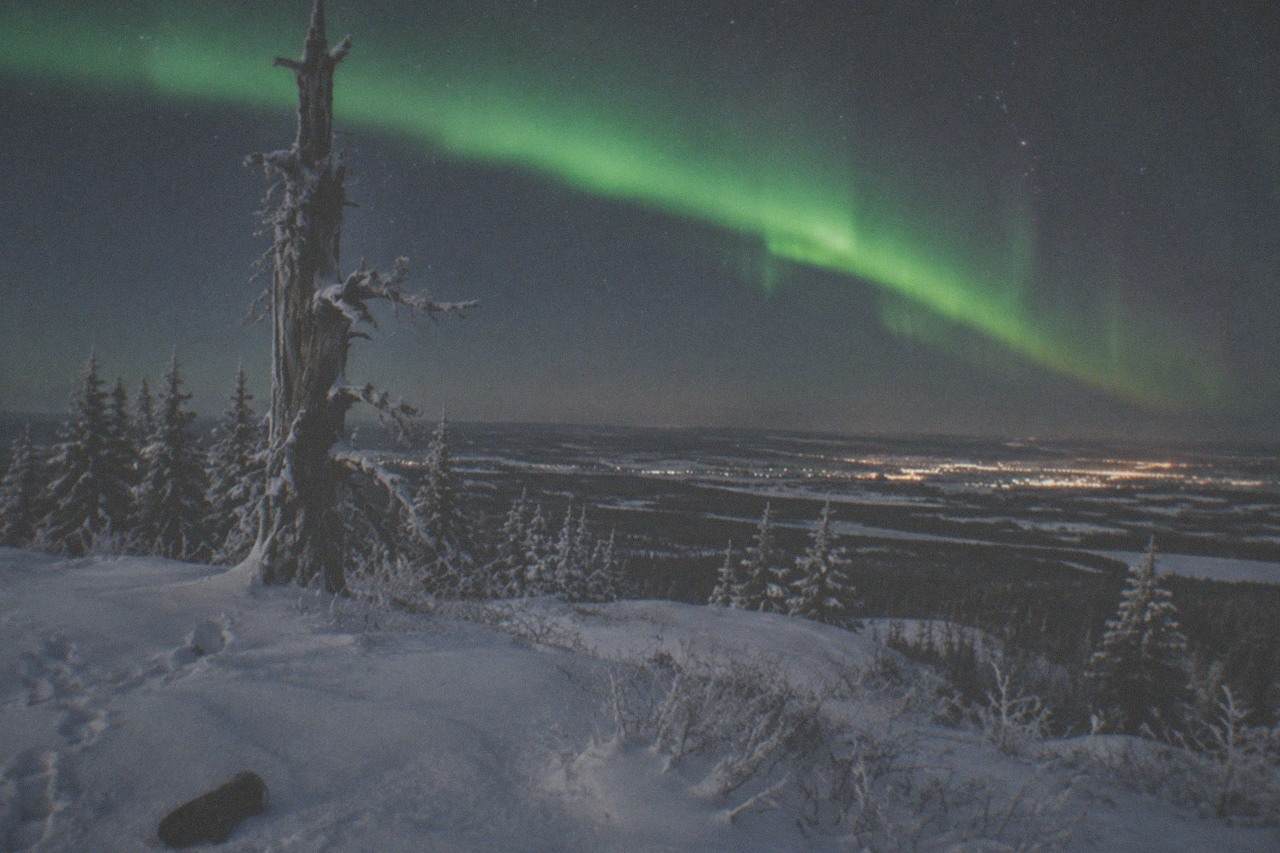
Plan for at least three nights in Fairbanks, with four as the comfortable margin. A widely cited figure from the destination marketing organization holds that visitors staying three or more nights during the season have roughly a 90 percent chance of seeing the aurora, weather permitting, and that the lights are visible on about four of five clear nights. Those odds come from stacking nights, not from any single spectacular evening.
Three is the number that keeps appearing across destination sources, and the reasoning behind it is worth understanding before you book anything. The aurora itself is active over Fairbanks far more often than most visitors assume. The city sits at roughly 64.8 degrees north, directly under the auroral oval, the ring of auroral activity that circles the geomagnetic pole. On many winter nights the oval is overhead or nearly so. What fails more often than the aurora is the sky: Interior Alaska gets its share of cloud, and a cloudy night can wipe out a strong display as completely as a quiet one. Staying a single night means betting everything on one roll of the weather dice. Staying three multiplies your chances across several independent attempts.
That is the honest version of the pitch, and it is also why no tour operator on earth will promise you a sighting. The aurora is a natural phenomenon, and any listing that hints otherwise should be treated with suspicion. What a longer stay buys you is not a guarantee but redundancy: more clear-sky opportunities, more chances for the geomagnetic activity to cooperate, and the freedom to skip a mediocre forecast night in favor of a better one the next day. Visitors who treat the trip as a three-night campaign rather than a one-night gamble consistently report better outcomes, and the arithmetic supports them.
For readers who want the deeper statistical background, including why Fairbanks sees visible aurora even at low Kp index values where mid-latitude cities see nothing, our guide to the Kp index and Fairbanks forecasting breaks down the science. For trip construction, the sections below cover what three nights actually looks like in practice, how the season calendar changes the math, and how to spread more than one tour across a longer stay rather than stacking every hope on a single outing.
Why Three Nights Is The Standard Fairbanks Aurora Recommendation
The three-night recommendation is a weather hedge, not a marketing gimmick. Fairbanks aurora is visible on roughly four of every five clear nights during the season, but cloud cover removes whole nights from play. Three nights gives you multiple independent chances at a clear, active sky, which is how the commonly cited 90 percent figure is derived.
Digging into where that number comes from makes it more trustworthy, not less. The figure is repeated across destination and tourism sources for the Fairbanks region, always with the same two conditions attached: a stay of three or more nights, and weather permitting. It is a commonly cited visitor statistic rather than the output of a controlled study, and it should be read as a well-supported rule of thumb rather than a contract. The underlying logic is straightforward. If the aurora is overhead and visible on roughly four out of five clear nights, and if clear skies in Interior Alaska arrive on something like half to two-thirds of winter nights depending on the month, then each additional night compounds your cumulative odds in a way one night never can.
The relationship between stay length and probability is not linear. Going from one night to two nights roughly doubles your clear-sky opportunities. Going from two to three adds a third independent attempt, which is where the widely cited figure crosses into the high-confidence zone. Beyond four or five nights the gains flatten: you are already covering most of the plausible weather scenarios, and extending to six or seven nights mostly adds cost and fatigue rather than meaningful probability. For most travelers the sweet spot is three nights with a fourth as a buffer, booked with free-cancellation listings where the roster carries them so a forecast bust does not become a sunk cost.
There is a planning consequence to this arithmetic that many first-time visitors miss. If you only have three nights, you want each of them to be usable. That means booking a tour format that runs nightly rather than a one-off special event, and it means being ready to move your viewing night to whichever evening has the best combined forecast of clear sky and geomagnetic activity. The University of Alaska Fairbanks Geophysical Institute publishes a daily three-day aurora forecast that travelers routinely use for exactly this kind of shuffling. Readers sorting the same question for the whole state can also compare notes in our piece on the odds of seeing the northern lights in Alaska, which widens the lens beyond Fairbanks.
The table below turns the rule of thumb into planning ranges you can actually use when sketching a trip. Treat it as a general guide built from the commonly cited figures, not a promise from any operator.
| Stay length | What it realistically gives you | Best suited for |
|---|---|---|
| 1 night | A single weather dice roll; you see the lights if that one sky is clear and active | Travelers already in Fairbanks who cannot extend |
| 2 nights | Two independent chances; solid if both are tour-backed and flexible | Short stopovers, Aurora Winter Train passengers |
| 3 nights | The commonly cited threshold for roughly 90 percent odds, weather permitting | The standard recommendation for most visitors |
| 4 nights | A buffer night for cloud, plus room to combine two different tour formats | Photographers and itinerary-driven travelers |
| 5+ nights | Diminishing statistical returns, maximum schedule flexibility | Long winter trips combining other Interior Alaska activities |
How Fairbanks Weather And Cloud Cover Affect Your Stay Length
Cloud, not weak aurora, is the main reason visitors miss the lights in Fairbanks. Interior Alaska winters mix genuinely clear stretches with cloudy systems that can sit over the Tanana Valley for a night or two at a time. That is why the three-night rule exists: each additional night is another chance the sky clears while the aurora keeps running above it.
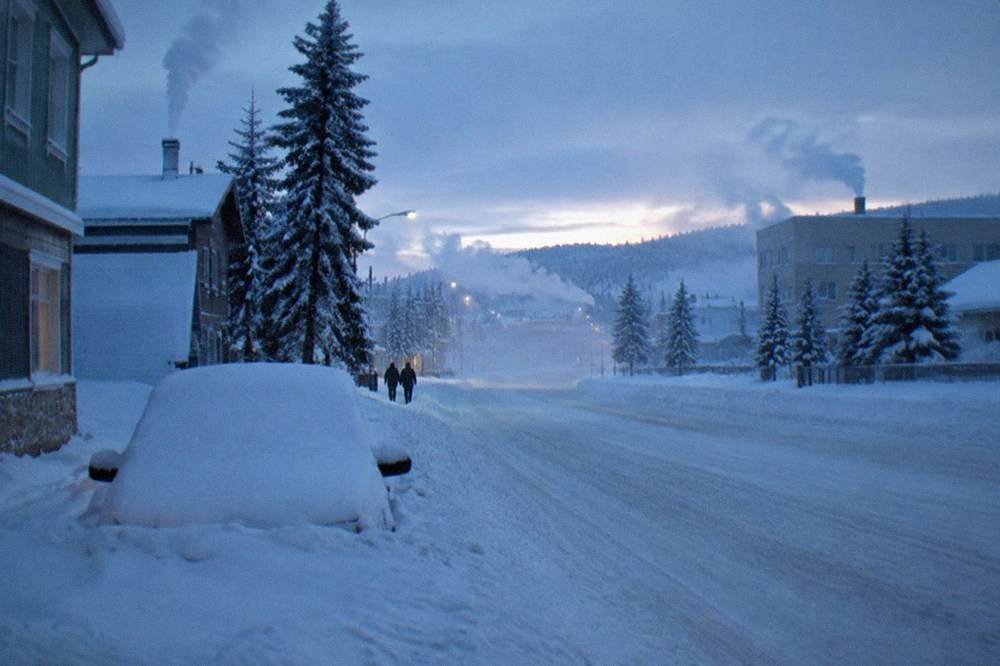
The meteorology of the Interior matters here more than most guides admit. Cold air pools in the Tanana Valley through winter, producing temperature inversions where a shallow layer of cold, often moist air sits under clearer air aloft. On some nights that means ice fog or low cloud right where you are standing in town while a hilltop twenty minutes north is under stars. This is exactly why the Fairbanks tour market is dominated by products that drive: a lodge or hilltop product moves you out of the valley fog to a site picked for its sky, and a chase tour actively relocates if the first stop is clouded. Booking one of each across a multi-night stay is not redundancy, it is two different tools for the same problem.
Winter cold is the other planning variable, and it is worth knowing the real numbers rather than folklore. Monthly temperature normals for Fairbanks show December average highs around 4 to 5F with lows around -12 to -13F, and January, often the coldest month, average highs around 1 to 2F with lows around -16 to -17F. February moderates to highs around 12 to 13F, lows around -10 to -11F, and by March the normals sit around 25 to 27F for highs with lows near -3F. These are long-term averages, not worst cases: the winter of 2025 to 2026 was Fairbanks' coldest on record, averaging nearly -14F across December to March. Cold alone does not kill an aurora night, but it shortens how long anyone wants to stand in one, which argues for heated-shelter formats on the coldest stretches of the season.
Cloud cover also varies by month in ways that interact with the season calendar. The equinox months and the mid-winter stretch each have their own character, and the best months for northern lights in Fairbanks are covered in detail in our dedicated timing guide. The short version for stay planning: you cannot schedule a clear night, so you schedule enough nights that one of them clears.
For on-the-ground planning, the practical tools are the UAF Geophysical Institute forecast for activity and the National Weather Service for sky cover, checked together on the afternoon of each viewing day. A quick checklist for a three-night stay looks like this in practice:
| Night | Typical strategy | Why |
|---|---|---|
| Night one | Take the first available tour, even on a moderate forecast | Lock in a viewing opportunity; moderate is not bad in Fairbanks |
| Night two | Chase the best combined forecast of the three | The designated flex night; move formats if cloud is forecast |
| Night three | Only rebook if activity is forecast strong and sky clear | Saves money and sleep if night one or two already delivered |
What The Fairbanks Aurora Season Calendar Means For Trip Timing
Fairbanks' aurora season runs from August 21 to April 21, per the official destination marketing organization, and every night inside that window is astronomically dark enough for viewing. Stay length matters inside any month, but the calendar decides which months reward it most: mid-winter offers the longest darkness, while spring and fall trade shorter nights for milder temperatures.
The season window is not a rough approximation, it is the region's official definition, and it exists for a specific astronomical reason. From late August, Interior Alaska nights get dark enough for the human eye to register aurora, and by late April the return of twilight erases the contrast between a glowing sky and a merely bright one. Outside the window, the sky is simply never dark enough: the midnight sun in summer and the long twilight of shoulder season prevent viewing even when the aurora is active overhead. Inside it, roughly eight months of the year, Fairbanks offers genuine darkness and, in mid-winter, an extraordinary amount of it. On the winter solstice the city sees approximately 3 hours and 41 minutes of daylight, with sunrise near 10:58am and sunset near 2:41pm, lengthening to about 10 hours by late February.
That darkness has a direct consequence for stay planning. More hours of usable night means more viewing hours per night, which partially compensates for a short stay. A December visitor effectively gets a longer aurora window each evening than a March visitor, though March compensates with warmer temperatures and statistically friendlier travel conditions. The mistake to avoid is conflating longer nights with clearer skies: darkness gives you more hours, it does not change the odds that those hours are cloud-free. Those are separate variables, and the three-night rule is built around the cloud one.
Timing within the week also matters more than most visitors expect. Rather than anchoring a trip to fixed calendar dates, many experienced travelers anchor to a forecast window and hold flexibility. The Geophysical Institute publishes both a three-day and a 27-day forecast, and the longer one is genuinely useful for rough trip shaping, though it carries obvious uncertainty at that range. Travelers wanting the calendar broken down month by month, including the equinox effect on geomagnetic activity, will find it in our guide to Fairbanks aurora season dates.
How To Spread Multiple Aurora Tours Across A Longer Fairbanks Stay
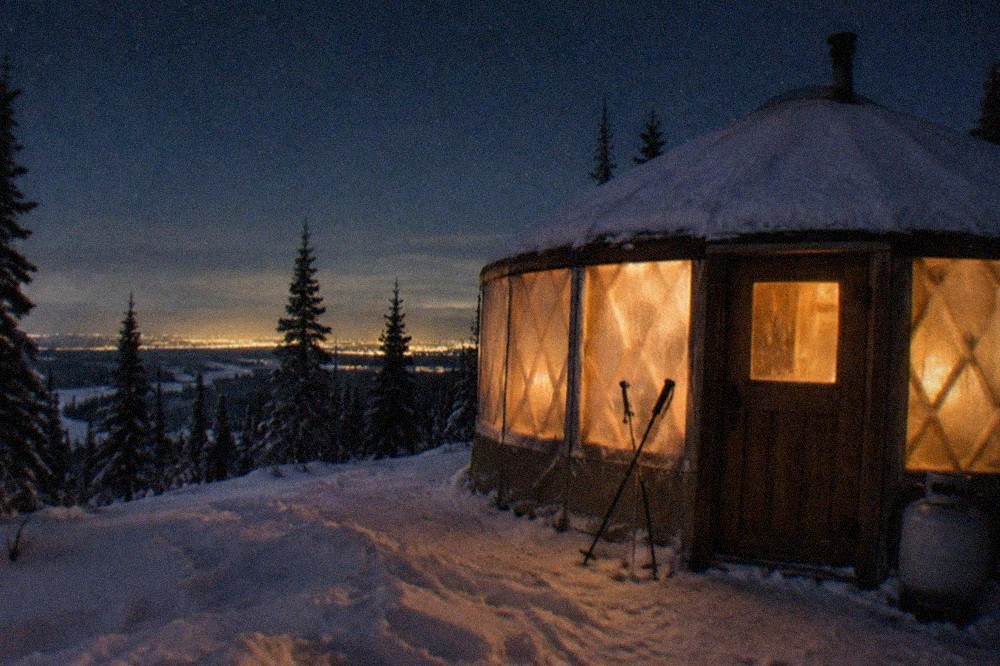
A three or four night stay rewards travelers who book more than one tour format rather than repeating the same product nightly. One night in a heated lodge, one on a mobile chase, and one resort combo covers three different weather scenarios, and listings with free cancellation can be shuffled as forecasts change. This is the strongest practical argument for staying longer than two nights.
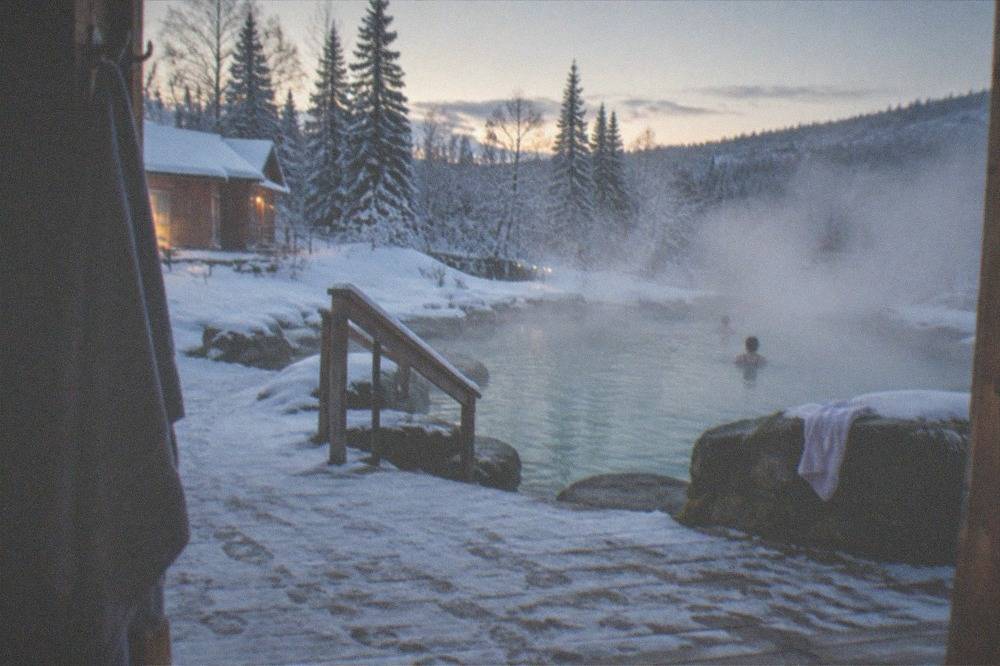
The logic is that different formats fail differently. A lodge product with large north-facing windows gives you warmth and a fixed site, and it works well when the sky above the lodge is clear but the drive would be risky. A chase tour in a vehicle roams between sky clearings, which is the right tool when cloud is patchy rather than total. A resort combo like the Chena Hot Springs product pairs the hot springs pool, open daily from 7am to 11:45pm, with aurora viewing, which turns a marginal night into a good evening regardless of what the sky does. Spread across three nights, these are not competing purchases, they are complementary bets on different weather outcomes.
The Chena Hot Springs combo tour in particular functions as a stay-length multiplier. It runs from $275 per person, carries a 4.5 rating from 1,342 reviews, and combines the resort's heated springs with aurora viewing, so even a cloud-covered night returns a memorable evening rather than a cold wait. Because the resort sits roughly 60 miles northeast of Fairbanks, about a 1 to 2 hour drive depending on conditions, it also serves as a full-evening anchor for one of your three nights. Travelers weighing it against other formats will find the fuller comparison in our guide to Chena Hot Springs aurora tours.
A sample three-night allocation using roster listings illustrates how the pieces fit. The prices are per person as listed, and formats can be swapped freely as forecasts shift.
| Night | Format | Roster example | From price | What it covers |
|---|---|---|---|---|
| Night one | Lodge viewing | Alaskan Northern Lights Aurora Borealis Lodges | $160 per person | Heated lodge and yurt viewing, north-facing windows, hotel transport |
| Night two | Hot springs combo | Chena Hot Springs tour | $275 per person | Springs access plus aurora viewing, a guaranteed-good evening |
| Night three | Premium chase | Premium Aurora Viewing Tour | $335 per person | Small-group mobile chasing, the flex night for a strong forecast |
Budget plays an obvious role in how many tour nights you stack, and the honest ranges are laid out in our guide to what a Fairbanks aurora tour costs, from the $99 Murphy Dome hilltop option at the low end to the $385 photography format at the top. A budget traveler can hold three nights with one paid tour and two self-drive or lodge-only evenings. A comfort traveler can book a format every night. Both are legitimate executions of the three-night rule.
Is One Night In Fairbanks Ever Enough For The Northern Lights?
One night is enough only when the sky cooperates, and you cannot know in advance whether it will. Statistically a single clear, active night in Fairbanks delivers a visible display roughly four times out of five, but the compound odds of getting that clear active night on your one attempt are meaningfully lower than the three-night figure. One night is a bet, not a plan.
There are legitimate one-night scenarios. Aurora Winter Train passengers stopping through, road-trippers on a fixed Anchorage to Fairbanks loop, and business travelers with a free Saturday all face the same constraint, and for them the answer is to maximize the quality of the single attempt rather than wish for more nights (see Fairbanks Train To Anchorage). That means booking a format with the highest chance of finding clear sky, which in practice means a chase product, and it means checking the afternoon forecast before committing. It also means accepting in advance that a cloud layer can end the plan for reasons no operator controls.
For everyone else, one night is a false economy. The marginal cost of a second and third night in a Fairbanks hotel is small next to the cost of the trip itself, and the marginal probability gain is large. The widely cited statistic exists precisely because the jump from one night to three moves you from a coin-flip-feeling gamble to a high-confidence plan. If the trip is built around the aurora rather than merely including it, three nights minimum, four if the schedule allows, is the defensible answer. Travelers squeezed on time can also compare the overnight-train option against flying in our piece on whether the Aurora Winter Train is worth it, since the train effectively converts travel time into a viewing evening.
The premium chase format is the one-night traveler's best tool, because it moves. The Premium Aurora Viewing Tour runs from $335 per person with a 5 rating from 789 reviews, the deepest review pool among the chase products on this roster, and a small-group chase can relocate to open sky in a way a fixed lodge cannot. Pairing it with a free-cancellation listing on your second choice for the same night, where the roster carries free cancellation, is the classic one-nighter hedge.
What Solar Cycle Conditions Mean For Fairbanks Stay Planning
The solar cycle argues for the same three-night rule rather than against it. Solar Cycle 25 passed its sunspot peak, around 160.9 in October 2024, and is declining toward minimum, but geomagnetic activity, the direct aurora driver, has stayed relatively elevated into 2026. Serious storms are expected to become less frequent after 2026, which strengthens the case for stacking nights now rather than assuming every winter behaves alike.
This is the one piece of context where the honest answer is more interesting than the marketing one. Some travel coverage frames the current cycle in breathless superlatives, and the real picture is more nuanced and more useful. The smoothed sunspot number that tracks the cycle's rise and fall has been declining since late 2024, measured at about 99.8 in February 2026, and the cycle continues toward its next minimum around 2030. By raw sunspot count the peak is behind us. But auroras respond to geomagnetic disturbance rather than sunspots directly, and the planetary Ap index has averaged relatively elevated values into 2026, above 2024 levels in the first eight months of the year. Coronal holes, which send fast solar wind earthward independent of sunspot count, keep producing solid displays even in a declining cycle.
For a stay-length decision, the takeaway is calm. Fairbanks' position under the auroral oval means the lights are a frequent, seasonal phenomenon here rather than a rare event to be chased across the decade. The baseline activity that makes Fairbanks a destination does not switch off with the cycle, and the three-night arithmetic described above remains the right planning frame. What the declining cycle does change is the frequency of the exceptional storms, the kind that push the aurora far south and paint whole-sky displays over Interior Alaska. Those become less common after 2026, which is a soft argument for booking the trip within the current elevated window rather than indefinitely deferring it. Our fuller treatment of the subject, including the sunspot and Ap index numbers, is in the guide to Solar Cycle 25 and the northern lights in 2026.
None of this changes the fundamental honesty of the answer. No cycle phase guarantees a sighting on any given night, no operator can promise one, and the only variable fully within your control is the number of nights you give the sky to perform.
Common Questions About How Many Days To Stay In Fairbanks
How Many Days To Stay In Fairbanks To See The Northern Lights?
Three nights is the standard recommendation, with four as the comfortable buffer. The commonly cited figure holds that a stay of three or more nights during the August 21 to April 21 season carries roughly a 90 percent chance of an aurora sighting, weather permitting, with the lights visible on about four of five clear nights.
Is Two Nights In Fairbanks Enough To See The Aurora?
Two nights can absolutely work, and plenty of visitors see a strong display on their first evening. Statistically, though, two nights give you two independent chances at a clear sky, which sits below the three-night threshold behind the widely cited 90 percent figure. If two is all your schedule allows, book a flexible chase format and check the forecast each afternoon.
What Month Gives The Best Odds In Fairbanks?
Any month between August 21 and April 21 is astronomically dark enough for viewing. Mid-winter offers the longest darkness, with about 3 hours 41 minutes of daylight at the solstice, while March offers milder temperatures with average highs around 25 to 27F. Month choice changes comfort and logistics more than it changes the underlying stay-length arithmetic.
Should I Book An Aurora Tour Every Night Of My Stay?
You do not need to. A common pattern is one lodge or resort format on the first night, a chase tour on the best forecast night, and a decision on the third evening only if the earlier nights did not deliver. Listings with free cancellation can be shuffled as the forecast moves, and Fairbanks Aurora Borealis Tours roster pages note where the listing carries it.
Why Is Three Nights The Magic Number?
Because the limiting factor is usually cloud, not aurora activity. Fairbanks sits under the auroral oval, so the lights are frequently active overhead, but cloudy nights remove viewing opportunities entirely. Three nights stack enough independent weather chances that the commonly cited odds reach roughly 90 percent during the season.
Does A Longer Stay Guarantee I See The Lights?
No stay length guarantees a sighting, and no honest operator will claim one. The aurora is a natural phenomenon. What a longer stay does is raise your cumulative odds across multiple nights, which is why the widely cited figure is always stated with three or more nights and weather permitting attached.