Where To Stay In Fairbanks For Northern Lights Viewing
Fairbanks hotels are comfortable and convenient, but the city's own light dome is the quiet reason so many aurora seekers end their night disappointed. This guide separates the two different decisions travelers conflate: where to sleep, and where to actually watch the sky.
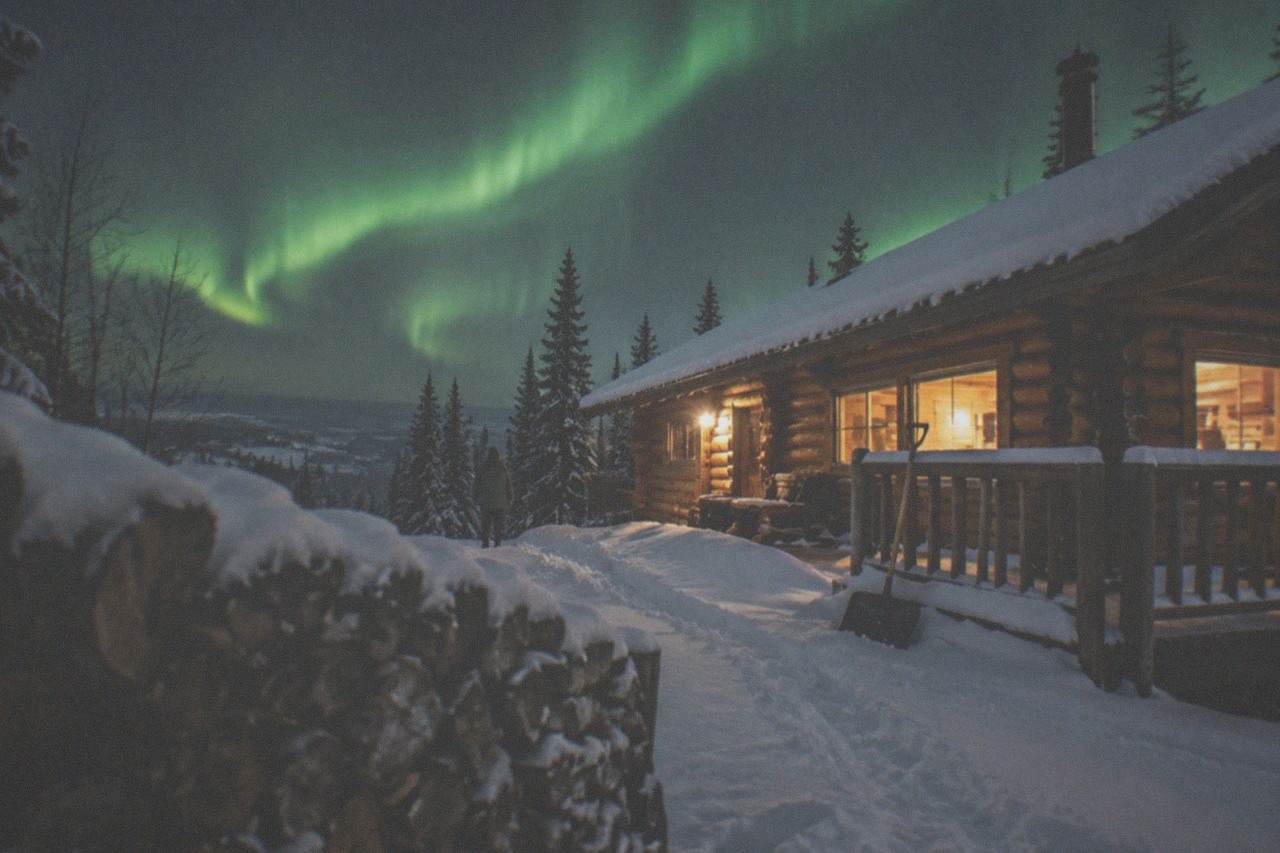
Short answer
A downtown Fairbanks hotel room rarely delivers a good aurora display because streetlight glow washes out faint activity. The stronger play is a lodge or hilltop viewing product that transports you to dark skies, from $160 per person for the lodge and yurt option, from $179 per person at the Cleary Summit glass house, and from $275 per person for the Chena Hot Springs combination.
Where To Stay In Fairbanks For Northern Lights Viewing
Fairbanks earns its aurora reputation on geography, not luck. The city sits at roughly 64.8 degrees north, under the typical auroral oval, which means visible activity is often possible even at low geomagnetic readings, roughly Kp 2 to 4, that would produce nothing at mid-latitudes. The official aurora season runs August 21 to April 21, and outside that window the midnight sun or bright twilight makes viewing impossible regardless of what the sky is doing.
The catch is that the reputation belongs to the region, not to your hotel room. Fairbanks is a working city, and the same streets that make it a comfortable winter base cast a dome of light that hides all but the strongest displays (see Tours For Seniors). The decision that actually shapes your night is not which hotel chain you pick. It is whether you sleep in town and get transported out to dark skies, or pay for a property and a viewing format that puts darkness at the doorstep. This guide compares those options side by side, with prices and local details to help you choose. It skips hotel brand names because pickup location, not the brand on the door, decides your aurora night.
Can You Actually See The Northern Lights From A Fairbanks Hotel?
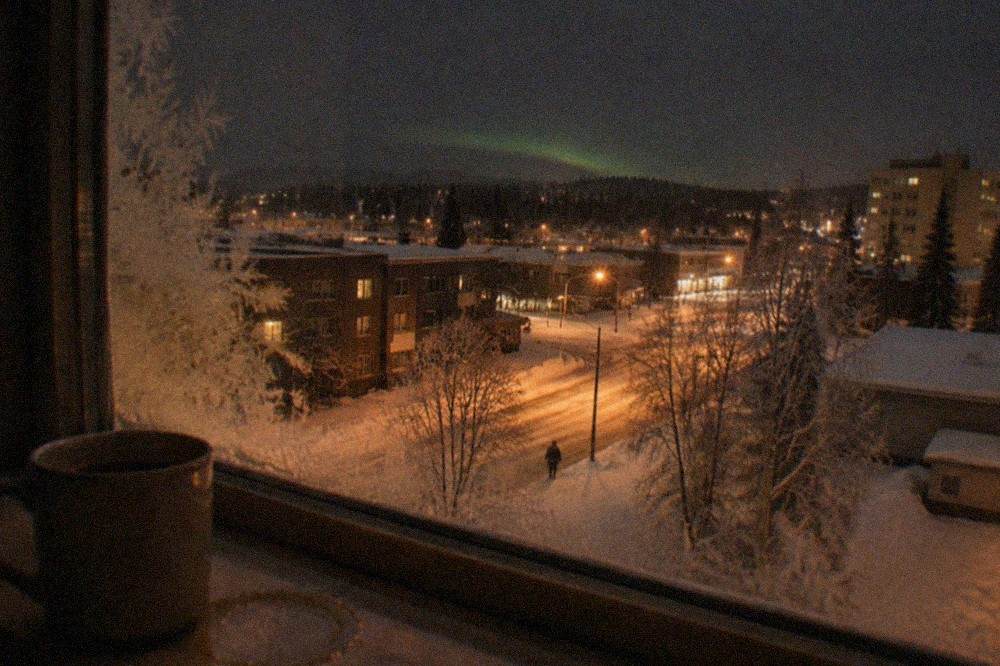
Faint aurora often fails over a Fairbanks hotel because streetlight glow in the city core washes out weak displays, so many guests watch nothing from a downtown room even on an active night. The products that fix this problem do not rely on your hotel at all: they transport you out to a dark lodge or hilltop site for the viewing hours, then return you late.
The physics of the situation is simple. An aurora bright enough to overpower urban skyglow typically corresponds to a stronger geomagnetic disturbance, and those nights are a minority of the season. On an average active night the display may register as a pale gray-green smudge low on the northern horizon from a lit parking lot, while the same display from a dark hilltop north of the city can fill half the sky with structure and color. The widely reported figure travelers cite from the destination marketing organization, roughly a 90 percent chance of seeing the aurora over a stay of three or more nights with clear weather, assumes dark-sky viewing conditions, not a hotel window facing Fourth Avenue.
That does not make a downtown hotel a bad choice of base. Fairbanks hotels are where the tour vans collect guests, where you sleep warm between 1am and 3am viewing windows, and where you can walk to dinner. The honest framing is that a hotel room is a place to sleep and launch from, not a viewing platform. Guests who understand that split plan better: they book the comfortable room in town and pair it with a transport-included viewing product.
One structural point worth knowing before comparing anything: Fairbanks' aurora season is defined by darkness, not by solar activity. The UAF Geophysical Institute forecast publishes a daily 3-day outlook built on the Kp index, and the season window exists because from late April to late August the sky simply never gets dark enough to see anything. Where you stay matters most in the months when nights are longest.
What Should A Northern Lights Hotel In Fairbanks Actually Offer?
A good aurora base in Fairbanks offers three things: transport to dark skies, late-night return logistics, and warm shelter during multi-hour viewing windows. A downtown hotel can offer none of these directly, so the real question is which viewing product you attach to the room, and whether that product includes hotel pickup and heated space between displays.
Think of the lodging decision as a two-part system. Part one is the bed, and almost any Fairbanks property covers that adequately in winter. Part two is the viewing layer, and that is where the options diverge sharply. Some travelers book a hotel and drive themselves to public pullouts, which costs nothing but demands winter driving skill, cold-weather gear, and luck with parking and clouds. Others attach a guided product that handles all three failure points at once.
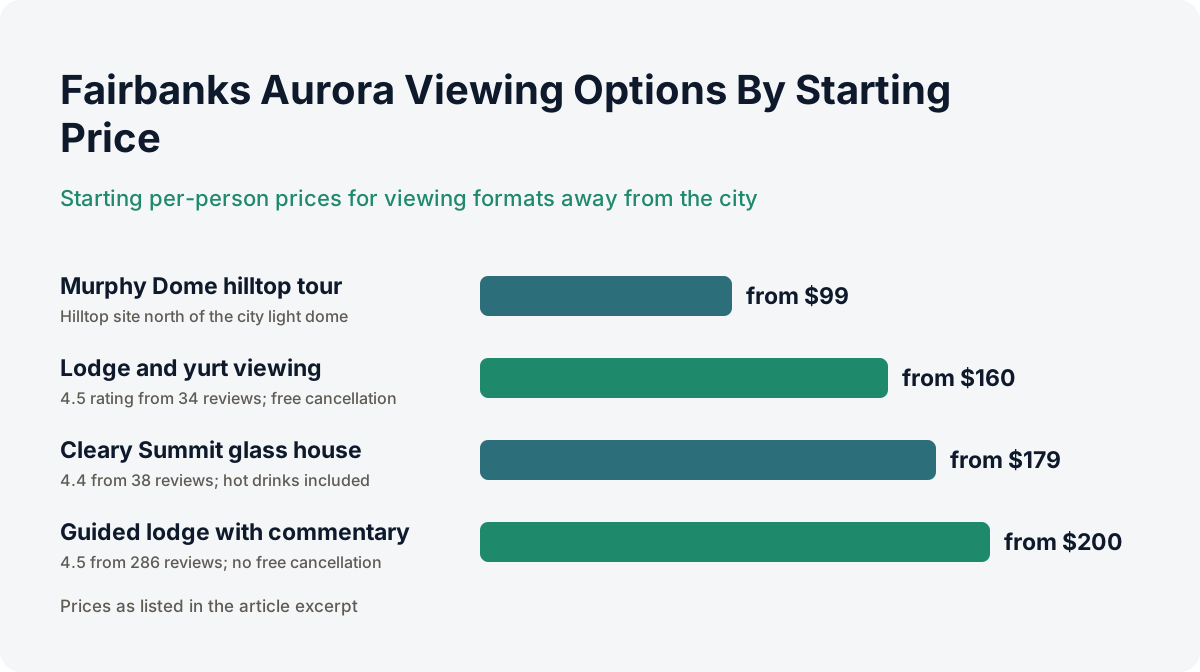
The two-part approach is what the strongest listings on this roster are built around. The lodge and yurt viewing product transports guests from major Fairbanks hotels, seats them in a heated yurt with large north-facing windows, and returns them at the end of the window. It runs from $160 per person, holds a 4.5 rating from 34 reviews, and carries free cancellation on the listing. For travelers who want the same dark-sky logic with a glass wall instead of a yurt window, the Cleary Summit glass house runs from $179 per person with hot drinks and snacks included, at 4.4 from 38 reviews, and carries a "Likely to sell out" badge on its listing.
The three options in that band represent three distinct lodging strategies. The lodge and yurt product is the pure dark-sky play: warmth, big windows, transport included. The glass house at Cleary Summit is the same idea in a more panoramic format, a 270-degree glass structure with floor-to-ceiling windows. The Chena Hot Springs combination is a different animal entirely, pairing resort access with aurora viewing from a property roughly 60 miles northeast of the city. A fuller comparison of that resort option lives in the Chena Hot Springs aurora tours guide.
For travelers weighing the pure transport-included lodge night, the listing details matter more than the headline price.
| Viewing format | Where you sleep | Warm shelter at the site | Price per person |
|---|---|---|---|
| Lodge and yurt viewing | Any major Fairbanks hotel | Heated yurt, north-facing windows | From $160 |
| Cleary Summit glass house | Any Fairbanks hotel | 270-degree heated glass house, hot drinks | From $179 |
| Self-drive to public pullouts | Any Fairbanks hotel | Your own vehicle only | No tour cost |
The lodge and yurt option earns its place as the default recommendation for one reason: it removes the decision fatigue. Guests are collected from major hotels, which means the hotel choice stops mattering for the aurora outcome, and the yurt's large north-facing windows mean the coldest part of the night is spent indoors watching the sky rather than standing in it. With free cancellation on the listing, it is also the lowest-commitment way to lock in a dark-sky night before flights are even booked.
Are Lodge And Hilltop Lodging Sites Near Fairbanks Better Than Hotels?
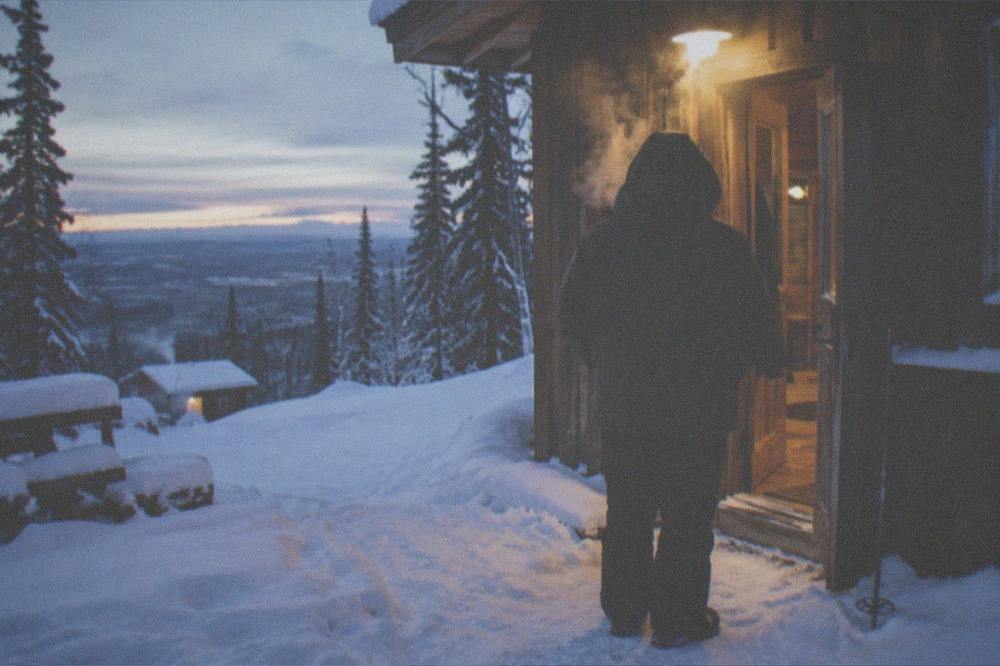
Yes, for viewing quality, and the gap is not subtle. Lodge and hilltop sites sit north of the city's light dome, where faint aurora reads as structure and color rather than a gray hint. The tradeoffs are price, since these are viewing products rather than rooms, and schedule, since nights run late, with viewing windows concentrated between roughly 10pm and 3am.
The geography that makes these sites work is consistent: get north and get elevated. Murphy Dome, a long-standing hilltop viewing location, and Cleary Summit, home of the glass house, both sit far enough from Fairbanks that the city's glow sits below the horizon rather than in front of the sky. That single change converts marginal nights into good ones. A budget hilltop tour at Murphy Dome runs from $99 per person, 4.5 from 317 reviews, which is the cheapest guided route to dark sky on this roster.
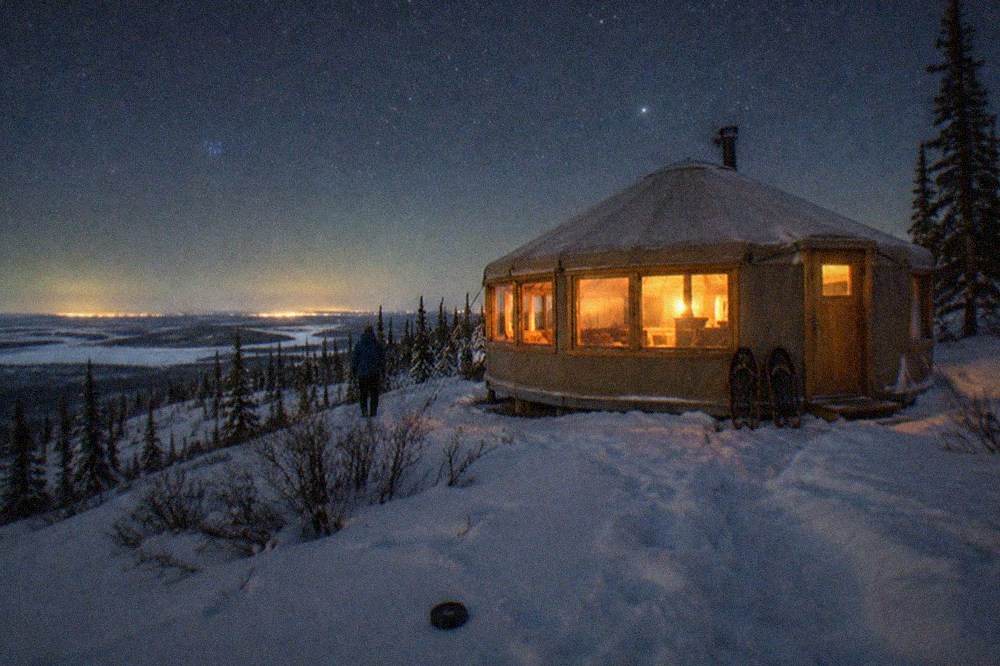
The guided lodge option takes the same dark-sky logic and adds a roof. Guests on that format, 4.5 from 286 reviews, from $200 per person, stay at a lodge base with commentary from a guide rather than standing at a windy pullout. Note on that one: the listing does not carry free cancellation, so it is non-refundable per its terms. Check before committing. Murphy Dome is the only listing in the roster without a stated cancellation policy, so treat those as read-before-you-book items as well.
A practical caution applies to anyone considering renting a car and driving to these sites independently. Winter nights in the Fairbanks interior routinely run well below zero, with January normals around 1 to 2F for highs and -16 to -17F for lows, and rural roads refreeze into black ice after dark. The National Weather Service Fairbanks office posts winter advisories throughout the season, and conditions change fast in the hills. Transport-included formats exist precisely because that drive is unpleasant at 1am.
The glass house format deserves its own word because it solves a problem no hotel can: it puts you inside a heated, fully windowed room that faces the dark sky directly.
The Cleary Summit glass house is the closest thing on this roster to sleeping under the aurora without leaving warmth behind. Floor-to-ceiling glass across a 270-degree arc means the viewing position is a chair, not a stance, and hot drinks and snacks are included in the from $179 per person price. At 4.4 from 38 reviews it is a proven format, and its "Likely to sell out" badge on the listing is real: book it early in your trip window so a backup night remains.
Is Chena Hot Springs Resort Worth Booking As An Aurora Base?
Chena Hot Springs Resort is a genuine lodging-and-viewing combination in one place: you sleep on site, soak in an outdoor hot springs pool open 7am to 11:45pm daily, and can join aurora viewing without driving back to town. It sits roughly 60 miles northeast of Fairbanks, a 1 to 2 hour drive, which is the tradeoff: remoteness buys darkness but costs you the city.
The resort is the one option in this guide where "where to stay" and "where to watch" collapse into a single answer. The property sits at milepost 56.5 on Chena Hot Springs Road, far from Fairbanks' light dome, and its official site describes it as 60 scenic miles from the city. The outdoor pool and pool house run 7am to 11:45pm year-round, and the Aurora Ice Museum, billed as the world's largest year-round ice environment, is held at a constant 25F with 45-minute guided tours at 11am, 1pm, 3pm, 5pm, and 7pm, priced at $20 for adults and $15 for children ages 6 to 11.
Those are the resort's own general-admission prices, separate from any tour product. Travelers who do not want to arrange a resort stay independently can book a combination tour from Fairbanks that bundles the resort with aurora viewing, and that is the format on this roster: a Chena Hot Springs combination running from $275 per person with a 4.5 rating from 1,342 reviews, making it the most widely reviewed product on the entire site. The listing states no cancellation policy either way, so confirm terms on the live listing.
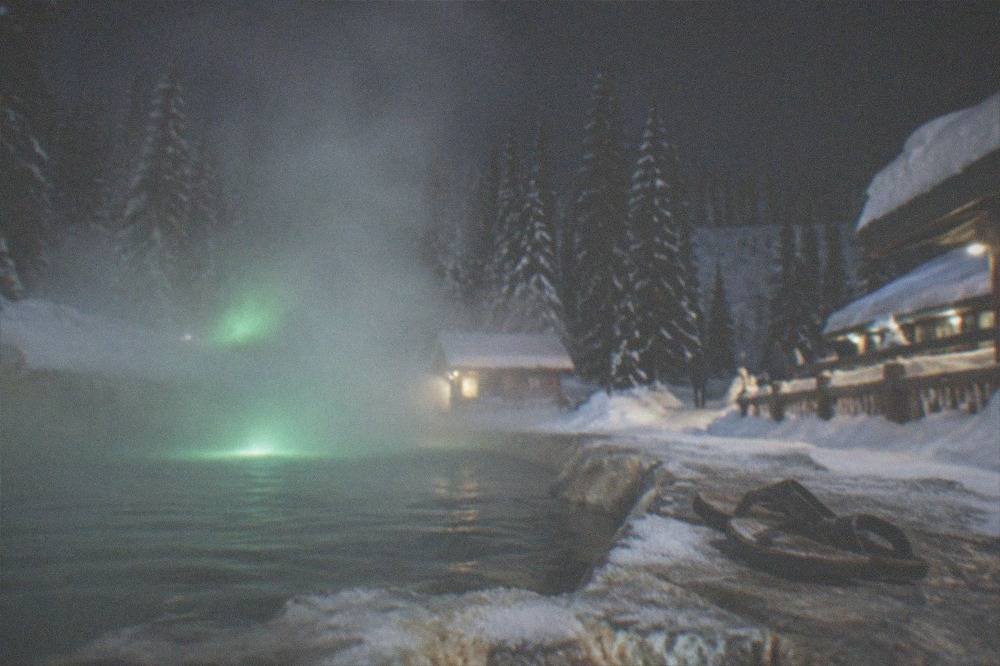
The honest comparison with a city hotel plus lodge night is a matter of what you want from the trip. A Chena stay is a destination: hot springs, ice museum, and dark sky in one package, at the cost of being over an hour from Fairbanks restaurants, shops, and other tours. A city hotel plus a transport-included viewing product keeps every option open, including daytime tours like dog sledding, at the cost of never escaping the city's ambient light except during the tour itself. Travelers splitting a short stay between both ideas will find the one day in Fairbanks itinerary useful for sequencing them.
| Chena Hot Springs detail | Figure |
|---|---|
| Distance from Fairbanks | Roughly 60 miles, 1 to 2 hours' drive |
| Outdoor pool hours | 7:00am to 11:45pm daily, year-round |
| Ice Museum interior temperature | Constant 25F |
| Ice Museum tour length | 45 minutes, typically 11am, 1pm, 3pm, 5pm, 7pm |
| Ice Museum admission | Adults $20, children ages 6 to 11 $15 |
The combination tour is the practical middle path for travelers who want the resort experience without committing a full stay to it. From $275 per person, it handles the drive, gets you the resort and the aurora window in one night, and returns you to Fairbanks. With 1,342 reviews behind its 4.5 rating, it is also the format with the deepest track record of anything in this guide.
Which Parts Of Fairbanks Work Best For Aurora Lodging?
For a hotel-based stay, the practical rule is simple: sleep where the vans collect you. The major hotels used for tour pickup cluster in the central and eastern parts of the city, and every transport-included viewing product on this roster serves them. Beyond pickup coverage, the hotel's location matters far less than people assume, because the viewing happens well outside town either way.
This is the section where most aurora lodging guides go wrong, because they invent a specific hotel or a nightly rate to crown as "the best." We do not invent hotel names or nightly rates, so none are quoted here. What can be said with confidence is structural. Fairbanks is compact, winter driving inside the city is manageable, and the products that solve the darkness problem all include transport from major hotels, meaning the pickup network, not the neighborhood, is the variable that affects your night.
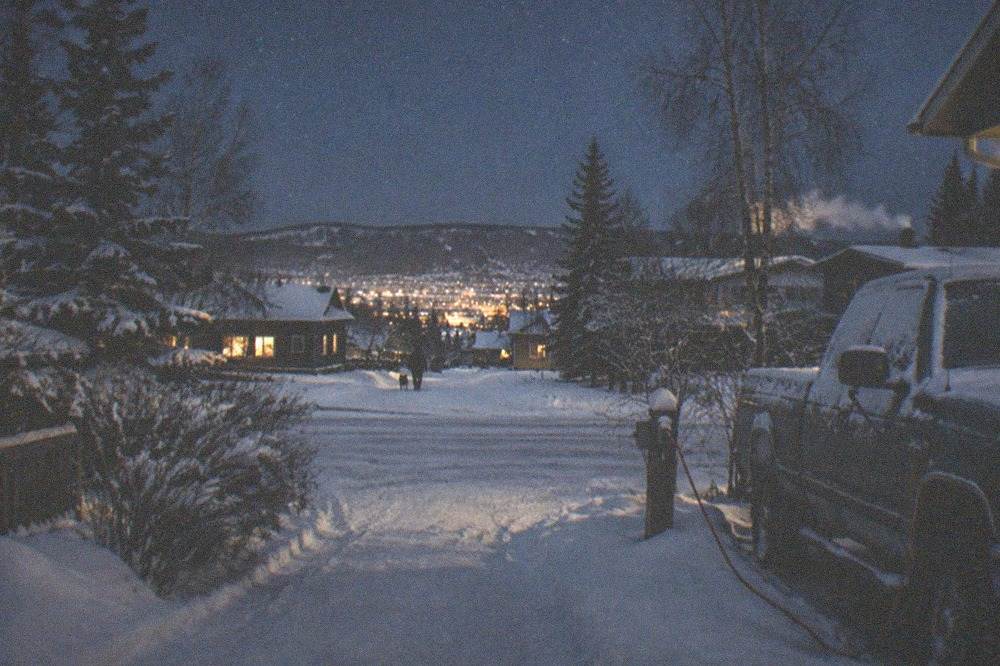
The city's own light footprint does vary by area, and a guest on an upper floor of a property at the quieter northern edge of town occasionally catches a strong display from a window facing away from the core. But betting a once-a-year aurora trip on that is poor strategy. Streetlights, parking lots, and highway glow reach most of the city, and the strongest displays are the only ones that reliably punch through. A dark hilltop 30 to 45 minutes north of town sees those same strong displays plus every moderate one the city misses.
For travelers who want to compare the full set of viewing formats against a lodging decision, the aurora viewing lodges and cabins guide covers the property types in more depth, and the best northern lights tours overview ranks the guided options. The short version for lodging purposes: any hotel that appears in a tour's pickup list is functionally equivalent for aurora outcomes, so choose on price, breakfast, and sleep quality instead.
| Lodging strategy | Darkness at the site | Transport needed | Typical commitment |
|---|---|---|---|
| Downtown hotel, self-drive viewing | Depends on the pullout you reach | Your own rental car, winter driving | Fuel and gear only |
| Downtown hotel plus lodge/yurt tour | Full dark sky north of the city | Included, collects from major hotels | From $160 per person |
| Downtown hotel plus hilltop tour | Full dark sky, exposed viewing | Included | From $99 per person |
| Chena Hot Springs Resort stay | Dark sky at the property | One long drive each way, or a combo tour | Resort stay or from $275 per person |
One more planning note: the same dark-sky logic that applies to lodges applies to anything north-facing. If you do end up with a hotel room and a strong forecast, ask at the desk for a room on an upper floor with a northern exposure, kill the interior lights, and give your eyes ten minutes. It is a free lottery ticket, not a plan.
When Should You Book A Northern Lights Stay In Fairbanks?
Book lodging and a viewing product together, two to four months ahead for the core winter season, and give yourself at least three nights in town. The widely cited figure from the destination organization holds that a three or more night stay during the season carries roughly a 90 percent chance of an aurora sighting, weather permitting, and longer stays convert luck into statistics.
The three-night rule exists because two variables have to line up: geomagnetic activity and clear sky. Fairbanks wins the first one by geography, sitting under the auroral oval where visible aurora often appears at Kp 2 to 4, but cloud cover is a coin flip on any given night. Stacking nights stacks odds. The same reasoning explains why free cancellation matters on a viewing product: if your first night is clouded out, you want the option to rebook rather than eat the cost.
Timing within the season matters too. Midwinter offers the longest darkness, with the solstice delivering roughly 3 hours 41 minutes of daylight and nights stretching over 19 hours, but it is also the coldest period, with January normals of 1 to 2F highs and -16 to -17F lows, and the winter of 2025-26 was the coldest on record, averaging nearly -14F across December to March. Late season, February into March, softens the cold while keeping long nights, with March highs around 25 to 27F. Packing for any of it is its own task, covered in the what to wear on a Fairbanks aurora tour guide.
| Month | Typical high | Typical low | Night length context |
|---|---|---|---|
| November | 12 to 14F | -2 to -4F | Long nights, early season pricing |
| December | 4 to 5F | -12 to -13F | Solstice: about 3 hours 41 minutes of daylight |
| January | 1 to 2F | -16 to -17F | Longest nights, coldest month |
| February | 12 to 13F | -10 to -11F | About 10 hours of daylight by late month |
| March | 25 to 27F | Around -3F | Milder cold, still-dark evenings |
Booking order matters more than booking date. Lock the room first, since hotel inventory in Fairbanks is finite in peak season, then lock the viewing product with transport from that hotel, then leave one spare night unbooked in case weather forces a reshuffle. For the two listings on this roster carrying a real "Likely to sell out" badge, the glass house and the full-day Arctic Circle trip, earlier is genuinely better. For the rest, the risk is season inventory, not artificial urgency.
Solar context is worth a sentence here, stated carefully. Solar Cycle 25 has passed its sunspot peak, which occurred around October 2024 at a smoothed number near 160.9 and had fallen to about 99.8 by February 2026, but geomagnetic activity, the more direct driver of auroras, has stayed relatively elevated into 2026, with significant storms expected to become less frequent after 2026 as the cycle declines. None of that changes where you should sleep: Fairbanks' position under the oval is the asset, and dark sky is how you collect on it.
The lodging decision, then, reduces to a clean choice. Sleep in the city and buy a night of darkness through a transport-included product, or sleep at the resort and carry the darkness with you. Both work. The one strategy that reliably fails is the one most travelers default to: a downtown room, no plan, and a hope that the sky cooperates over the streetlights.
Whichever base you choose, the site that produced this comparison, Fairbanks Aurora Borealis Tours, keeps the full roster of lodge, hilltop, hot springs, and photography viewing products in one place, each with its verified price and rating on its own page.
Common Questions About Staying In Fairbanks For The Northern Lights
Can You See The Northern Lights From A Downtown Fairbanks Hotel?
Sometimes, but only during strong displays, because streetlight glow in the city core washes out faint and moderate aurora. A northern-facing upper-floor room with interior lights off gives you a free chance on an active night, but it is not a plan. The reliable strategy is a downtown room paired with a transport-included viewing product at a dark site.
What Is The Best Hotel In Fairbanks To See The Northern Lights?
No specific hotel is verified as the best in the research behind this site, and none is named here. The honest answer is that the hotel matters less than the viewing layer attached to it: transport-included lodge, yurt, glass house, and hilltop products collect from major Fairbanks hotels, which makes any hotel in their pickup network functionally equal for aurora outcomes.
How Many Nights Should I Stay In Fairbanks To See The Aurora?
At least three. A commonly cited figure from the official destination organization holds that a three or more night stay during the August 21 to April 21 season gives roughly a 90 percent chance of a sighting, weather permitting, with the aurora visible on about four of five clear nights. Fewer nights turn the trip into a coin flip on cloud cover.
Is Chena Hot Springs Resort A Better Aurora Base Than A Fairbanks Hotel?
It is a different base, not strictly a better one. The resort sits roughly 60 miles northeast of Fairbanks in genuinely dark surroundings, with an outdoor pool open 7am to 11:45pm daily, but it is over an hour from the city's restaurants and other tours. A city hotel plus a resort day tour, from $275 per person, lets you sample both.
Do Aurora Lodges Near Fairbanks Include A Place To Sleep?
The lodge-based viewing products on this roster are viewing experiences with heated indoor space, not overnight accommodations. Guests are transported from major Fairbanks hotels to a lodge or yurt with north-facing windows, watch the viewing window in warmth, and return to their hotel the same night. From $160 per person, with free cancellation on the listing.
Should I Book My Aurora Tour Before My Hotel?
Book the hotel first, because tour pickup lists are built around major hotels, then match the tour to it. Then keep one spare night flexible in case of clouds, and prefer listings with free cancellation where the roster shows it, such as the lodge and yurt viewing product. For the two listings carrying a real "Likely to sell out" badge, book earlier rather than later.