Is The Train Ride From Fairbanks To Anchorage Worth It?
An honest look at the Fairbanks to Anchorage train as a travel trade-off: scenery and comfort against time, compared with driving or flying, plus how it fits an aurora trip.
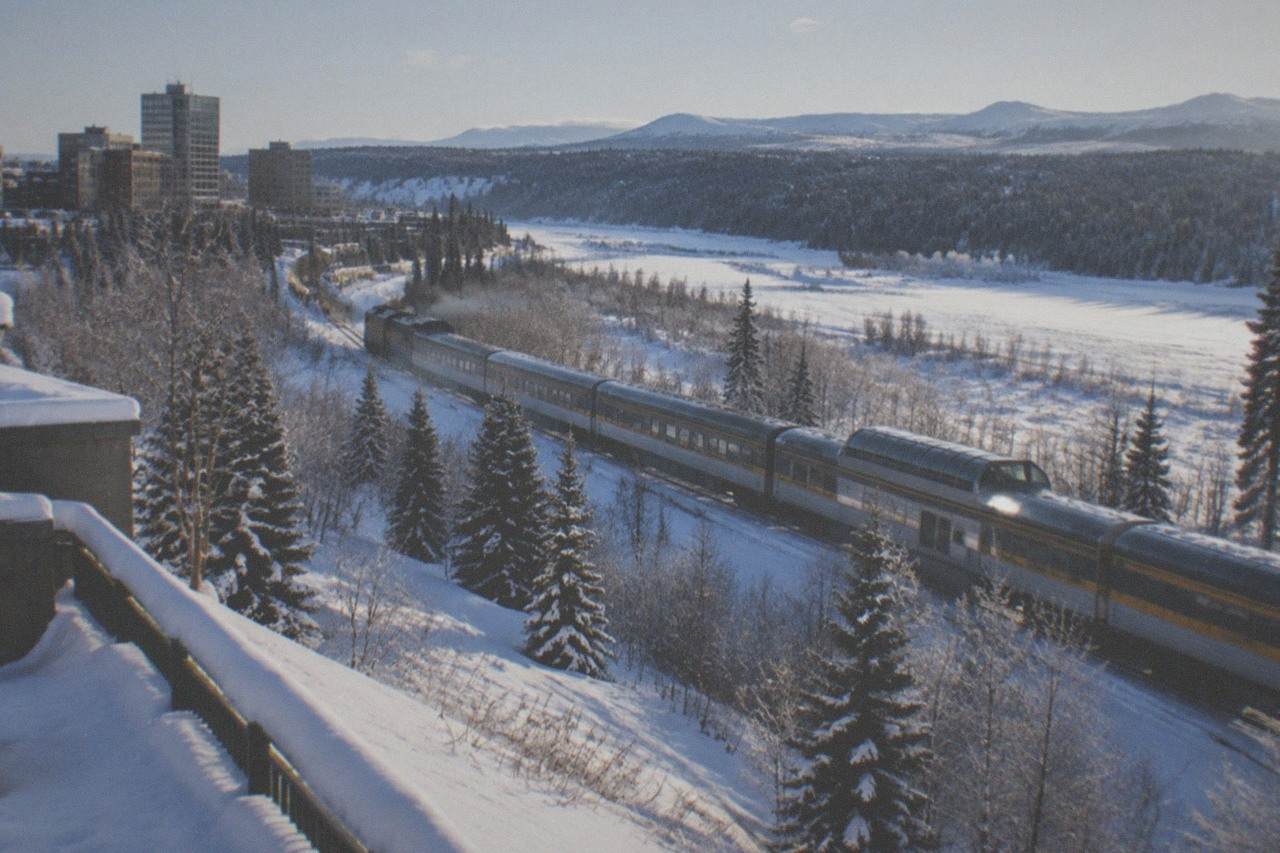
Is The Train Ride From Fairbanks To Anchorage Worth It?
The Fairbanks to Anchorage rail route is one of the most photographed stretches of track in North America, and it is also one of the slowest ways to move between Alaska's two biggest interior cities. That combination is exactly what makes the question worth asking honestly. For some travelers the scenery is the entire point of the day, and the hours spent rolling past rivers and mountain passes are the best part of the itinerary. For others, especially aurora hunters on a short winter trip, those same hours are a cost paid in darkness that could have been spent under the sky.
This page works through the trade-off in practical terms. It compares the train against driving and flying on the factors that actually matter to a Fairbanks aurora trip, looks at what the route shows you, and explains how to fold rail travel into a northern lights itinerary without wasting viewing nights. One honest caveat up front: rail fares and departure schedules change season to season, and this article does not invent a price or a timetable. Check the railroad's own current schedule and fare page for the specific dates before booking anything.
Is The Train Ride From Fairbanks To Anchorage Worth It?
The train is worth it if the journey itself is part of your trip and you have a full day to give it, and not worth it if your priority is maximizing aurora viewing time around Fairbanks. It is a scenery-first choice, slower than flying and generally slower than driving the direct road route, and it removes winter driving risk from your hands. Decide based on how many nights you have, not on the ticket alone.
The honest answer starts with what kind of traveler you are. The rail route between Fairbanks and Anchorage runs through terrain that the parallel road system either touches briefly or not at all, and the train's pace turns that terrain into the main event rather than a backdrop. Travelers who finish the ride and describe it as a highlight almost always describe the landscapes: river valleys, canyon walls, mountain crossings, and long stretches with no road, no power line and no building in sight. That is a genuine, real experience the road cannot replicate.
The travelers who regret the choice are usually the ones who bought the ticket as transportation rather than as an experience. If the goal is to land in Fairbanks, sleep, and be on an aurora hilltop the same night, every hour spent on a train is an hour of daylight spent not resting, not acclimating and not positioning for the night. A direct flight covers the distance in a fraction of the time. A driver with winter experience covers it on a flexible schedule of their own choosing.
There is also a middle case that gets less attention. Travelers arriving in Anchorage by cruise or by long-haul flight sometimes take the train north to Fairbanks precisely because it converts a dead transfer day into a scenic day, then spend their remaining nights on aurora tours out of Fairbanks. In that configuration the train is not competing with viewing time at all, because the alternative was never going to be an aurora night anyway. The direction and the position in your itinerary matter as much as the mode.
If the train brings you into Fairbanks with evenings still ahead of you, the next decision is how you will actually watch the sky once it gets dark. Fairbanks' aurora season runs August 21 to April 21, per Explore Fairbanks, the official destination marketing organization, which is a wider window than most first-time visitors expect. The three options above span the common formats: heated lodge and yurt viewing with hotel transport, a hot springs resort combo, and a mobile small-group chase that moves toward clear sky. The right one depends less on budget than on how much cold you want to stand in and how much you want a guide to drive you.
How Does The Fairbanks To Anchorage Train Compare With Driving Or Flying?
Measured purely on speed, flying wins by a wide margin, driving is second, and the train is the slowest of the three. Measured on winter risk, the order reverses: the train puts a professional crew between you and icy roads, while driving the interior in mid-winter demands real preparation. The train costs more time than either alternative, so you are buying comfort and scenery with hours.
It is worth being blunt about the time gap, because marketing copy rarely is. The direct road route between the two cities is a full day of driving in winter conditions, split across a maintained highway corridor with services at intervals. The train covers comparable distance at rail pace, with the schedule set by the railroad rather than by you, and winter service does not necessarily run daily in each direction. Flying compresses the whole transfer to a couple of hours in the air plus airport time on both ends. For a trip measured in nights rather than days, that difference compounds fast.
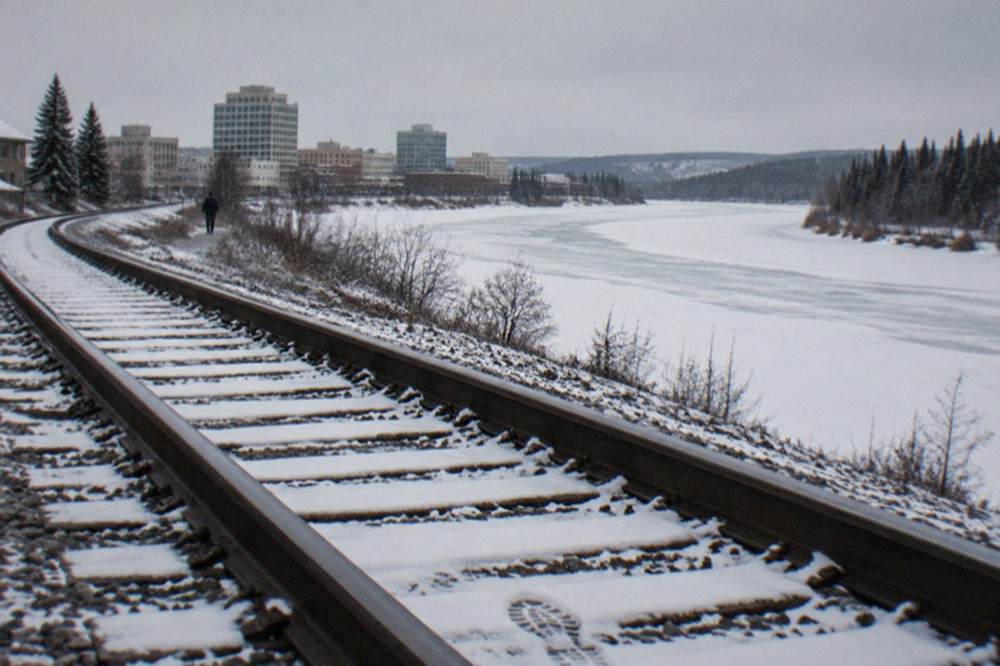
The winter-risk side of the ledger is where the train quietly earns its keep. Fairbanks winter conditions are not a rounding error: monthly normals put January, often the coldest month, at highs around 1 to 2F and lows around -16 to -17F, and December highs around 4 to 5F. The winter of 2025-26, December through March, was Fairbanks' coldest on record, averaging nearly -14F, per the National Weather Service. A traveler unused to those temperatures, driving an unfamiliar rental on possibly icy roads for hours, is taking on real risk. The train removes that entirely, and the Fairbanks winter driving conditions guide covers the road side of that decision in detail.
| Factor | Train | Driving | Flying |
|---|---|---|---|
| Time between cities | Slowest of the three, full day at rail pace | Full day of winter driving with stops | Fastest by a wide margin |
| Schedule control | Fixed to the railroad's timetable | Entirely your own | Airline schedules, several daily options |
| Winter road risk | None, crew handles it | Entirely yours, real hazard in mid-winter | None on the ground beyond airport transfers |
| Scenery access | Terrain the road barely touches | Good, but eyes on the road | Aerial views only in clear weather |
| Fatigue on arrival | Low, seated and sheltered all day | High after hours of focused driving | Moderate, airport processes included |
| Best fit | Journey-as-destination travelers | Confident winter drivers wanting flexibility | Short-trip aurora hunters |
The cost question is harder to answer honestly in a general article, because rail fares shift with season and demand, so check the railroad's current fare page for today's price. What can be said plainly: the train ticket is generally priced closer to a flight than to a tank of fuel split across a carload, and a solo traveler often finds the train and the plane in the same cost band while a carload splits driving costs across every seat. Check the railroad's own fare page for your dates rather than trusting any secondhand figure, including ones from travel listicles.
What Do You Actually See On The Fairbanks To Anchorage Train Route?
The route's core appeal is terrain the road network does not reach: extended river valley running, canyon passages, mountain crossings and long car-free stretches of forest and tundra. Visibility is the wildcard, because winter light is short and the same route can present as either a white mountain panorama or a dark corridor depending on month and cloud. What you see is genuinely different from the drive.
The interior rail corridor earns its photographic reputation honestly. Long sections of the route run alongside river systems, and the train's slow pace plus its dome and window arrangements mean you are not catching glimpses between guardrails the way a driver is. Passengers consistently describe the experience in terms of uninterrupted looking: hours of it, with the landscape changing from interior forest toward mountain terrain as the route moves south. Wildlife sightings happen, typically at distance, but treat them as a bonus rather than a promise.
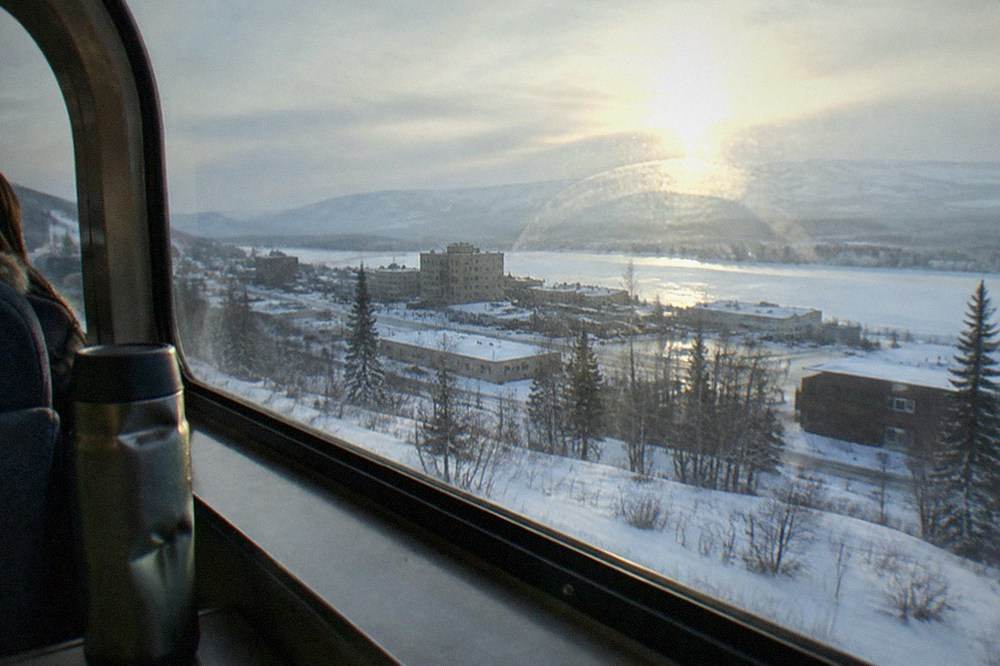
Winter light is the honest constraint on all of it. At the winter solstice, Fairbanks gets roughly 3 hours and 41 to 42 minutes of daylight, with sunrise near 10:58am and sunset near 2:39 to 2:41pm AKST, lengthening to about 10 hours by late February. A December departure therefore spends most of its travel day in darkness or twilight, and the celebrated views are largely a dusk-and-dark ride with lit interiors. A late February or March departure, by contrast, travels in expanding daylight and actually shows you the terrain. That single fact reshapes the worth-it answer more than any fare difference: the same ticket is a different product in different months.
The counterpoint to short days is that mid-winter travelers are not on the train for the views alone. They are often on it because it is the comfortable way to move between two aurora bases, and the dark hours outside the window are simply the daytime half of an itinerary whose real event happens after 10pm. If that is your framing, a December ride is far more defensible than the scenery-first framing suggests, and the cold on the other side of the glass becomes part of the point.
| Month | Daylight picture | What it means for the train ride |
|---|---|---|
| December | Roughly 3 hours 42 minutes at solstice | Mostly a dark or twilight ride, views limited |
| January | Slow lengthening from the December floor | Short scenic window, deepest cold on arrival |
| February | About 10 hours by late February | Long light, the first reliably scenic month |
| March | Highs around 25 to 27F in Fairbanks | Full scenic rides, warmer station transfers |
One more practical note that belongs here rather than repeated later: layer for the train as you would for standing outside at stops, even though the ride itself is heated. Station transfers, boarding gaps and any mid-route stops put you in air that can be well below zero, and the what to wear on a Fairbanks aurora tour guidance applies to rail travel days just as much as to hilltop viewing. Heated carriage, yes, but the moments in between are interior Alaska in winter.
Can You Combine The Train With Aurora Viewing Around Fairbanks?
Yes, and the combination works best northbound: ride the train from Anchorage to Fairbanks as a scenic daylight transfer, then spend your following nights on aurora tours based in Fairbanks. Southbound, the train tends to consume the final day of a trip, so it fits only when your itinerary can spare it. The aurora happens at night regardless of how you arrived.
Fairbanks is the aurora base in this pairing, not Anchorage, and that asymmetry drives the whole planning logic. Fairbanks sits at roughly 64.8 degrees north under the auroral oval, close enough that visible aurora is often possible at lower Kp values, roughly 2 to 4 on the 0 to 9 planetary scale, where mid-latitude locations see nothing. The University of Alaska Fairbanks Geophysical Institute publishes a daily 3-day aurora forecast built on that index, which travelers use alongside local cloud cover to pick viewing nights. Anchorage sits well south of the oval and is a weaker base for the same lights.
The standard pattern, and the one this site's own tour formats are built around, is to bank nights in Fairbanks rather than travel evenings away. A commonly cited figure repeated across sources, including Explore Fairbanks, is roughly a 90% chance of seeing the aurora with a stay of three or more nights during the season, weather permitting, with lights visible on about four of five clear nights. That figure is a widely reported planning number, not a guarantee, but its arithmetic is the point: every night you spend on a train or in a transfer hotel is a night subtracted from the count that makes the odds work. Other pages covering the same trip are gathered on Fairbanks Aurora Borealis Tours.
Two of the strongest formats for rail arrivals deserve a specific mention, because they solve the problem a train arrival creates: you arrive tired, at night or near it, and do not want to navigate a cold hilltop on your own. The lodge and yurt viewing option runs from $160 per person, rated 4.5 from 34 reviews, with transport from major Fairbanks hotels and free cancellation on the listing. It gets you to a heated north-facing structure and back without you driving anything.
The hot springs format goes further, turning the whole evening into a destination. The Chena Hot Springs Resort combo tour runs from $275 per person, rated 4.5 from a substantial 1,342 reviews, and pairs the resort with aurora viewing. The resort itself sits roughly 60 miles northeast of Fairbanks via Chena Hot Springs Road, about 1 to 2 hours' drive, per its official site. This site keeps a fuller comparison in the Chena Hot Springs aurora tours guide. For a traveler who stepped off a train that morning, a guided evening that ends in a heated vehicle is not a luxury, it is the difference between a second viewing night and an early bedtime.
For most rail arrivals, though, the lodge format above is the simpler first night: it is the cheapest of the heated options on this site's roster, it includes pickup from major hotels, and its free-cancellation terms make it a low-risk booking to lock in before the trip even starts. Travelers who want to hold seats for several nights at once often book the lodge for night one and keep a chase or resort option for later nights, once the forecast picture for the stay is clearer.
That pairing, a fixed heated base for the first tired night and a mobile or resort format once you have your bearings, is also how experienced aurora travelers structure a multi-night stay in general. The same logic applies whether you flew in at noon or rolled in on the evening train: protect the first night with comfort, then take the more ambitious formats when you are rested and the sky forecast is known.
What Should You Know About Winter Travel Between Fairbanks And Anchorage?
Three things carry most of the weight: winter cold in the interior is severe and statistically record-setting, road conditions demand respect even on the main corridor, and daylight is so scarce in December that any transfer day is mostly a dark one. The train's main practical advantage is that it hands the first two problems to somebody else.
Start with the cold, because it reframes everything else on the list. Interior normals put November at highs around 12 to 14F with lows around -2 to -4F, December at highs around 4 to 5F with lows around -12 to -13F, and January, often the coldest month, at highs around 1 to 2F and lows around -16 to -17F. By March the highs recover to around 25 to 27F. The winter of 2025-26, December through March, was the coldest on record for Fairbanks, averaging nearly -14F. For a rail traveler this matters at stations, at boarding and at any stop where you step out, more than it matters inside the carriage.
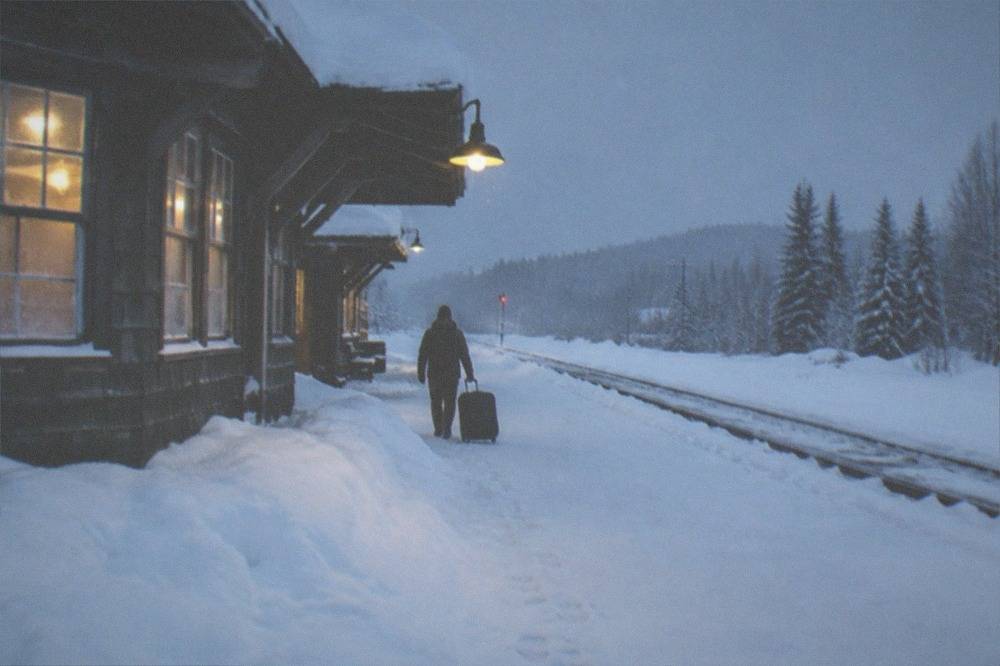
Road conditions are the second weight. The National Weather Service Fairbanks office issues frequent winter weather advisories through the season for snow accumulations in the 2 to 8 inch range, blowing snow, gusts and visibility down to half a mile or less on interior highway corridors. Those advisories are routine, not exceptional, which is exactly why a mode of travel that never asks you to hold a steering wheel through them has real value in mid-winter. Travelers driving the corridor should check the state's 511 road condition service on the day, not the forecast from a week out.
Daylight is the third and least discussed. With roughly 3 hours 42 minutes of daylight at the December solstice, a December transfer day in either direction is functionally a night journey with a brief twilight interlude. Longer winter nights mean more viewing hours, but do not confuse the two: more dark hours do not raise your odds of clear sky, and a dark train ride is not an aurora opportunity unless the forecast and your window line up. The best time to see the northern lights in Fairbanks guide untangles that month-by-month question properly.
How Do You Choose Between The Train And Other Options For A Fairbanks Aurora Trip?
Choose the train when you have spare days, want the scenery, or want to avoid winter driving entirely. Choose flying when nights are scarce and every hour counts. Choose driving when flexibility, cost across a group, or en route stops matter and you are confident in winter conditions. Most regret comes from mismatching the mode to the itinerary, not from any mode being bad.
The cleanest way to decide is to count your nights first and your preferences second. A traveler with four or more nights in Fairbanks can give one full day to the train and still bank enough viewing nights for the commonly cited odds to work. A traveler with two nights cannot, in honesty, spare the day, and should fly and spend the difference on a stronger tour. The itinerary shape decides the answer before the ticket price even enters the calculation.
| Your situation | Best mode | Why |
|---|---|---|
| Short trip, 2 to 3 nights, aurora is the goal | Fly | Preserves every viewing night |
| Long trip, 5+ nights, journey valued | Train, ideally northbound | Converts a transfer day into scenery, no driving risk |
| Group of 3 or more, confident winter driver | Drive | Cost splits across the carload, full flexibility |
| Solo traveler uneasy about icy roads | Train or fly | Removes the driving risk entirely |
| Arriving via Anchorage cruise or long-haul flight | Train northbound to Fairbanks | Dead transfer day becomes a highlight day |
| Late February or March travel | Train's scenic case strengthens | About 10 hours of daylight shows the route |
One caution that applies to any mode in deep winter: build slack. The single most common way a tightly planned Alaska winter itinerary fails is a zero-buffer day, where one weather delay, one advisory or one missed connection cascades across the remaining nights (see One Day In Fairbanks). The train is not immune to weather, and neither is a flight schedule; the difference is that a weather-hit driving day is your problem in real cold, while a weather-hit train or flight day is a rebooking problem. Slack in the middle of the itinerary protects the aurora nights at the end, which are the reason the trip exists.
For travelers who choose the scenic route and arrive with evenings intact, the strongest closing argument is to spend those evenings well rather than improvising in the cold. The Chena Hot Springs combo at from $275 per person, 4.5 from 1,342 reviews, is the flagship evening on this site's roster, and the premium small-group chase at from $335 per person, rated 5 from 789 reviews, is the pick for travelers who want a guide actively driving toward clear sky instead of waiting at a fixed site. Either way, the train got you there comfortably; the tour is what the trip is remembered for.
The solar context, for those timing a trip around the cycle, supports going sooner rather than later: Solar Cycle 25's smoothed sunspot number peaked around 160.9 in October 2024 and was in a declining phase through 2025 to 2026, at about 99.8 by February 2026, but geomagnetic activity, the more direct aurora driver, has stayed relatively elevated into 2026, with significant storms expected to become less frequent as the cycle declines toward its next minimum. That is an honest, hedged reason to prioritize a rail-and-aurora trip in the next couple of seasons, not a guarantee of any particular night.
Common Questions About The Fairbanks To Anchorage Train Ride
Is The Train Ride From Fairbanks To Anchorage Worth It?
It is worth it if the journey itself is part of your trip and you can spare a full day, especially northbound into Fairbanks on a late February or March departure with real daylight. It is not worth it if your trip is short and every night needs to count toward aurora viewing, in which case flying preserves the nights that matter.
Is The Train Faster Than Driving From Fairbanks To Anchorage?
No. The train is generally the slowest of the three main options. Driving is typically faster with flexible stops, and flying is faster by a wide margin. The train's advantage is comfort, scenery and the removal of winter driving risk, not speed.
Can You See The Northern Lights From The Train Between Fairbanks And Anchorage?
It is possible in principle on a dark winter ride with an active forecast and clear sky, but it is not something to plan around: you cannot stop, the interior is lit, and windows are not a serious viewing setup. Treat any sighting as a bonus and book actual aurora tours out of Fairbanks instead.
Should I Take The Train Before Or After My Fairbanks Aurora Nights?
Before, if the direction allows it. Riding northbound into Fairbanks as a daylight transfer preserves your Fairbanks evenings for viewing. Riding southbound on your last day is fine too, since those hours are no longer aurora hours, but avoid burning a mid-trip evening on travel. Bank your nights in Fairbanks.
Does The Train Avoid Winter Driving Risks Between Fairbanks And Anchorage?
Yes, that is its most practical advantage. Interior winter advisories for snow, blowing snow and low visibility are routine, and mid-winter temperatures run well below zero. The train puts a professional crew between you and all of it, while driving demands real preparation and confidence in icy conditions.