Is The Aurora Train Worth It?
An honest look at the aurora train question for Fairbanks visitors: what a train ride gives you, what a guided aurora tour gives you, and how the two compare on cost, viewing time and flexibility.
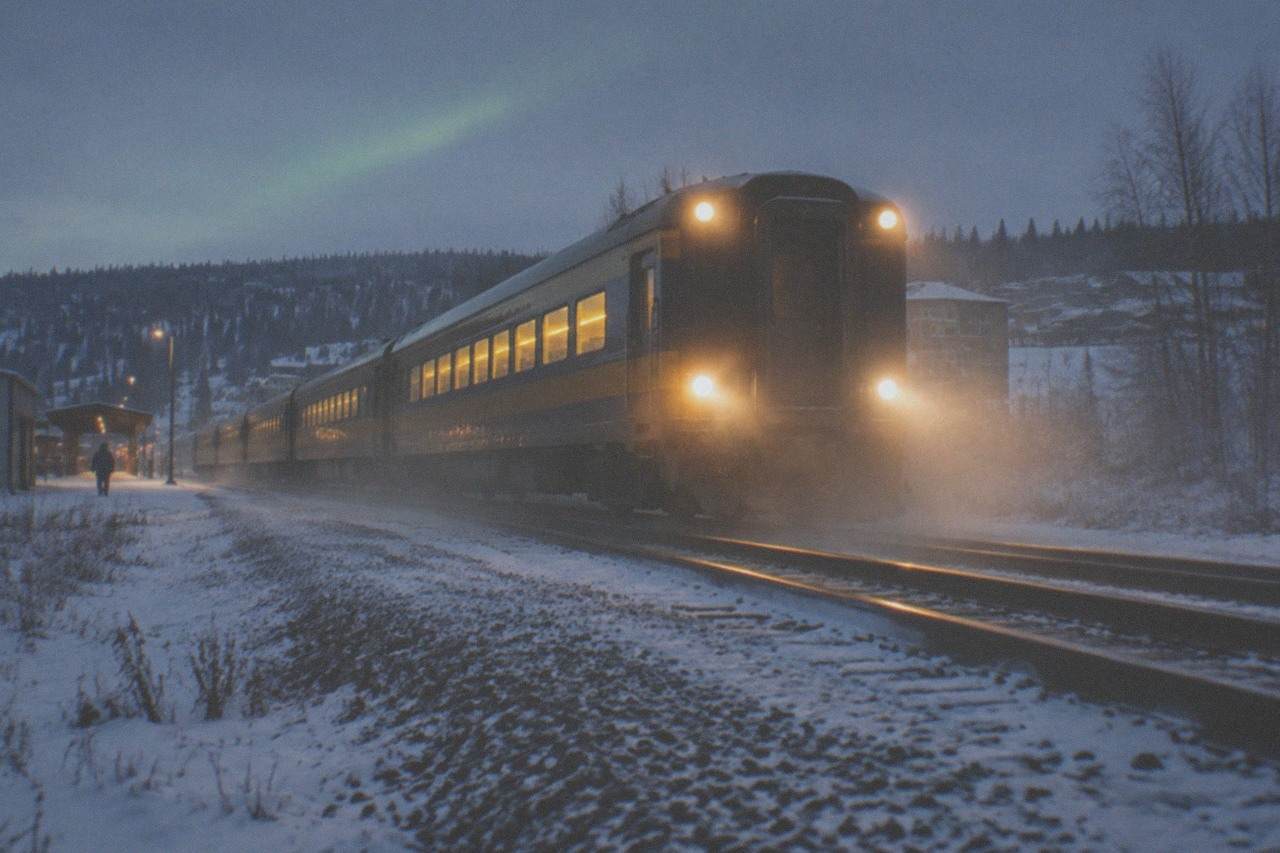
Is The Aurora Train Worth It?
The honest answer depends on what you are buying. A train ride through Interior Alaska is a scenery experience with a chance of aurora out the window; a dedicated aurora tour is a viewing experience built around darkness, a guide and flexible relocation. This site does not sell any train-based aurora product, so the comparison below is a genuine trade-off, not a sales pitch for one side.
The appeal of the aurora train is easy to understand. Rail routes out of Fairbanks cross the same Interior terrain that road tours cross, but from a heated car with wide windows, no driving and no dressing for the cold unless you step outside at a stop. If the aurora is active while the train rolls north, the combination of motion, snow and glowing sky can feel like the definitive Alaska night. Plenty of visitors arrive with exactly that image in their head.
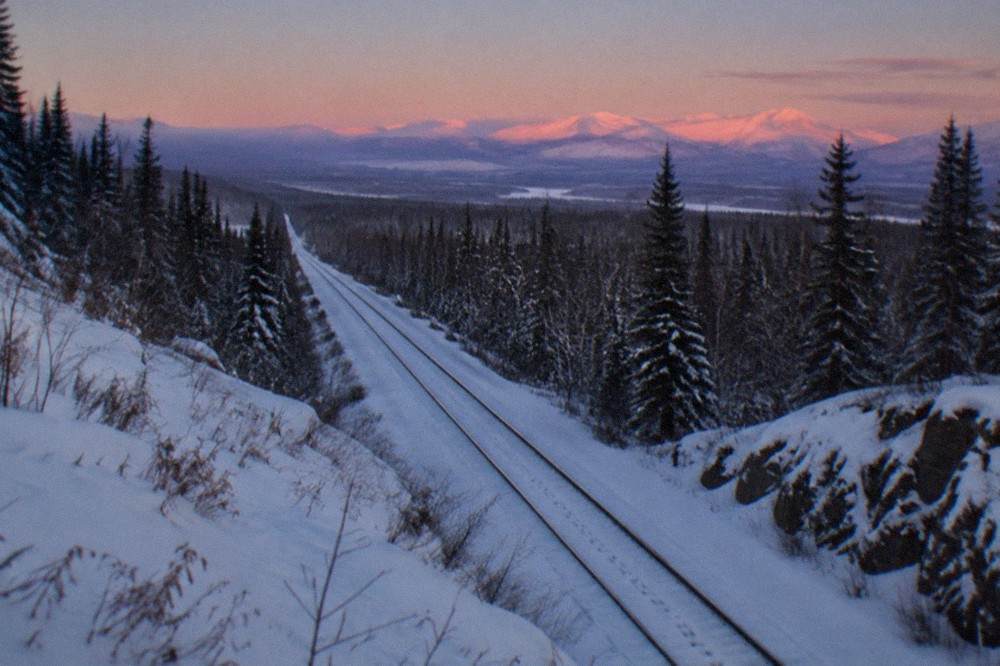
The catch is structural rather than scenic. A train runs on a fixed schedule along a fixed track. It cannot chase a gap in the clouds, wait out a quiet hour, or move twenty miles because the Kp forecast shifted after departure. Fairbanks sits under the auroral oval at roughly 64.8 degrees north, so visible aurora is often possible at lower Kp values, roughly 2 to 4, than at mid-latitudes, but the deciding factor on any given night is usually cloud cover, and a train has no answer to cloud cover. The UAF Geophysical Institute forecast is built around that reality: visitors pair it with local weather, not with a fixed route.
There is also a season constraint that a train brochure may not emphasize. Fairbanks' aurora season runs August 21 to April 21, per Explore Fairbanks, the official destination marketing organization. Outside that window, twilight or the midnight sun prevents viewing even when the aurora is active overhead. A summer scenery train and an aurora train are simply different products, and only one of them exists in the dark half of the year.
So the question is worth reframing before it can be answered. If you want a rail journey through Interior Alaska and would be happy if the lights appeared, the train can be worth it. If you want to maximize your odds of actually watching the aurora, a dedicated tour from Fairbanks does things a train cannot do. The rest of this article works through that trade-off honestly, using the real products this site's roster actually sells: guided van tours, lodge and yurt viewing, and hot springs combos. There is no train product hidden further down the page.
For readers who want the short version of the pivot: the three options above represent the main formats on the roster. A premium small-group chase moves for the sky, a lodge experience holds you in one heated dark-sky spot, and a hot springs combo pairs viewing with a soak. A train is none of those things, and the sections below explain why that difference matters on a cloudy night.
What The Aurora Train From Fairbanks Actually Offers
A train from Fairbanks offers comfort, scenery and a fixed schedule, plus a passive chance of seeing the aurora from a window. It offers no relocation for clear sky, no guide reading the forecast, no heated outdoor viewing position and no flexibility on timing, because rail timetables cannot be rewritten for one night of weather.
Start with the genuine strengths, because they are real. Rail travel in Interior Alaska removes the two hardest parts of a winter night out: driving and standing still in the cold. You sit in a heated car, watch the boreal forest and hills slide past, and eat or nap as the miles accumulate. There is no wrong turn on an icy road, no rental agreement to read, and no decision fatigue at 11pm when the sky looks uncertain. For travelers whose priority is a memorable Alaska journey with aurora as a possible bonus rather than the goal, that is a coherent choice.
The weaknesses show up when aurora becomes the goal rather than the bonus. The aurora is a natural phenomenon and no product can guarantee a sighting; the widely reported figure, attributed across sources including Explore Fairbanks rather than to any single operator, is roughly a 90% chance of seeing the aurora with a three-night stay during the season, weather permitting, with the aurora visible on about four of five clear nights. That 90% number is earned through repeated chances across multiple nights and multiple sky conditions, which is exactly what a single fixed-route journey cannot manufacture. One train departure gives you one sky, one route and one clock.
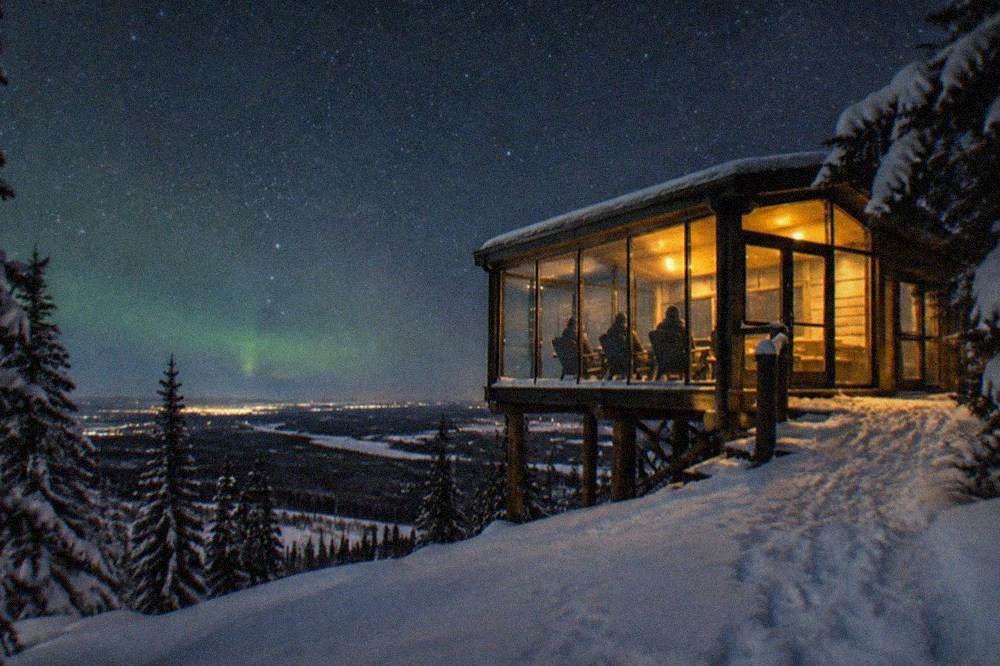
Two structural points are worth dwelling on. First, viewing from inside a lit rail car is harder than viewing from outside a dark one: interior reflections fight the sky, and windows limit your field of view to one side of the train. Second, aurora watching rewards stillness and darkness, ideally a north-facing open horizon, and a moving train trades both for scenery. Lodge-based viewing products exist precisely because a fixed heated structure with large north-facing windows beats a rolling one for this purpose.
None of this makes the train a bad product. It makes it a different product, and the honest framing is that a train ride is worth it for the ride itself. The same night, budgeted differently, could be spent with a guide who checks the cloud map at 10pm and drives the group toward the clearer part of the Interior, or in a yurt with hot drinks and a wide dark view. Those are the products the rest of this article compares, because those are the products this site actually represents.
Why Fairbanks Aurora Tours Spend More Time Under The Sky
Dedicated aurora tours convert your night into viewing hours: they leave after dark, position you under dark sky away from city glow, and stay out or hold position through the active hours. A guide also adds relocation, forecast reading and camera help, three things a fixed timetable cannot offer on any route out of Fairbanks.
The core advantage is time under the right sky, not luxury. Fairbanks' winter nights are long: at the winter solstice on December 21 the city gets approximately 3 hours 41 minutes of daylight, with sunrise around 10:58am and sunset around 2:40pm, lengthening to about 10 hours by late February. Longer nights mean more potential viewing hours per outing, which is why tour products are structured as multi-hour evening operations rather than short excursions. A train journey spends much of its dark hours moving between places, while a viewing tour spends them stopped in places chosen for the sky.
Relocation is the second advantage, and it is the one that matters most on imperfect nights. Small-group chasing tours operate on the logic that the sky is patchy: a guide with a cloud map and local knowledge can drive the group to a hole in the overcast, and if the first stop is flat, the van moves again. The Premium Aurora Viewing Tour, rated 5.0 from 789 reviews and priced from $335 per person, is built on that model, and its large review pool reflects many nights where moving made the difference. A lodge product takes the opposite bet, a fixed dark location with a wide horizon, and pairs it with heat, snacks and north-facing glass so waiting is comfortable. Neither model is universally better; they are two honest answers to the same uncertainty.
The solar cycle context adds a quiet urgency to the question of how you spend your nights. Cycle 25 is past its sunspot peak but geomagnetic activity has remained relatively elevated into 2026, and significant storms are expected to become less frequent as the cycle continues toward its next minimum. Nobody should tell you 2026 is the best year ever, because that absolute claim is not supportable, but the honest statement is that the current window is an active one and it is gradually narrowing rather than widening. If seeing the aurora is the point of the trip, spending each night in a format designed for the aurora is the rational allocation of those nights.
Readers weighing a premium chase against a lodge night can see the format difference in one line: the chase buys flexibility, the lodge buys comfort and stillness. The premium tour's 789-review pool at a 5.0 rating is the kind of evidence that matters when choosing how to spend a 300-dollar-plus night, and every rating on this page is printed with its review count for exactly that reason.
How The Costs Compare In Fairbanks
Aurora tours on this roster run from $99 per person for budget hilltop viewing to $385 per person for a photography-focused adventure, with most evening options between $160 and $335 per person. Train travel is priced separately by the rail operator, so the honest comparison is per night of aurora-focused spending, not a single head-to-head ticket price.
The table below shows the roster's real prices, all per person and all taken from the listings this site represents. It exists so the train question can be answered with numbers rather than vibes: whatever a rail ticket costs, you can see exactly what the same evening budget buys in a format built for the aurora.
| Format | Tour | Starting price per person | Rating and review count |
|---|---|---|---|
| Budget hilltop viewing at Murphy Dome | Budget Hilltop, Murphy Dome | From $99 | 4.5 from 317 reviews |
| Lodge and yurt aurora viewing | Lodge and Yurt Aurora Viewing | From $160 | 4.5 from 34 reviews |
| Private tour with hotel pickup | Private Tour, Hotel Pickup | From $160 | 4.4 from 18 reviews |
| Glass house viewing at Cleary Summit | 270-Degree Glass House, Hot Drinks | From $179 | 4.4 from 38 reviews |
| Small-group aurora chase | Small-Group Aurora Chase | From $215 | 5 from 557 reviews |
| Ice fishing and aurora combo | Ice Fishing and Aurora Combo | From $239 | 5 from 121 reviews |
| Hot springs and aurora combo | Hot Springs Combo, Chena Resort | From $275 | 4.5 from 1,342 reviews |
| Premium small-group chase | Premium Aurora Viewing Tour | From $335 | 5 from 789 reviews |
Read that table as a decision grid rather than a ranking. The budget hilltop option at $99 per person spends the least and gives you a dark elevated spot with transport, which is a genuinely good fit for a first night or a tight budget. The Chena hot springs combo at $275 per person, with 4.5 from 1,342 reviews, the deepest review pool on the roster, spends more and buys a soak plus viewing, a format that suits travelers who want an experience rather than a stakeout. The premium chase at $335 per person buys mobility and a guide's judgment. A train ticket buys neither a soak nor mobility for the sky.
Two roster facts deserve honesty rather than sales language. The private tour at from $160 per person carries only 18 reviews, so it cannot honestly be described as popular regardless of its 4.4 rating. Similarly, the Electric Moose photography adventure with pizza and heated shelter, from $300 per person, has 14 reviews, a small pool that says nothing either way about quality. Review counts matter alongside ratings, so both are printed together across this varied roster.
Cancellation terms are the other cost factor, and they differ listing by listing. Lodge and yurt viewing, the glass house at Cleary Summit, the Arctic Circle full-day trip and the dog sled dinner tour carry free cancellation on their listings. The guided lodge viewing product and the private tour explicitly do not carry free cancellation, so read those listings carefully before booking. The remaining listings state no policy either way, and no claim should be inferred from silence. Cancellation matters more than most visitors expect, because Interior Alaska winters produce cloudy nights and plans shift.
When A Train Ride Beats An Aurora Tour In Fairbanks
A train ride is the better choice when the journey itself is the point: covering long Interior distance in comfort, avoiding winter driving entirely, or connecting Fairbanks to other parts of Alaska in daylight. It is also the better choice for visitors who dislike cold-weather standing and would rather accept a lower aurora chance than spend hours outside waiting.
Fairness requires naming the scenarios where the tour format loses. Some visitors have no interest in standing in a yurt at 1am, and there is nothing wrong with that preference. Winter in Fairbanks is genuinely cold: January averages highs around 1 to 2F and lows around -16 to -17F, often the coldest month, and the winter of 2025-26 from December to March was the coldest on record for the city, averaging nearly -14F, per the National Weather Service. A heated rail car is a legitimate response to those numbers, and so is a glass house or a lodge with north-facing windows, which is exactly why those indoor-viewing formats exist on the roster.
The train also wins on distance and daylight. If the trip's shape is Anchorage to Fairbanks, or a longer rail journey through Interior Alaska, the train is doing transport work no evening tour does (see Fairbanks Train To Anchorage). Winter sightseeing on rails means watching the Alaska Range and boreal forest in daylight, which is its own experience, and the winter driving conditions around Fairbanks explain in detail why self-driving those corridors in winter is a serious commitment rather than a casual add-on. Notably, the rules are even stricter on the far northern routes: most major national rental-car companies prohibit driving the Dalton Highway or void insurance coverage for it, per the BLM Arctic Interagency Visitor Center.
But notice what happened in that last paragraph: the moment the comparison is about transport, the aurora drops out of it. The honest split is this. If the question is "how do I travel through Alaska beautifully," a train is a strong answer. If the question is "will I see the aurora on my three nights in Fairbanks," the tools are the UAF forecast, the calendar from August 21 to April 21, and an evening format designed around darkness and cloud cover. Trying to make one purchase answer both questions is how visitors end up with a lovely train ride and no lights.
The hybrid logic some travelers use is worth stating plainly: book the train for the scenery, and book one or two dedicated aurora evenings separately. That costs more than either option alone, but it removes the gamble from both halves of the trip. The commonly cited 90% figure for a three-night stay assumes nights actually spent under dark sky in viewing mode, not nights spent in transit. A shorter stay, one or two nights, carries lower odds, which is a real argument for choosing the most sky-focused format available on those nights rather than the most scenic one.
Choosing Between Train Scenery And Fairbanks Aurora Viewing
Choose the train if scenery and comfort are the goal, and choose a dedicated tour if the aurora is the goal, because the two formats optimize for different outcomes. Within the tour side, choose a chase for flexibility on uncertain nights, a lodge or glass house for comfort, and a hot springs combo when you want a full evening experience rather than pure viewing.
By this point the question has narrowed to which tour format fits you, so it helps to look at the roster's three main evening models side by side. The table below compares them on what each one actually does with your night, which is the decision that matters once the train is off the table.
| Question you should ask | Lodge or yurt viewing | Small-group chase | Hot springs combo at Chena |
|---|---|---|---|
| What if the sky is patchy? | You wait at one dark location | The guide relocates for clearer sky | You soak and wait at the resort |
| How cold will you get? | Heated structure, glass viewing | Vehicle time plus outdoor stops | Pool plus heated indoor options |
| Best fit for | Comfort-first viewers | Odds-maximizers, photographers | Travelers wanting a full evening |
| Roster price example | From $160 per person, lodge and yurt | From $215 per person, small-group chase | From $275 per person, Chena combo |
The lodge model is the closest cousin to the train's comfort appeal, with one decisive difference: the structure is stationary, positioned for a dark north horizon, and you can step outside whenever the sky ignites. The Alaskan Northern Lights lodges product, from $160 per person with a 4.5 rating from 34 reviews, includes transport from major Fairbanks hotels and large north-facing windows, and its listings carry free cancellation. The glass house at Cleary Summit, from $179 per person with 4.4 from 38 reviews, takes the same idea further with floor-to-ceiling windows in a 270-degree structure, hot drinks and snacks; that listing carries a real "Likely to sell out" badge, so travelers drawn to it should not assume last-minute availability.
The chase model is the honest answer to the train's core weakness. When the forecast is uncertain or the sky is broken, a fixed product, whether a rail car or a lodge, gives you one bet. A chase gives you several. The trade-offs are real too: you spend more of the night in a vehicle, standing outside at stops, and trusting a guide's judgment. The small-group chase at from $215 per person, rated 5 from 557 reviews, and the premium chase at from $335 per person, rated 5 from 789 reviews, both show the format's track record in their review pools. For readers who want help thinking through viewing windows before choosing, the best time to see the northern lights in Fairbanks breaks down the season month by month.
One more consideration belongs in this decision: what happens on the nights the aurora simply does not show. The aurora is never guaranteed on any product, any route, in any season, and honest planning treats a no-show night as a live possibility even in the current elevated-activity window. A tour with a guide, commentary, hot drinks and company gives a no-show night some residual value as an Interior Alaska evening out. A train gives a no-show night the value of the ride itself, which, to be fair, can be considerable. Choose based on which residual you would rather have.
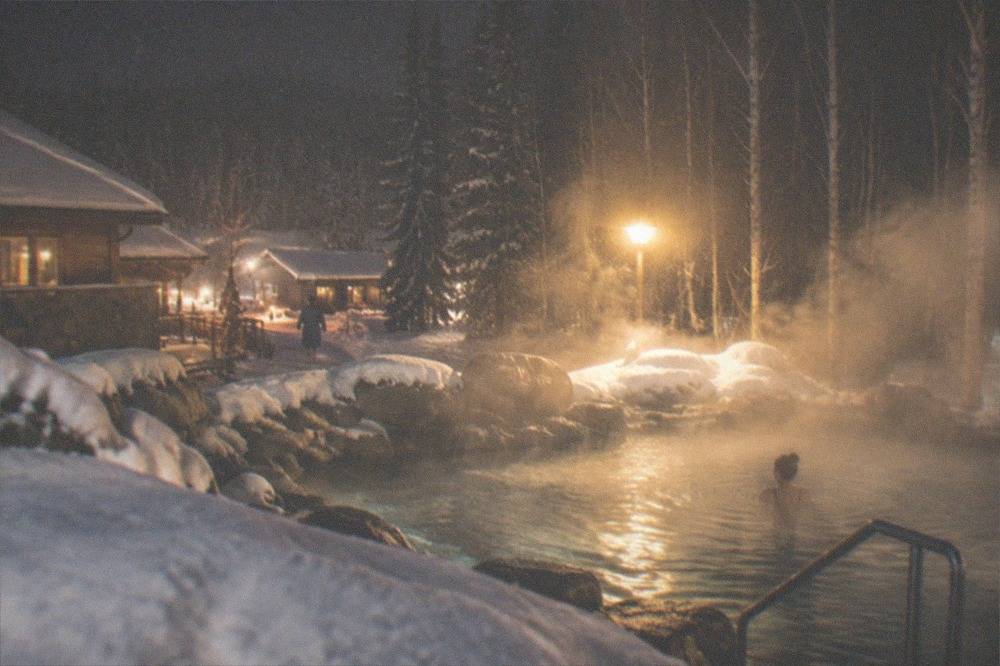
The Chena combo deserves the final word in this section because it is the roster's most balanced answer to the trade-off this whole article describes. It costs more than a basic viewing night, from $275 per person, but it buys a hot soak, a resort evening and aurora viewing in one outing, and its 4.5 rating from 1,342 reviews is the deepest evidence base on this site's entire roster. For travelers who want comfort and sky in the same purchase, it resolves the train's appeal without the fixed timetable.
Readers comparing the full field of formats can go wider than this page: the best northern lights tours in Fairbanks ranks the whole roster, and the dog sled and aurora combination tours add a distinctly Interior Alaska variant for travelers who want activity with their evening. Whatever the choice, this Fairbanks Aurora Borealis Tours article's honest summary stands: the train is worth it for the train, and the tour is worth it for the lights, and only you can decide which one your trip is actually for.
All three of these options leave from the Fairbanks area with transport included at a general level; exact pickup or meeting points are shown on each operator's live listing. Between the premium chase, the lodge experience and the Chena combo, the roster covers the comfort-to-flexibility spectrum that a single train ticket cannot span, and every price and rating above is printed exactly as its listing carries it.
Common Questions About The Aurora Train And Fairbanks Tours
Is the aurora train worth it?
It depends on the goal. A train is worth it for the journey through Interior Alaska in comfort; it is not the strongest choice for maximizing aurora odds, because a fixed route and schedule cannot chase clear sky. This site does not sell a train-based aurora product, and its dedicated tours are built around the flexibility a train lacks.
Can you see the northern lights from a train in Alaska?
Yes, when the aurora is active and the sky is clear along the route, but it is a passive chance from inside a lit, moving rail car. Tours position you under dark sky with a wide view, and chasing tours can relocate when the sky is patchy, which a train cannot do.
What is the best alternative to the aurora train from Fairbanks?
A dedicated evening tour. Options on this roster range from budget hilltop viewing at Murphy Dome from $99 per person to a premium small-group chase from $335 per person, plus lodge, glass house and hot springs formats in between.
How many nights do you need to see the aurora in Fairbanks?
Three or more is the commonly cited figure: sources including Explore Fairbanks repeat a roughly 90% chance of seeing the aurora with a three-night stay during the August 21 to April 21 season, weather permitting, with the aurora visible on about four of five clear nights.
Are Fairbanks aurora tours guaranteed to see the lights?
No. The aurora is a natural phenomenon and no tour, train or lodge can guarantee a sighting. Tours improve your odds through dark locations, guides and relocation, but honest planning always leaves room for a quiet sky.
When is aurora season in Fairbanks?
August 21 to April 21, per Explore Fairbanks. Outside that window, twilight or the midnight sun prevents viewing even when the aurora is active overhead, so summer scenery trains and winter aurora trips are genuinely different products.