What Not To Miss When Visiting Alaska?
An honest Alaska bucket list: the northern lights from Fairbanks, Chena Hot Springs, the Arctic Circle sign, dog sledding, and what the summer coast and rail routes add, with real prices and season facts.
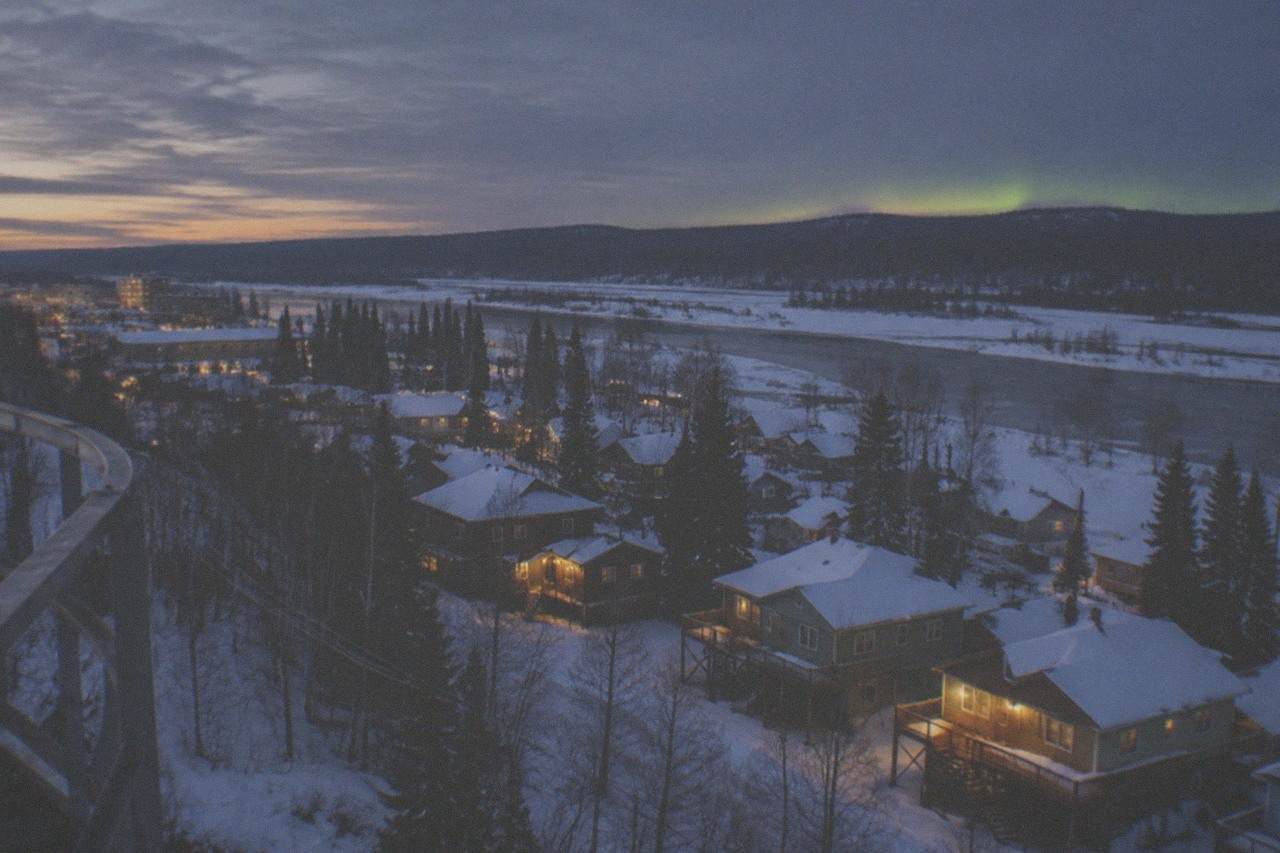
What Not To Miss When Visiting Alaska?
Alaska rewards two very different trips: a summer loop for coast, glaciers, and long daylight, and a winter stay in the Interior for the northern lights. The essentials most visitors regret skipping are the Fairbanks aurora season, Chena Hot Springs, the Arctic Circle sign on the Dalton Highway, and a dog sled ride under a dark Interior sky.
That split is the single most useful thing to understand before booking anything. Travelers who arrive in July expecting the aurora discover that Fairbanks never gets properly dark between late spring and late summer, and travelers who arrive in January expecting the Kenai fjords by boat discover that the coast is a different season entirely. The lights belong to the cold half of the year, and almost everything else belongs to the warm half, and almost nobody has time to do both in one visit.
The aurora is the anchor of the cold half, and Fairbanks is where Alaska does it best. The city sits under the auroral oval, the band of sky where the lights appear most often, and the official destination marketing organization defines the viewing season as August 21 to April 21, a window set by darkness rather than by solar activity: outside it, twilight or the midnight sun simply erases the show even when the magnetosphere is firing. That long window is why so many bucket-list itineraries route through a city that otherwise gets overlooked for Anchorage, and it is the reason this guide spends most of its length on the Interior. Fairbanks is also where Fairbanks Aurora Borealis Tours is based, so the practical detail here leans toward the aurora economy: lodges, hilltops, forecasts, and the specific tours worth booking.
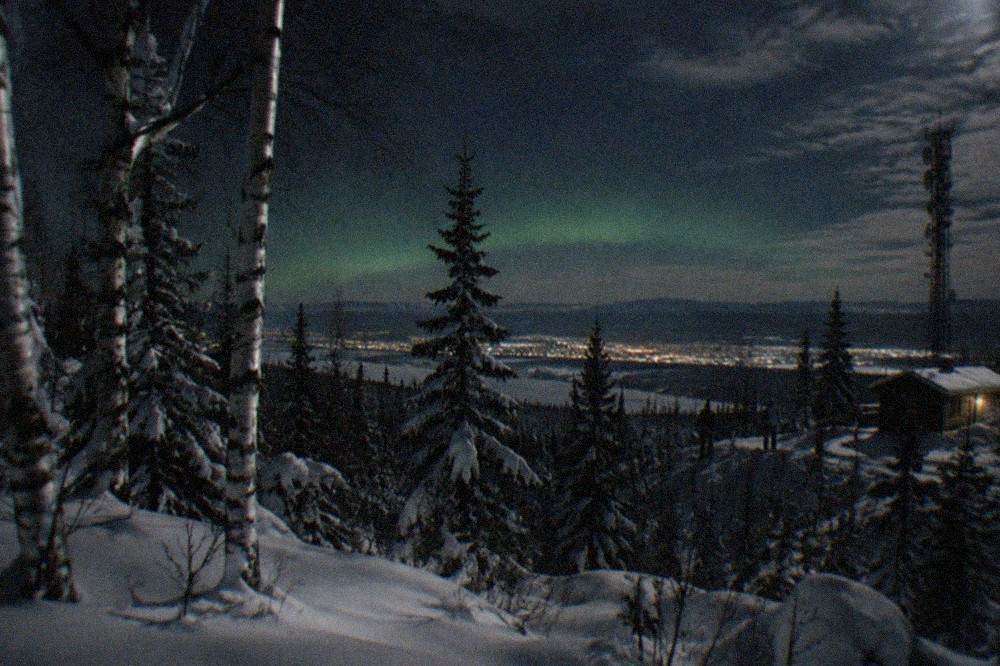
If the aurora is the reason for the trip, the three formats that matter most are the lodge or yurt night with heated north-facing windows, the mobile chase that drives toward clear sky, and the hot springs combo that stacks a resort day under an evening hunt. These three cover nearly every budget and travel style represented on the local tour roster, from around $160 per person for heated lodge viewing to $335 per person for a premium small-group chase, with the Chena Hot Springs combination sitting in the middle at $275 per person.
Between them, those three options answer the question most first-time Alaska visitors actually ask: should the aurora night be comfortable, aggressive, or a full day out? A heated lodge with big windows suits families and anyone who wants to wait warm. A chase tour suits photographers and travelers on a short stay who cannot afford a cloudy night at a fixed site. The hot springs combo suits anyone who wants the day itself to be part of the memory, with an ice museum and a geothermal pool before the sky darkens.
Why Fairbanks Belongs At The Heart Of An Alaska Trip
Fairbanks sits at roughly 64.8 degrees north, under the auroral oval, so its viewing season stretches from August 21 to April 21. A widely cited figure from the tourism board holds that visitors staying three or more nights during the season see the lights roughly 90 percent of the time, weather permitting, with displays on four of five clear nights.
That geography deserves a plain explanation, because it is the reason Fairbanks beats almost every other aurora destination on the continent. The auroral oval is a ring of auroral activity centered on the geomagnetic pole, and Fairbanks sits beneath its typical southern edge. When activity is low to moderate, locations farther south see nothing while Fairbanks may still see a quiet green arc. The UAF Geophysical Institute publishes a daily forecast built on the Kp index, a 0 to 9 planetary geomagnetic scale, and notes that Fairbanks can show visible aurora at Kp values of roughly 2 to 4 that would leave mid-latitude cities empty-handed. The index is global rather than local, so it works best as a planning signal, not a guarantee.
The three-night rule is the practical takeaway. A single night in Fairbanks is a coin flip against cloud cover, and cloud cover, not solar activity, is the real enemy. Staying three or more nights statistically covers most weather patterns moving across the Interior, which is why the 90 percent figure is repeated across tourism sources and always carries the weather-permitting caveat. The aurora itself is never promised; the odds are built by giving the sky enough chances.
The Chena Hot Springs combo is the tour this site features at the top of its roster for good reason: at 4.5 across 1,342 reviews it carries one of the deepest review pools of any aurora product in the region, and from $275 per person it bundles an entire day, the resort, the Ice Museum, the hot springs, and an evening aurora hunt, into one booking. For a first Alaska trip that wants one big night to feel safe and full, it is the single listing that covers the most ground.
Chena Hot Springs And The Aurora Ice Museum Near Fairbanks
Chena Hot Springs Resort sits about 60 miles northeast of Fairbanks, a one to two hour drive, and pairs a year-round outdoor hot springs pool with the Aurora Ice Museum, a 25F structure built from more than 1,000 tons of ice and snow. Touring both in one afternoon, then staying for the lights, is the classic Interior Alaska day.
The resort is a destination in its own right, not merely an aurora stop. The official resort site describes the Aurora Ice Museum as the world's largest year-round ice environment, completed in January 2005, illuminated inside with ice sculptures and an ice bar, and kept at a constant 25F by a geothermal absorption chiller. Guided tours run about 45 minutes, typically at 11am, 1pm, 3pm, 5pm, and 7pm, with parkas provided. The outdoor hot springs pool is open 7am to 11:45pm daily, year-round, which means a soak under a dark winter sky is a real option even on nights the aurora stays quiet.
| Chena Hot Springs On-Site Essential | Detail |
|---|---|
| Drive from Fairbanks | About 60 miles northeast, roughly 1 to 2 hours |
| Aurora Ice Museum entry | Adults $20, children ages 6 to 11 $15 |
| Ice Museum tours | 45 minutes, typically 11am, 1pm, 3pm, 5pm, 7pm, year-round |
| Hot springs pool | Open 7am to 11:45pm daily, year-round |
| Resort's own aurora tour | About 5 hours to Charlie Dome, listed at $110 to $125 per person |
Those resort prices are general admission, separate from any tour booked from Fairbanks. The resort runs its own aurora excursion up the hill to Charlie Dome in a military-style vehicle with heated yurts and hot drinks at $110 to $125 per person, but it is only available to guests already at the resort. Independent travelers staying in Fairbanks usually book a combo tour instead, which handles the drive both ways and adds an aurora hunt on the return leg. The comparison between the two approaches, staying on-site versus touring from the city, is covered in detail in the Chena Hot Springs aurora tours guide.
The listed combo from Fairbanks runs from $275 per person and carries a 4.5 rating across 1,342 reviews. The listing does not state a cancellation policy, so check the terms on the live listing before committing, especially for winter dates when Interior weather can shuffle plans. One quirk worth knowing: the resort's geothermal plant supplies most of its electricity, drawn from water at 165F pumped from around 1,580 feet down, and the resort offers free 45-minute geothermal energy tours daily, a genuinely odd and worthwhile stop on a slow afternoon.
Booked as a single evening-to-morning experience, the combo compresses the best of Interior Alaska into one line item: hot water, ice architecture, dark sky, and a ride home. Travelers who prefer to sleep in Fairbanks and let someone else handle the 60-mile road both ways will find the combo format does exactly that, with pickup from the Fairbanks area, the exact meeting point shown on the listing.
The Dalton Highway And The Arctic Circle Sign From Fairbanks
The Arctic Circle marker stands at milepost 115 on the Dalton Highway, roughly 194 to 200 miles north of Fairbanks, about five hours one way in good conditions. Full-day tours run 12 to 16 hours round trip. Most national rental-car companies prohibit the highway or void insurance on it, so the way to reach the sign is a guided tour.
Crossing the Arctic Circle is the other genuinely Interior Alaska bucket-list item, and it is not a casual one. The Dalton Highway, also called the Haul Road, is the industrial supply route to the North Slope, and the BLM Arctic Interagency Visitor Center is blunt about it: most major national rental-car companies prohibit driving it or void coverage, and only specialty local operators typically permit their vehicles on it. Winter brings snow, blowing snow, refreeze black ice, and reduced visibility, and Alaska DOT notes winter conditions can persist from early August into June. Truck traffic increases in winter, and travelers are advised to check road conditions before any trip north.
The full-day tours that run this route from Fairbanks typically stop at the Trans-Alaska Pipeline, the Yukon River crossing, and Finger Mountain before reaching the Arctic Circle marker, where certificates are handed out and photographs happen. The return leg doubles as an aurora hunt, with the buses and vans stopping under dark sky away from town glow, often arriving back in Fairbanks in the small hours. One listing on this site's roster, the full-day Arctic Circle trip with a return aurora hunt around 3am, runs from $330 per person, rates 4.5 across 171 reviews, carries free cancellation, and bears a "Likely to sell out" badge on its listing, an urgency flag the operator itself displays.
It is a demanding day, and honesty about that is worth more than romance. Twelve to sixteen hours in a van on gravel, in winter cold, with stops at remote viewpoints, is not for every traveler, and the aurora portion is a bonus leg rather than the main event. For travelers whose priority is the lights rather than the latitude line, a Fairbanks-based chase or lodge night delivers more sky time for less fatigue. For travelers who want to stand at 66 degrees 33 minutes north and have the photograph, there is no substitute, and the deep-dive Arctic Circle aurora tour guide breaks down what the day actually contains.
Dog Sledding And Winter Nights Around Fairbanks
Dog sledding, ice fishing, and lodge-based aurora viewing round out the Interior winter experience. A combined dog sled ride and salmon dinner with aurora viewing runs from $320 per person, an ice fishing and aurora combo from $239 per person, and heated lodge or yurt viewing from $160 per person, each price set by its operator's listing.
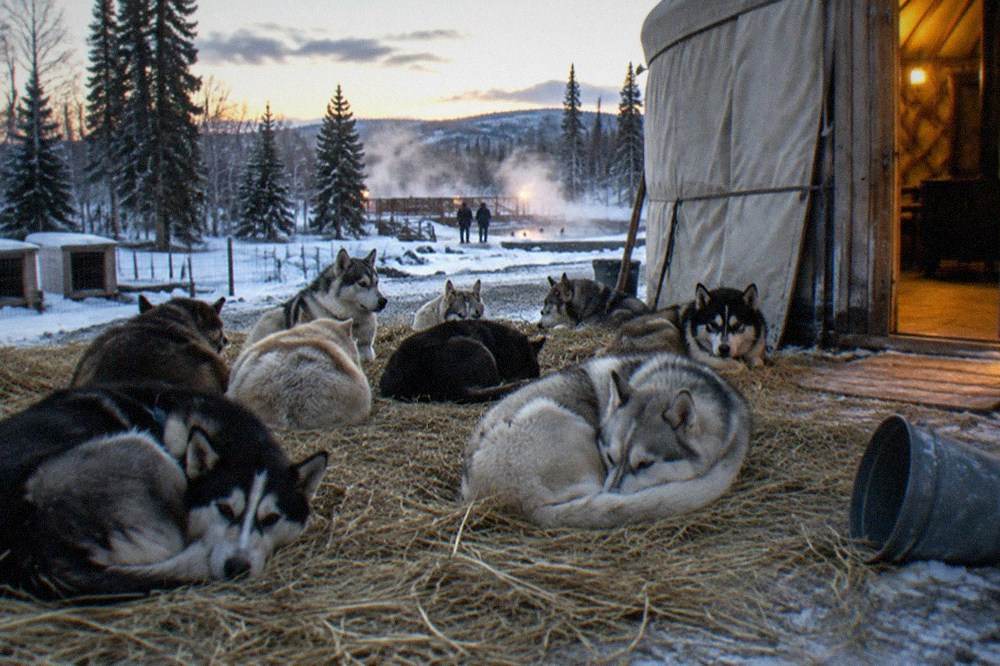
Alaska is one of the last places on earth where a working dog team is ordinary rather than exotic, and the Interior winter is where that culture is most accessible to visitors. The dog sled and aurora pairing on the local roster is a full evening built around it: a moonlit sled ride, a salmon dinner, time in a heated yurt, and then aurora viewing, from $320 per person, rated 4.5 across 140 reviews, with free cancellation on the listing. It is the format that answers the question of what to do with the hours between dusk and the aurora's late-evening peak, and it does so with food and a fire rather than a cold parking lot.
The ice fishing and aurora combo, from $239 per person and rated 5 across 121 reviews, runs the same logic with a hole in the ice instead of a sled. And the lodge-based format, from $160 per person at 4.5 across 34 reviews, is the simplest of all: transport from major Fairbanks hotels to a heated lodge or yurt with large north-facing windows, so the wait happens indoors. That lodge listing carries free cancellation, which makes it a common first-night booking for travelers who want a low-stakes introduction before committing to a chase or a full-day tour.
For many visitors the dog sled evening ends up being the Alaska memory that outlasts the aurora, because it is the one that cannot be replicated anywhere closer to home. The lights can be chased in Norway or Iceland; a salmon dinner in a yurt after a moonlit sled run in the Alaska Interior is a much shorter list of places.
When To Visit Alaska For Lights, Coast, And Trains
For the northern lights, plan around the August 21 to April 21 season, with midwinter offering the longest darkness and the equinoxes often noted for stronger geomagnetic activity. For everything else on an Alaska list, June through August brings the coast, the train, and hiking at their most accessible. Many travelers split one trip between both seasons.
The calendar math in Fairbanks is dramatic and worth seeing in numbers. On the winter solstice, December 21, the city gets roughly 3 hours and 41 to 42 minutes of daylight, with sunrise near 10:58am and sunset near 2:40pm. By late February daylight has stretched back to about 10 hours. Longer nights mean more viewing hours per night, though not a higher chance of clear sky, a distinction that matters when planning. The best time to see the northern lights guide works through the month-by-month trade-offs in full.
| Month In Fairbanks | Average High | Average Low | What It Means For Visitors |
|---|---|---|---|
| November | 12 to 14F | -2 to -4F | Early season cold, good darkness, thin crowds |
| December | 4 to 5F | -12 to -13F | Solstice darkness, near 4 hours of daylight |
| January | 1 to 2F | -16 to -17F | Often the coldest month, longest nights |
| February | 12 to 13F | -10 to -11F | Deep cold easing, roughly 10 hours of light by month end |
| March | 25 to 27F | -3F | Milder days, strong darkness, equinox activity |
Those are long-term monthly normals, not a forecast for any given week, and one recent winter proves the point in both directions: the winter of 2025-26 was Fairbanks' coldest on record, averaging nearly -14F from December through March, per the National Weather Service. Cold like that does not stop the tours, heated lodges and vans exist for exactly this reason, but it does dictate serious clothing, which the what to wear on a Fairbanks aurora tour guide covers layer by layer.
The equinoxes, late March and late September, are often noted for enhanced geomagnetic activity, and midwinter delivers the longest dark hours. Neither month guarantees anything, but both tilt the odds. Summer, June through August, is the mirror season: nearly 24 hours of usable daylight at peak, no aurora, and the whole coast, rail, and hiking half of the Alaska list at its best.
Alaska Beyond The Northern Lights: Trains, Wildlife, And Coast
Alaska is far more than its night sky. The rail route between Fairbanks and Anchorage, the glaciers and fjords of the Kenai Peninsula and Inside Passage, Denali in clear weather, and the chance of seeing grizzly bears, moose, and caribou give the state a full summer itinerary, no aurora required.
The summer half of the Alaska bucket list deserves its own honesty. The train between Fairbanks and Anchorage is one of the few North American rail journeys that justifies itself purely on scenery, and the Is the train ride from Fairbanks to Anchorage worth it article works through whether the fare buys enough to skip the highway (see Fairbanks Train To Anchorage). Denali is the tallest peak in North America, and the honest caveat is that it is visible only on a minority of days, so travelers building the whole trip around the view should build in buffer days instead.
Wildlife is the same story told with animals. Grizzly bears, moose, caribou, and Dall sheep are all present around the Interior and southcentral regions, but sightings are never scheduled; the grizzly bears around Fairbanks piece explains where they actually range and how often visitors cross paths. Coastal cruising, whether day trips out of Seward or the longer Inside Passage routes, reliably delivers glaciers and tidewater scenery in a way that wildlife cannot match, and for many travelers it is the most dependable wow of the summer season.
The practical summary is that summer Alaska is a logistics-heavy, high-reward loop: Anchorage in, Denali and Fairbanks by rail, Seward or Whittier for the water, Anchorage out. It shares almost no packing list with the winter aurora trip, which is a feature rather than a bug: doing both halves of the state well means two genuinely different journeys, and travelers who try to compress them into one March week with a boat tour are usually disappointed on both counts.
How To Fit An Alaska Bucket List Into One Trip
A workable pattern is three or more nights in Fairbanks for the lights, one day at Chena Hot Springs, one full-day Arctic Circle tour, and a summer rail or coastal leg added before or after. Booking the aurora night first matters most because the Arctic Circle day trip carries a sell-out warning on its listing.
Sequencing is what turns a list into a trip. The Fairbanks nights should anchor the winter half: three nights minimum for the weather statistics to work, with the first or second night spent at a heated lodge where waiting is comfortable, and a later night spent on a chase that can drive to clear sky (see Tours For Seniors). The Chena day slots in as either a self-drive resort day or a booked combo, and the Arctic Circle tour, at 12 to 16 hours with a roughly 3am return, works best on a day with nothing else planned and a slow morning after.
| Aurora Night Format In Fairbanks | From Price | Rating And Reviews | Best For |
|---|---|---|---|
| Hot Springs Combo, Chena Resort | $275 per person | 4.5 across 1,342 reviews | A full resort day plus the hunt |
| Premium Aurora Viewing Tour | $335 per person | 5 across 789 reviews | A small-group chase toward clear sky |
| Lodge And Yurt Aurora Viewing | $160 per person | 4.5 across 34 reviews | Waiting warm with big north windows |
Those three formats cover the decision most travelers face, and the review pools matter as much as the prices: 1,342 reviews and 789 reviews are deep, meaningful samples for a seasonal tourism product, while a 4.5 from 34 reviews is a good rating from a still-small pool. Where a listing carries a stated free-cancellation policy, as the lodge listing does, it is worth using, because Interior weather makes itineraries soft-edged by nature. The glass house at Cleary Summit is another option entirely, a 270-degree glass room at from $179 per person and 4.4 across 38 reviews, and it carries the roster's other "Likely to sell out" badge, but the three above are the ones that define the market.
For travelers combining the seasons, the honest advice is to separate the trips by months rather than days: aurora in the winter window, coast and rail in summer, with Anchorage as the hinge city between them. Travelers with only one trip and one season should pick the half of the list that matches their tolerance, cold and dark for the sky, mild and long for the water, and then leave the other half for the return visit that almost everyone ends up planning anyway.
Whichever aurora night anchors the itinerary, the rest of the Alaska list falls into place around it: a resort day, a latitude line, a sled run, and, if the calendar allows, a summer return for the coast and the train. Book the night with the deepest review pool first, give the sky three chances, and the state tends to take care of the rest.
Common Questions About Visiting Alaska
What Not To Miss When Visiting Alaska?
The essentials are the northern lights from Fairbanks between August 21 and April 21, a day at Chena Hot Springs with its Aurora Ice Museum, the full-day Arctic Circle sign tour on the Dalton Highway, a dog sled evening under an Interior sky, and, in summer, the rail route and coastal glaciers. The aurora half and the summer half rarely fit one trip, so choose a season first.
Where Are The Northern Lights Best Seen In Alaska?
Fairbanks is the state's most reliable base because it sits at roughly 64.8 degrees north, under the auroral oval, with a viewing season from August 21 to April 21. A commonly cited figure holds that a stay of three or more nights during the season sees the lights roughly 90 percent of the time, weather permitting, with displays on four of five clear nights.
How Many Days Should I Stay In Fairbanks To See The Aurora?
Three nights is the practical minimum, since cloud cover, not solar activity, is the main obstacle and a longer stay covers more weather systems. The widely reported 90 percent sighting statistic is built on exactly that stay length. Travelers with only one or two nights generally improve their odds with a mobile chase tour, which can drive to clearer sky, rather than a fixed viewing site.
Is The Arctic Circle Day Trip From Fairbanks Worth It?
For travelers who want to stand at 66 degrees 33 minutes north, yes: the full-day tour runs 12 to 16 hours, stops at the pipeline and Yukon River, reaches the sign at milepost 115, and hunts the aurora on the roughly 3am return. It is physically demanding, and most rental-car companies prohibit the Dalton Highway, so a guided tour is the realistic way to do it.
Can You Swim At Chena Hot Springs In Winter?
Yes. The outdoor hot springs pool is open 7am to 11:45pm daily, year-round, and the resort is about 60 miles northeast of Fairbanks, a 1 to 2 hour drive. The Aurora Ice Museum next to it is held at a constant 25F, offers 45-minute tours, and charges $20 for adults and $15 for children ages 6 to 11.