What Is Special About Chena Hot Springs?
Chena Hot Springs pairs a geothermal pool, the Aurora Ice Museum and a hilltop aurora operation about 60 miles from Fairbanks. Here is what makes the resort unusual, and how to see it.
What Is Special About Chena Hot Springs?
Chena Hot Springs stands out for combining three things rarely found in one place: a natural geothermal pool open year-round, the Aurora Ice Museum billed as the world's largest year-round ice environment, and a hilltop aurora operation, all roughly 60 miles northeast of Fairbanks at the end of a scenic dead-end road.
Plenty of Alaska destinations do one thing well. This resort does several, and the reason is underground. Hot mineral water rises through the valley floor, and the resort has spent decades building around it: a pool and pool house kept open every day of the year, greenhouses heated by the same water, a small power plant that turns low-temperature geothermal heat into electricity, and an ice attraction chilled by a patented absorption system running on that same resource.
The location helps too. Chena Hot Springs sits at the end of Chena Hot Springs Road, past the last turnoffs toward the Chena River State Recreation Area, far enough from Fairbanks that the city glow mostly drops below the horizon. On a clear night in season, that darkness is the product. Visitors who want the full picture of overnight and tour options across the region can browse the comparisons on Fairbanks Aurora Borealis Tours, which covers everything from lodge-based viewing to full-day Arctic Circle runs.
For aurora travelers, the practical pull is simple: this is one of the few places where a visitor can soak in naturally heated mineral water in the evening, walk through a 25F ice gallery the next morning, and stand on a dark dome watching the sky, without ever moving base camp more than a mile. The rest of this article walks through each of those pieces, what they cost, and how a guided tour from Fairbanks fits around them.
For readers comparing this resort against other aurora setups around Fairbanks, the two lodge listings in that selection are the natural contrast: fixed-base viewing with transport from major hotels rather than a resort stay, at from $160 and from $200 per person respectively. The rest of the article sticks to Chena itself.
How Far Is Chena Hot Springs From Fairbanks, And What Is The Drive Like?
Chena Hot Springs sits roughly 60 miles northeast of Fairbanks, at the end of Chena Hot Springs Road, and sources place the resort between 56.5 and 61 miles out depending on the route measured. Expect a drive of one to two hours each way, longer in snow. The resort's own shuttle materials quote about 1.5 to 2 hours.
The road is a single route in and out: Chena Hot Springs Road runs east from Fairbanks, follows the Chena River valley through the recreation area, and dead-ends at the resort at milepost 56.5. There is no through traffic and no alternate way in, which is part of why the night sky out there is as dark as it is. Independent mapping of Chena Hot Springs Road puts the drive at roughly one to one and a half hours in good conditions, while resort materials describing the shuttle quote 1.5 to 2 hours, a fair range for winter.
That spread is not carelessness. The road is paved the whole way but climbs and bends through the valley, and Interior Alaska winters reshape what an hour means. Snow, refreeze and low visibility can stretch the trip considerably, and travelers driving their own vehicle in December through February should treat the forecast as seriously as the aurora forecast. The site's Fairbanks winter driving conditions guide covers the seasonal hazards in detail, including the December advisory patterns that Interior travelers should watch.
Many visitors skip the driving question entirely by booking the Chena Hot Springs aurora combo, a guided outing that combines the resort with northern lights viewing from Fairbanks. It carries a 4.5 rating across 1,342 reviews and starts from $275 per person. The live listing spells out exactly what the evening covers, and the operator handles the valley road in the dark, which is the part of the trip most rental drivers are least eager to own.
The calculation is personal. A confident winter driver with studded tires and a full tank may relish the run out on their own schedule. A visitor landing at Fairbanks airport at 9pm with a 1am aurora window ahead usually does not, and that is the traveler this tour format was built for.
What Is The Aurora Ice Museum At Chena Hot Springs?
The Aurora Ice Museum is a 45-minute walk-through attraction built from more than 1,000 tons of ice and snow harvested on site, held at a constant 25F and open every day of the year. The resort bills it as the world's largest year-round ice environment. Adults pay $20, children ages 6 to 11 pay $15, and parkas are provided.
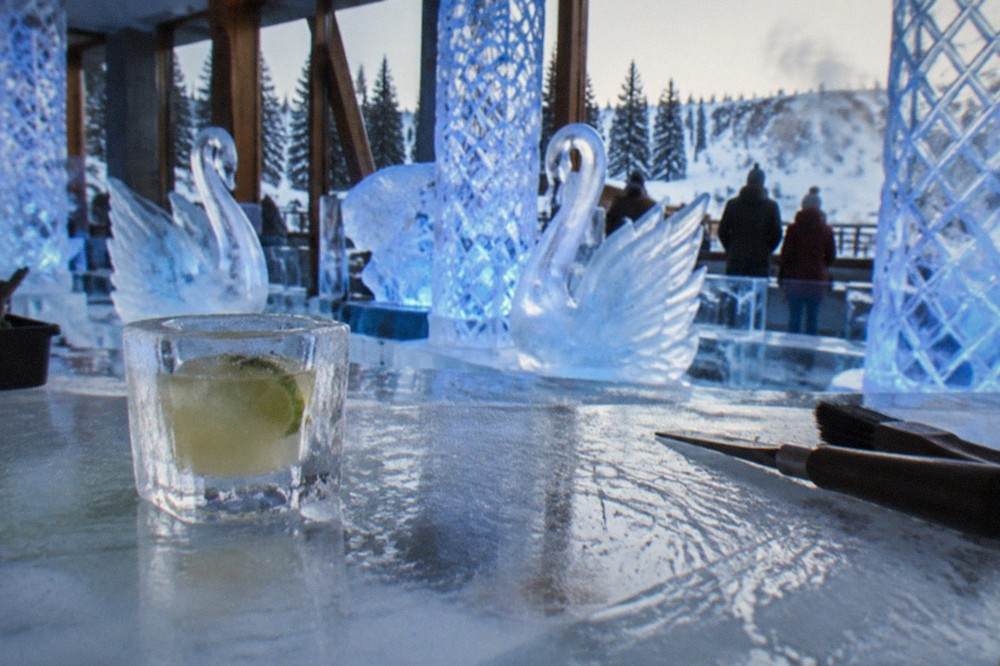
The museum is not a freezer with a few sculptures in it. It was completed in January 2005, carved from ice and snow cut on the property, and it stays frozen year-round using a patented geothermal absorption chiller, the first of its kind built for this purpose. The resort describes the result as the world's largest year-round ice environment: galleries of illuminated sculptures, jousting knights, a bed suite and an ice bar, all maintained at a constant 25F inside regardless of what the Alaska summer is doing outside.
Tours are guided and take about 45 minutes, running 365 days a year. For many winter visitors the museum doubles as the daytime half of an aurora trip: the sky owns the night, and the ice owns the afternoon. An optional Appletini served in a carved ice glass costs an extra $20 at the bar. The site's Aurora Ice Museum visitor guide goes deeper on what the tour covers and how to time it.
One point worth separating cleanly: these are the resort's own general-admission prices, charged at the door. They are entirely separate from the aurora tour listings sold out of Fairbanks, which price their own packages (see Tour Packages). A visitor can pay $20 for the museum on a day trip, or buy a combo tour from the city that folds resort time into a bigger evening, and the two price tags never merge.
| Detail | What The Resort Lists |
|---|---|
| Guided tour length | 45 minutes |
| Typical daily tour times | 11am, 1pm, 3pm, 5pm, 7pm |
| Inside temperature | Constant 25F |
| Adult ticket, ages 12 and up | $20 |
| Child ticket, ages 6 to 11 | $15 |
| Construction material | Over 1,000 tons of on-site ice and snow |
| Completed | January 2005 |
| Optional ice-glass Appletini | $20 extra |
Parkas are handed out free at the door, so a visitor who packed light for the pool does not need to rent winter gear to walk through. Photography is generally part of the experience; the blue-lit galleries are one of the most photographed interiors in Interior Alaska.
Can You Soak In The Chena Hot Springs Pool Year-Round?
Yes. The outdoor geothermal pool and pool house are open 7:00am to 11:45pm daily, year-round, and day-use admission runs $20 for adults, $18 for seniors and $17 for children ages 6 to 17, with children 5 and under free. Soaking is priced separately from Ice Museum tickets and from any aurora tour.
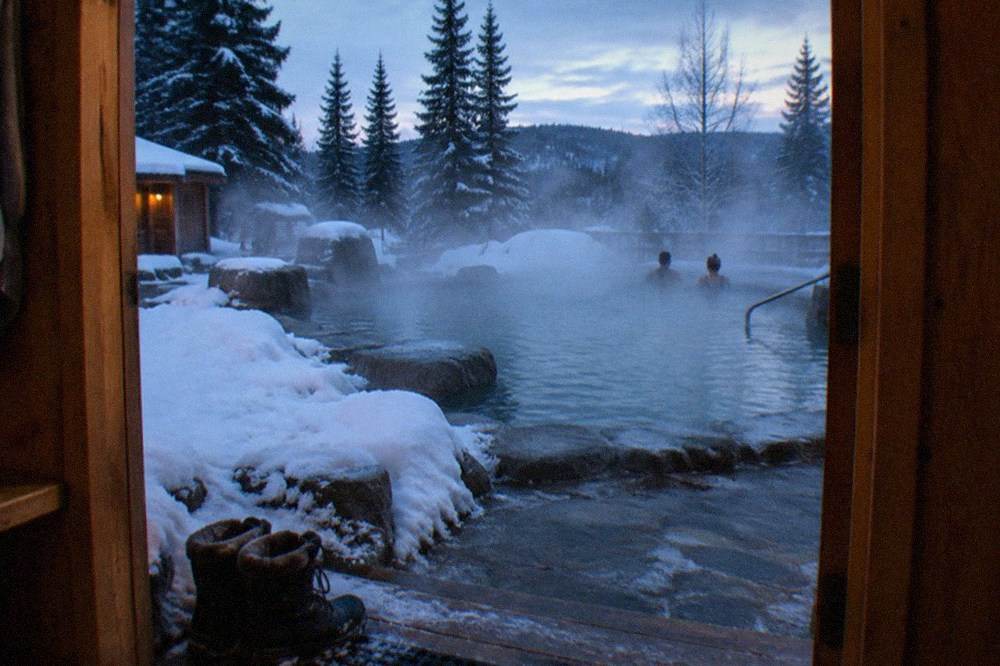
The pool is the heart of the resort and the reason there is a resort at all. Naturally heated mineral water feeds the outdoor pool and the surrounding pool house, and the facility keeps long hours precisely because the soak is the main event: opening at 7 in the morning and running until 11:45 at night, every day, including the deep of January. The resort's day-use rates are charged per person for pool access, separate from lodging and separate from every tour ticket.
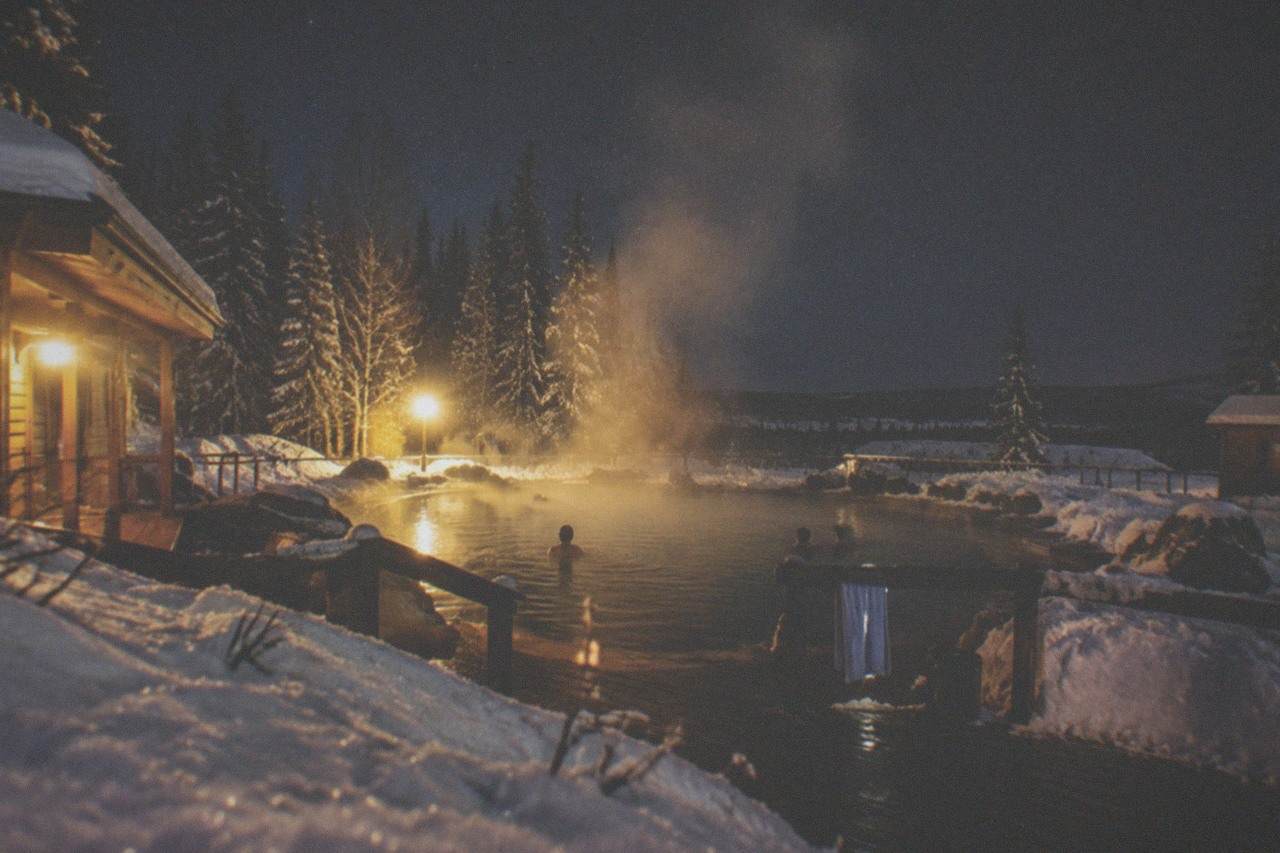
The winter version of this experience is the one travelers come for. Steam rolls off the water while the air around it sits well below freezing, hair frosting at the edges, and on a clear night the pool is one of the few places in Alaska where a visitor can watch for aurora from neck-deep in hot water. The season window matters here as everywhere in Fairbanks: the aurora viewing season runs August 21 to April 21, and outside it, twilight or the midnight sun ends the sky show even when geomagnetic activity continues overhead.
| Guest | Day-Use Rate For The Pool |
|---|---|
| Adults, ages 18 to 59 | $20 |
| Seniors, ages 60 and up | $18 |
| Children, ages 6 to 17 | $17 |
| Children 5 and under | Free |
| Pool and pool house hours | 7:00am to 11:45pm daily, year-round |
Day visitors should remember the pool is one of three separate tickets on the property. Soaking, the Ice Museum and any aurora outing are each priced on their own, and the resort's Charlie Dome aurora tour is a fourth product entirely. Nothing bundles automatically; a traveler who wants all of it in one price is really shopping for a packaged tour from Fairbanks.
Can You See The Northern Lights At Chena Hot Springs?
Yes, and the resort runs its own operation. The resort's Aurora Viewing Tour climbs to Charlie Dome by military-style SUSV for about 5 hours, with heated yurts, hot drinks and 360-degree views, at $110 to $125 per person booked through the resort. The aurora itself is natural and never guaranteed, with no refund if it fails to show.
Distance from Fairbanks is the resort's aurora advantage. Sixty miles of valley between the pool and the city means darker horizons in every direction, and the resort pushes further still: its own tour carries guests up to Charlie Dome, a dome above the resort with what the operation describes as 360-degree unobstructed views. Transport is by SUSV, a military-style tracked vehicle, and the top has heated Mongolian-style yurts stocked with hot chocolate, coffee, tea, water, Top Ramen and oatmeal. It is a genuinely unusual setup; very few aurora viewing points anywhere offer a bowl of noodles at 1am in a heated yurt.
The honest caveat is the one the resort itself states plainly: the aurora is a natural phenomenon and no refund is given if it does not appear. Season matters too. The window runs August 21 to April 21, and the Fairbanks aurora season timing guide explains why the darkness calendar, not the solar calendar, sets those dates.
The other route to the lights from this resort is the guided combo from Fairbanks. That listing, carrying a 4.5 rating across 1,342 reviews and starting from $275 per person, combines Chena Hot Springs Resort with aurora viewing in a single evening outing from the city. For a traveler staying in Fairbanks without a car, it is the simplest way to put the resort and the sky in one night, and the live listing spells out the full itinerary.
Between the two formats, the differences are structural rather than qualitative. The resort's own tour departs from the resort, so it suits overnight guests and day visitors already on the property. The Fairbanks combo departs from the city, which suits hotel-based travelers who want the road, the resort and the aurora handled as one ticket. Both end up under the same Interior sky, and both are honest that the sky makes its own schedule.
How Does The Geothermal Power Plant At Chena Hot Springs Work?
The plant draws 165F water from roughly 1,580 feet underground and converts it to electricity through an Organic Rankine Cycle system, which the resort describes as the lowest-temperature geothermal resource used for commercial power production anywhere. Two 200 kW units came online in 2005 and 2006, a third in 2017.
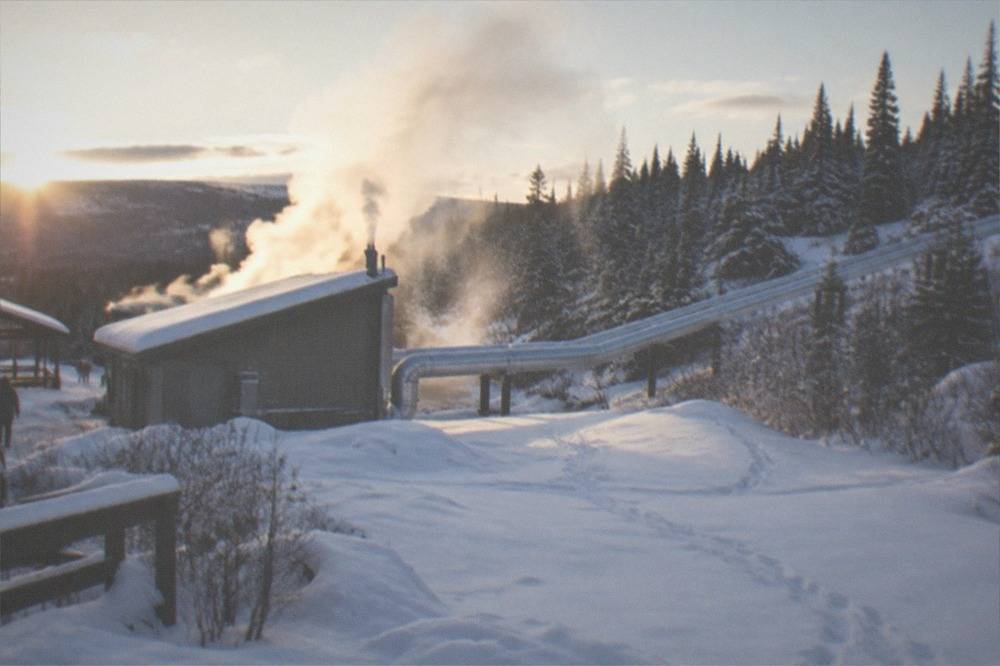
This is the part of Chena Hot Springs that engineering-minded visitors usually underestimate. Generating electricity from 165F water is genuinely difficult; conventional geothermal plants tap far hotter fields. The resort's answer is an Organic Rankine Cycle system using R134A refrigerant, which boils at a lower temperature than water and lets the plant spin a turbine from a heat source most power stations would consider useless. The first two 200 kW generating units came online in 2005 and 2006, a third and more efficient unit followed in 2017, and recent descriptions put the plant at around 85 percent of the resort's electricity.
The same resource heats greenhouses that grow produce year-round in the Interior, an operation worth seeing in its own right. The resort offers free 45-minute walking tours of the power plant and greenhouses daily at 2pm and 4pm, no ticket beyond showing up. On a trip built around 1am aurora watches, a 2pm geothermal tour is a good use of the daylight hours, of which midwinter Fairbanks offers roughly 3 hours and 41 minutes at the solstice, lengthening to about 10 hours by late February.
The plant tour also quietly explains the rest of the property. The pool stays open because the water is always there. The Ice Museum stays frozen in summer because the absorption chiller runs on the same geothermal heat. The greenhouses stay green in January for the same reason. One valley, one resource, and a resort that has spent two decades wiring everything it does to it.
Should You Visit Chena Hot Springs Independently Or On A Tour?
It depends on what you want from the night. A guided combo from Fairbanks, from $275 per person, pairs the resort visit with an organized aurora hunt in one booking. Independent visitors pay resort prices directly, stay flexible on timing, and can book the resort's own $110 to $125 Charlie Dome aurora tour once on site.
The independent route suits travelers with a vehicle, a flexible schedule and an appetite for logistics. Pay the pool day-use rate, pay the Ice Museum rate, drive in for the afternoon, and if the sky looks promising, book the resort's Charlie Dome tour at the front desk for the same night. The catch is the drive both ways, in the dark on the return leg, on a valley road in Interior winter.
The tour route suits nearly everyone else. One booking from Fairbanks covers the resort and the aurora hunt, with a guide who watches the forecast and the road. The trade is price and pace: from $275 per person against a $20 soak, and an organized evening against a self-directed one.
| Option | Price | What It Covers |
|---|---|---|
| Chena Hot Springs aurora combo from Fairbanks | From $275 per person, 4.5 from 1,342 reviews | Resort visit paired with guided aurora viewing, booked as one outing from the city |
| Resort's own Aurora Viewing Tour | $110 to $125 per person, booked at the resort | SUSV ride to Charlie Dome, heated yurts, hot drinks and snacks, about 5 hours |
| Independent day visit | Pool day-use $20 for adults, Ice Museum $20 for adults, priced separately | Soaking and the museum on your own schedule, no aurora transport included |
A third pattern is worth naming for completeness: some travelers skip the resort overnight entirely and base themselves in a fixed aurora lodge closer to Fairbanks. Lodge and yurt viewing with large north-facing windows and transport from major hotels runs from $160 per person with a 4.5 rating from 34 reviews and free cancellation on the listing, while a guided lodge-based evening with commentary runs from $200 per person at 4.5 from 286 reviews. Those formats trade the hot springs for simplicity, and for some itineraries that is the right trade.
Neither answer is wrong. The resort wins on range of experience, the fixed lodge wins on ease, and the Fairbanks combo splits the difference by delivering the resort without the drive. The itineraries that disappoint are usually the ones that tried to do all of it in one night.
Is Chena Hot Springs Worth The Trip From Fairbanks?
For most winter visitors, yes. The resort concentrates a soak, an ice museum, a geothermal plant tour and a hilltop aurora operation into one road-ended valley, all reachable in a single long day from Fairbanks. The trade is a 2 to 4 hour round trip drive on a road that demands winter respect.
The honest framing is that Chena Hot Springs is not one attraction but four stacked on a single geothermal resource, and that stacking is what justifies the mileage. A visitor could see an ice museum elsewhere, or soak elsewhere, or chase aurora elsewhere, but doing all four from one parking lot exists in very few places, and the darkness at the end of the road gives the aurora half a real chance to deliver.
Plan around the season window of August 21 to April 21, pack for nights that sit well below the already cold daytime normals, and check road conditions before committing to the drive. Then decide the format: own vehicle and resort-direct bookings, or a guided combo from Fairbanks with the whole evening pre-arranged. Either way, the pool is open until 11:45pm, and in midwinter the sky is worth staying for.
Whichever route wins, book the aurora night early rather than on arrival: the evenings that combine a clear forecast with a weekend fill first, and the museum runs on its set schedule of 11am, 1pm, 3pm, 5pm and 7pm slots, with the aurora outing timed to darkness instead. A little planning turns a long drive into the highlight of an Interior Alaska trip.
Common Questions About Chena Hot Springs
What Is Special About Chena Hot Springs?
Chena Hot Springs stacks a year-round geothermal pool, the Aurora Ice Museum billed as the world's largest year-round ice environment, a working geothermal power plant and a hilltop aurora operation into one resort, about 60 miles northeast of Fairbanks. Very few destinations offer a hot soak, an ice gallery and a dark-sky aurora hunt from a single base.
How Far Is Chena Hot Springs From Fairbanks?
The resort sits at the end of Chena Hot Springs Road at milepost 56.5, with cited distances of 56.5 to 61 miles from Fairbanks. The drive takes about one to two hours each way, and the resort's own shuttle materials quote 1.5 to 2 hours, so plan a longer window in winter conditions.
Is The Aurora Ice Museum Open Year-Round?
Yes, it runs 365 days a year. Guided tours last 45 minutes and are typically offered at 11am, 1pm, 3pm, 5pm and 7pm. Adults ages 12 and up pay $20, children ages 6 to 11 pay $15, parkas are provided free, and an optional Appletini in an ice glass costs $20 extra.
Can You See The Northern Lights From Chena Hot Springs?
Often, yes, during the August 21 to April 21 season on clear nights. The resort's own Aurora Viewing Tour runs about 5 hours to Charlie Dome with heated yurts and hot drinks, at $110 to $125 per person. The aurora is a natural phenomenon and never guaranteed, and the resort gives no refund if it does not appear.
How Much Does It Cost To Visit Chena Hot Springs For The Day?
Day-use pool admission runs $20 for adults, $18 for seniors and $17 for children ages 6 to 17, with children 5 and under free, and the Ice Museum charges $20 for adults and $15 for children ages 6 to 11. The two are priced separately, and both sit apart from any aurora tour ticket.
Is Chena Hot Springs Worth The Drive In Winter?
For most visitors, yes, provided the road is respected. It is a paved dead-end valley road, roughly one to two hours each way in good conditions and longer in snow or refreeze. Confident winter drivers can do it independently; travelers who would rather not drive the valley at night can book a guided combo from Fairbanks that pairs the resort with aurora viewing.