Aurora Ice Museum At Chena Hot Springs: What To Know Before You Go
Chena Hot Springs Resort, about 60 miles northeast of Fairbanks, keeps a gallery built from more than 1,000 tons of ice and snow open all year at a steady 25F. This guide covers the museum's verified facts, its admission prices, and the aurora tours that pair naturally with a visit.
Short answer
The Aurora Ice Museum at Chena Hot Springs is held at a constant 25F, was completed in January 2005, and offers 45-minute guided tours year-round, typically at 11am, 1pm, 3pm, 5pm and 7pm. Ice Museum admission is $20 for adults and $15 for children, separate from pool day-use and aurora tour prices.
What Is The Aurora Ice Museum At Chena Hot Springs?
The Aurora Ice Museum at Chena Hot Springs Resort is a gallery carved from over 1,000 tons of ice and snow, completed in January 2005 and billed by the resort as the world's largest year-round ice environment. It sits about 60 miles northeast of Fairbanks and is kept at a constant 25F by a geothermal absorption chiller, so it stays frozen through every Alaskan season, including the height of summer.
The museum is the most unusual building at Chena Hot Springs, and the reason is simple: the resort sits on a geothermal resource, and that resource powers both the hot springs pools visitors come to soak in and the cooling system that keeps a building made of ice from melting. The two extremes exist on the same small property, a few minutes' walk apart.
The resort's own pages describe the chiller as a patented geothermal absorption unit, the first of its kind used for this purpose. That detail matters less to a visitor than the result does: a structure that would be impossible anywhere else in Interior Alaska survives year-round without conventional refrigeration. Ice hotels elsewhere in the world typically melt in spring and get rebuilt each winter. This one does not.
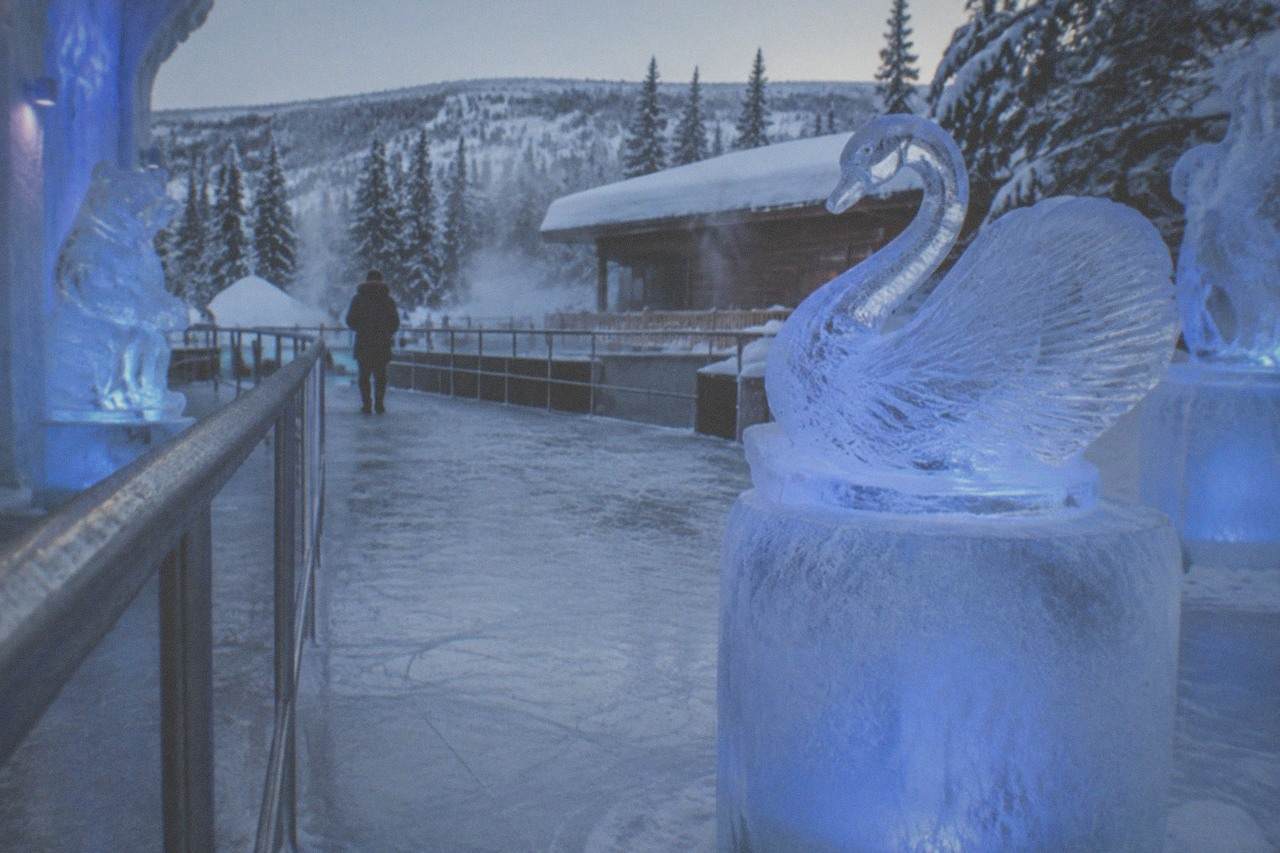
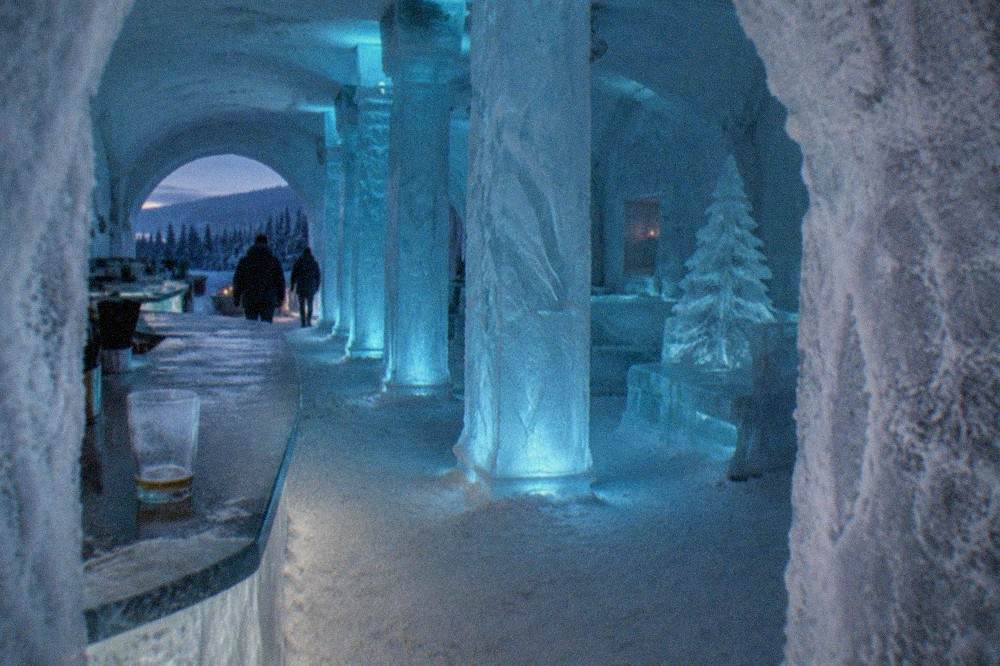
What visitors actually see inside is a set of illuminated ice sculptures, carved galleries, jousting-themed ice art and an ice bar where drinks are served in glasses made of ice. Guided tours walk through the whole space and explain how the building is made and maintained. The museum is the piece of Chena Hot Springs that most often surprises first-time visitors, many of whom arrive mainly for the hot springs or the northern lights and discover the ice gallery while they are there.
The building sits near the resort's other attractions, so a visit slots easily into a day that also includes the outdoor hot springs pool, which is open 7:00am to 11:45pm daily year-round. Planning a Chena day around both is the most common pattern among winter visitors, and the resort's own official site lists current schedules for everything on the property.
How Big Is The Aurora Ice Museum And How Was It Built?
The museum was built from more than 1,000 tons of ice and snow harvested on-site and was completed in January 2005. The resort bills it as the world's largest year-round ice environment, a claim the resort itself makes on its official pages. It is a permanent structure rather than a seasonal ice hotel that melts and is rebuilt annually, which is what separates it from ice hotels in places with warm summers.
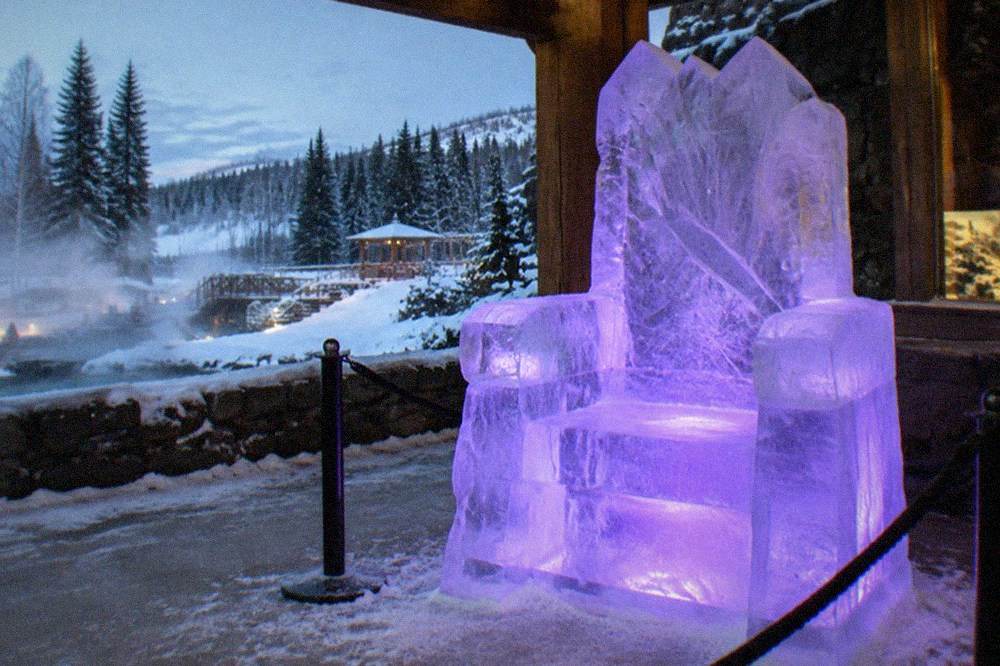
The scale is the part that is hard to convey in photographs. Ice galleries, thrones, a full bar and a jousting arena of ice fill the interior, and the 45-minute tour pace exists because there is a real amount of ground to cover, not because the guide is stretching for time. The harvest of over 1,000 tons happened on the property itself, using ice and snow from the resort grounds rather than materials trucked in from elsewhere.
The 2005 completion date makes the museum one of the older permanent installations of its kind anywhere. It has survived more than twenty Interior Alaska winters, including the winter of 2025 to 2026, which the National Weather Service recorded as Fairbanks' coldest on record, averaging nearly -14F from December through March. A building that survived that, at 25F inside, has proven its engineering.
| Aurora Ice Museum fact | Figure |
|---|---|
| Materials | Over 1,000 tons of ice and snow, harvested on-site |
| Completed | January 2005 |
| Interior temperature | Constant 25F |
| Tour length | 45 minutes, guided |
| Tours offered | Year-round, 365 days |
| Claim on the resort's site | World's largest year-round ice environment |
One honest caveat belongs here. The "world's largest" title is the resort's own description, repeated across its official materials, and it is the phrase this guide uses because it is the phrase the operator publishes. Ice museum sizes are not tracked by any independent standards body, so the claim is best read as the resort's billing rather than a certified ranking. Either way, the building is large, genuinely frozen, and genuinely open in July.
Visitors who want the full context of the property, including the hot springs pools and the resort's aurora viewing operation, can read the companion piece on Chena Hot Springs aurora tours, which covers the full range of ways to visit the resort from Fairbanks.
What Does An Aurora Ice Museum Tour Cost And When Do Tours Run?
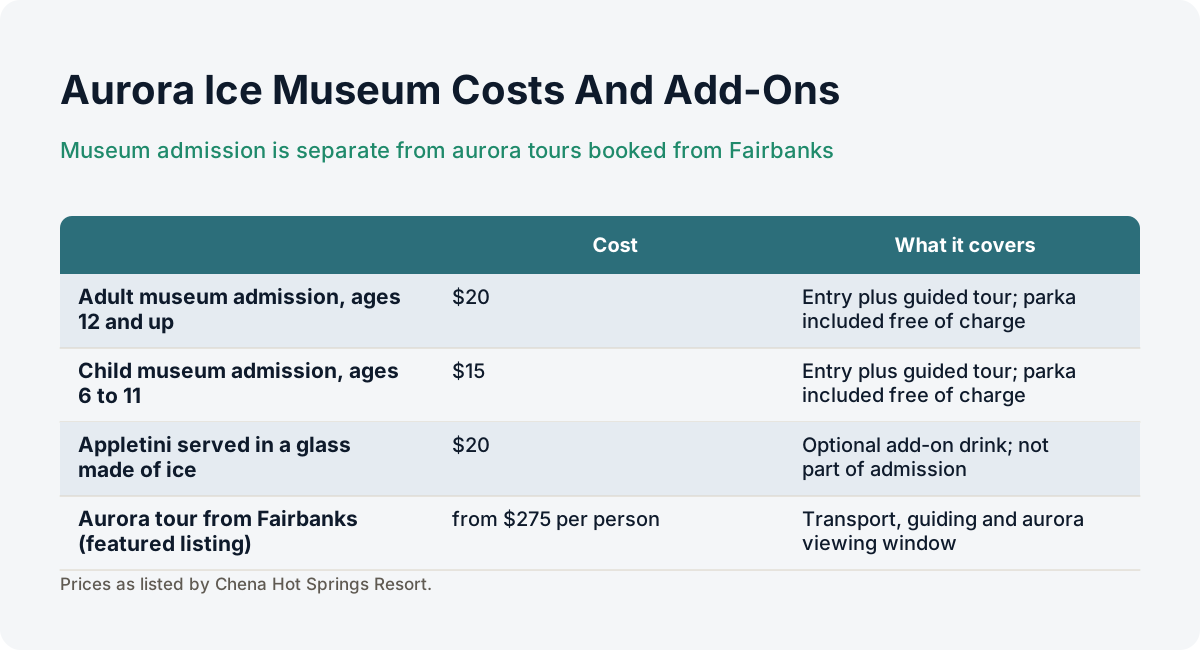
Guided tours of the Aurora Ice Museum run about 45 minutes and are offered year-round, typically at 11am, 1pm, 3pm, 5pm and 7pm. Resort admission is $20 for adults (12 and up) and $15 for children (6 to 11). These are the resort's own general-admission prices, entirely separate from any aurora tour price a visitor might book from Fairbanks, and the two should never be confused.
The tour times are worth noting carefully because they shape the day. The 5pm and 7pm slots are the ones that fit an aurora evening, since the museum visit ends close to the hours when the sky gets dark enough for viewing during the season. The 11am through 3pm slots suit travelers who arrive midday, soak in the outdoor hot springs pool, and head back to Fairbanks before dark.
Parkas are provided free of charge on the museum tour, which matters because 25F indoors is colder than most visitors dress for in a resort setting. An optional Appletini served in a glass made of ice costs an additional $20, and it is the single most photographed item in the building after the sculptures themselves.
| Tour time | Typical schedule | Who it suits |
|---|---|---|
| 11am | Daily, year-round | Early arrivals, day-trippers heading back by afternoon |
| 1pm | Daily, year-round | Midday visitors combining the museum with lunch at the resort |
| 3pm | Daily, year-round | Afternoon soakers who want the museum before the pool |
| 5pm | Daily, year-round | Visitors building toward an evening at the resort |
| 7pm | Daily, year-round | Aurora-season guests pairing the museum with night viewing |
The pricing separation deserves a second sentence because it is the most common point of confusion. The $20 and $15 figures buy entry to the museum. An aurora tour from Fairbanks that includes resort access is a separate product with a separate price, the featured listing on this site runs from $275 per person, and its price reflects transport, guiding and the aurora viewing window, not museum admission. Some bundled tours do include resort access, and the live listing states exactly what is included in each.
For a reader weighing how to spend an aurora budget in Fairbanks, the honest framing is that the museum is a low-cost, high-certainty attraction: it is open every day of the year, at a fixed price, and it does not depend on weather or solar activity. The aurora, by contrast, is a natural phenomenon with no guarantee attached on any tour, in any season, from any operator. A well-planned Chena visit uses the certainty of the museum and the hot springs to anchor the day, and treats the aurora window as the part that depends on conditions. Readers planning a wider trip can compare the full range of options in the guide to northern lights tour packages from Fairbanks.
How Cold Is It Really Inside The Chena Aurora Ice Museum?
Inside, the Aurora Ice Museum is held at a constant 25F, cold enough that the resort hands every visitor a parka free of charge before the tour starts. That is roughly the same as a typical March daytime high in Fairbanks, which averages around 25 to 27F, so the museum feels like stepping outside on a mild midwinter afternoon, except that it is indoors, dark-lit and full of carved ice.
The steady 25F is the engineering story of the building. A conventional ice hotel in a warm climate would need powered refrigeration and would lose the battle against a summer eventually. Chena's museum instead uses the resort's own geothermal heat to drive a patented absorption chiller, the first of its kind used for this purpose, which holds the interior at a single set temperature all year. Heat from the ground is used to make cold, an elegant reversal that only a geothermal property could pull off.
For visitors, the practical side is straightforward. Dress as if for a winter day: warm layers, closed shoes, a hat if you run cold, though the provided parkas cover the biggest gap. Most visitors spend 45 minutes inside comfortably with the parka and are glad of the hot springs pool afterwards, which is open from 7:00am to 11:45pm daily. The contrast between the two, ice and heat on the same property, is the entire charm of a Chena day.
A fair warning on expectations: 25F does not feel extreme to anyone who has spent a Fairbanks winter outside, and the tours are not survival experiences. The cold is managed, constant and brief. The appeal is the art and the oddity of the place, an ice building that outlasted the coldest winter Fairbanks has ever recorded without a degree of change to its interior. Visitors wanting deeper background on how the resort's geothermal system works can take the resort's free 45-minute renewable energy tour, offered daily, which covers the power plant and the geothermally heated greenhouses.
Can You See The Northern Lights At Chena Hot Springs Itself?
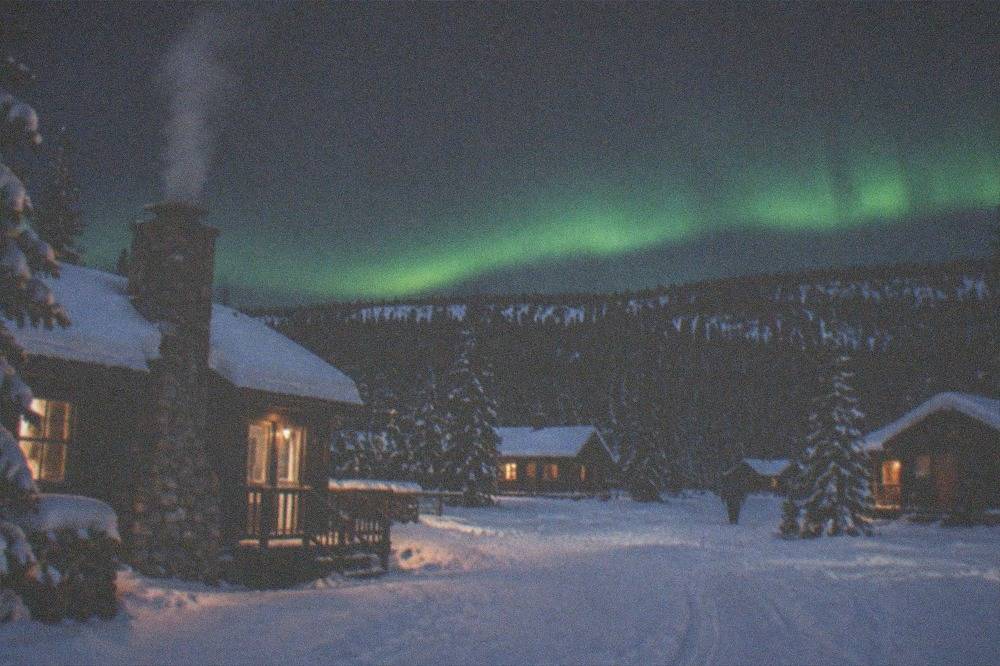
Yes, aurora viewing is possible at Chena Hot Springs, and the resort runs its own aurora tour to Charlie Dome, a 5-hour experience with transport from the resort, heated yurts and hot beverages, priced at $110 or $125 per person in the resort's 2026 materials. The aurora itself is a natural phenomenon with no guarantee, and the resort's own pages state plainly that no refunds are given if it does not appear.
The resort's position is strong for viewing. It sits roughly 60 miles northeast of Fairbanks via Chena Hot Springs Road, a drive of about 1 to 2 hours, far enough from the city's glow to enjoy genuinely dark skies in the hills above the buildings. The resort's aurora tour uses a military-style transport vehicle to climb to Charlie Dome, where heated Mongolian-style yurts give viewers a warm place to wait between checking the sky, and the 360-degree vantage from the top is unobstructed.
There is an important distinction most first-time visitors miss. The resort's own aurora tour starts at the resort, which means staying there or arranging your own arrival. A separate category of tour departs from Fairbanks, drives out to Chena, bundles resort access (often including the Ice Museum and the hot springs) with an aurora viewing window, and drives back the same night. The featured listing on this site is that second kind: a combo that pairs the Chena Hot Springs Resort visit with aurora viewing, rated 4.5 from 1,342 reviews, from $275 per person.
For travelers staying in Fairbanks without a rental car, or anyone who prefers not to drive a winter road at 1am, the from-Fairbanks combo is the practical choice, and its 1,342-review history is the deepest on this site's roster. Travelers already booked into the resort can skip the transport markup and use the resort's own Charlie Dome tour instead. Both are honest options; the difference is where you sleep and who does the driving. The UAF Geophysical Institute publishes a daily aurora forecast that covers the Chena hills as well as Fairbanks proper, and checking it the day of the tour is a reasonable habit.
How Do You Combine The Ice Museum With An Aurora Tour From Fairbanks?
The pairing is the most natural day plan in Interior Alaska: a combo tour from Fairbanks drives you to Chena Hot Springs, includes resort access such as the Ice Museum and the hot springs, then stays for an aurora viewing window before returning. The featured combo runs from $275 per person. The resort's museum admission is $20 for adults and $15 for children, and a bundled tour's price is set by the operator's listing.
The sequence of a bundled day usually runs like this: pickup in the Fairbanks area (exact meeting points are shown on each listing), the 1 to 2 hour drive out Chena Hot Springs Road, arrival in the late afternoon, the 5pm or 7pm museum tour, time in the outdoor hot springs pool, and then the aurora window in the late evening before the drive back. Whether the museum entry is included in a specific tour's price is stated on that tour's live listing; some bundle it, some leave it as an optional add-on paid at the resort.
Travelers comparing this with lodge-based aurora viewing, where you sit in a heated lodge or yurt with big north-facing windows rather than riding out to a hot springs resort, can weigh both in the guide to aurora viewing lodges and cabins near Fairbanks. The lodge model minimizes driving and maximizes warmth; the Chena model adds an ice museum, a hot soak and a resort evening to the same night. Neither is strictly better; they solve different traveler problems.
The one thing worth saying plainly: the aurora window at Chena enjoys the same odds and the same forecast as anywhere in the Fairbanks area, and no operator can promise a sighting. A commonly cited figure from the destination's season materials holds that a three-night stay during the season gives roughly a 90 percent chance of seeing the aurora, weather permitting, with the lights visible on about four of five clear nights. That is a statement about staying multiple nights, not about any single booked evening.
What Else Is There To Do At Chena Hot Springs Resort?
Beyond the Ice Museum and the hot springs pool, Chena offers the resort-run aurora tour to Charlie Dome, free daily 45-minute geothermal and renewable energy tours at 2pm and 4pm, and a geothermal power plant that is the lowest-temperature geothermal resource used for commercial power production in the world. Day-use pool pricing is separate from everything above.
The energy tour is the underrated item on that list. It is free, it runs twice daily, and it explains the geothermal system that makes everything else at the resort possible: the 165F water drawn from about 1,580 feet down, the power units that have supplied around 85 percent of the resort's electricity in recent years, and the greenhouses heated by the same resource. Visitors who take it come out understanding why an ice museum and a hot springs resort can coexist on one small property.
| Chena Hot Springs activity | Typical schedule | Price |
|---|---|---|
| Aurora Ice Museum tour | 11am, 1pm, 3pm, 5pm, 7pm daily | $20 adults, $15 children 6-11 |
| Outdoor hot springs pool | 7:00am to 11:45pm daily | $20 adults, $18 seniors, $17 children 6-17 |
| Geothermal energy tour | 2pm and 4pm daily | Free |
| Resort aurora tour to Charlie Dome | Evenings, 5 hours | $110 to $125 per person |
| Appletini in an ice glass | During museum visits | $20 |
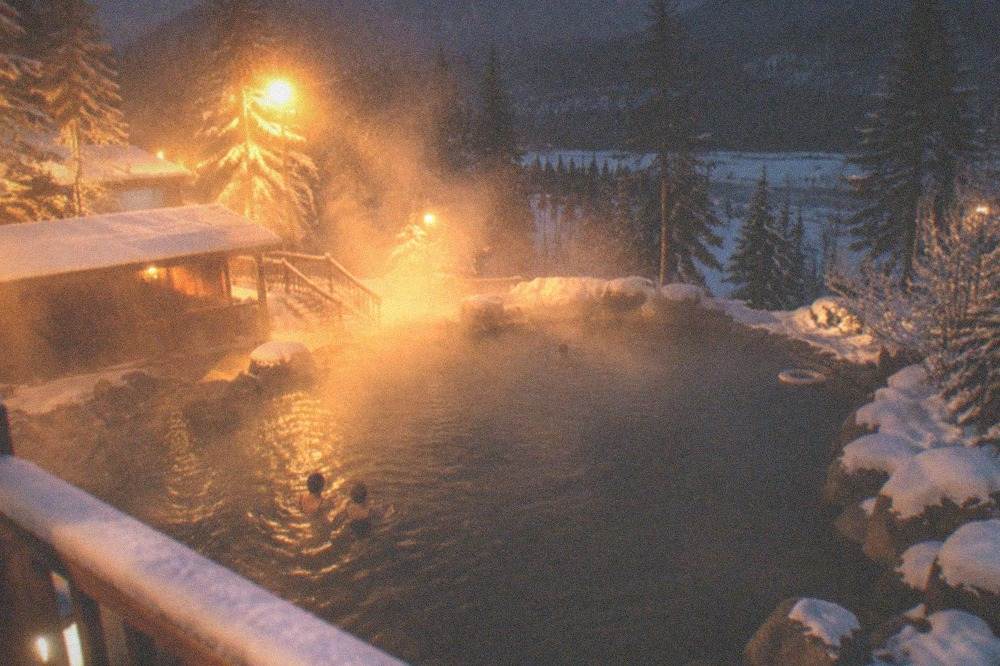
The pool prices in the table are day-use rates: $20 for adults 18 to 59, $18 for seniors 60 and up, $17 for children 6 to 17, and free for children 5 and under. Pool hours matter for planning, because the outdoor pool stays open until 11:45pm, so an aurora night can include a soak before or after the viewing window, which is the single most popular use of a Chena evening among winter guests. The resort's own materials note the pool house operates year-round, and midwinter soaks in -10F air are a large part of the property's draw.
For readers building a wider Interior Alaska itinerary, the drive out to Chena can be part of a day that also covers Fairbanks itself, and the site's one day in Fairbanks itinerary shows how the two fit together. Chena Hot Springs Road is a maintained state road, ordinary by winter-driving standards for the region, and far easier than the Dalton Highway route covered in the guide to winter driving conditions around Fairbanks (see Driving To Fairbanks).
When Is The Best Time To Visit The Ice Museum At Chena Hot Springs?
The museum itself is open 365 days a year, so any visit works. The aurora is the part with a season: Fairbanks' viewing window runs August 21 to April 21, and outside it, twilight or the midnight sun prevents viewing even when the aurora is active overhead. A Chena visit in that window can pair the museum and the hot springs with a real aurora chance.
The season window is the fact that most often disappoints travelers, so it deserves its plain statement. In June, Fairbanks has almost no true darkness, and no tour or forecast can change that. In September and late March, nights are dark and temperatures are milder than midwinter. In December and January, nights are longest (the winter solstice brings only about 3 hours 41 minutes of daylight) but temperatures average lows around -16 to -17F in January, and the winter of 2025 to 2026 averaged nearly -14F overall, the coldest on record.
Equinox months are often noted as strong viewing periods because of a seasonal enhancement in geomagnetic activity, and midwinter offers the most dark hours. The honest summary is that any month inside the August 21 to April 21 window can produce a good night, and the deciding factors are weather, trip length and cold tolerance rather than the calendar. The commonly cited figure that a three-night stay gives roughly a 90 percent chance of a sighting, weather permitting, reflects that logic: more nights, more chances for a clear sky.
For readers weighing the timing question in depth, the guide to the best time to see the northern lights in Fairbanks breaks the season down month by month, and Explore Fairbanks, the official destination organization, maintains the authoritative season dates for the region.
What Should You Wear For The Ice Museum And A Chena Aurora Evening?
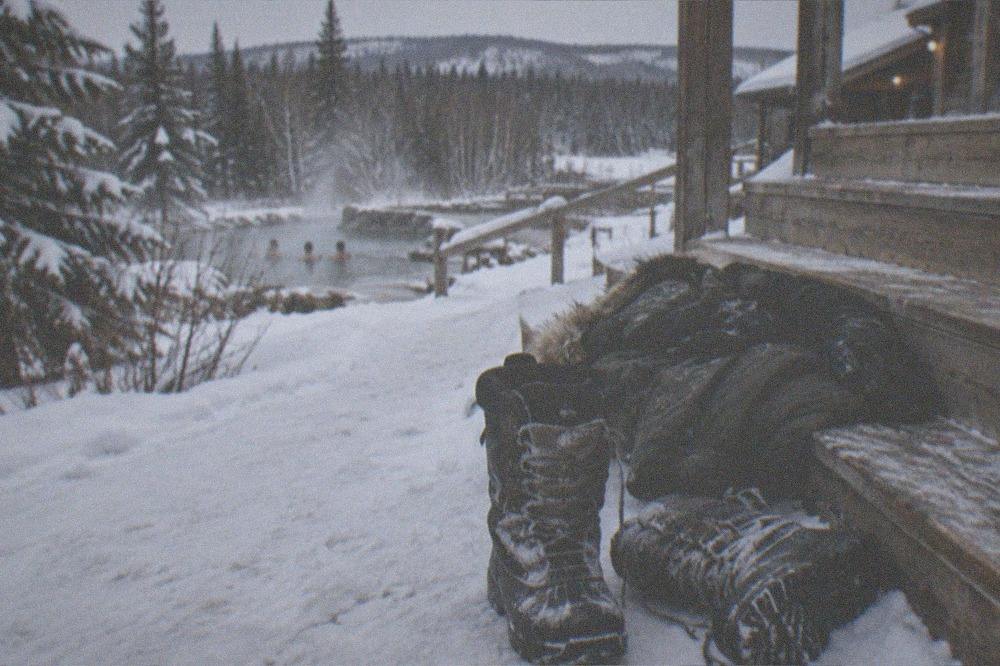
For the museum, dress in warm layers with closed shoes; parkas are provided free on the tour, and the constant 25F interior feels like a mild Fairbanks winter afternoon. For the aurora evening outdoors, plan for the real outside temperatures: January nights average lows around -16 to -17F, and the 2025 to 2026 winter averaged nearly -14F overall, so insulated boots, serious layers, hats and gloves are not optional.
The two environments are different problems, and packing for both is the trick. The museum is a controlled 25F for under an hour, and the parka covers the gap. The aurora viewing window is two to four hours outdoors or in and out of a heated vehicle or yurt, at whatever the actual night temperature is, and Interior Alaska midwinter nights are the coldest conditions most visitors will ever stand still in.
| Part of the Chena visit | Environment | What to wear |
|---|---|---|
| Ice Museum tour | 25F indoors, 45 minutes | Warm layers, closed shoes; parka provided |
| Hot springs pool | Outdoor pool, steam, cold air | Swimsuit, robe or towel strategy for the walk |
| Aurora viewing window | Outdoors, seasonal night lows from -17F to 25F | Insulated boots, full winter layers, hat, gloves |
| The drive out and back | Heated vehicle, Chena Hot Springs Road | Keep a spare layer in the vehicle |
The pool deserves a special note because it is where clothing plans most often go wrong. Getting from a changing room to an outdoor pool in winter air means a short, cold walk in a swimsuit, and the standard tactic is a robe or towel strategy worked out in advance. Once in the water, the heat is luxurious; the moment of exit is the bracing one. Most guests time their soak for immediately after the aurora window or before it, and the pool's 11:45pm close makes an after-aurora soak a real possibility on many nights.
Footwear is the item that ruins trips. Standing still on packed snow at -15F for an hour defeats thin boots quickly, and cold feet end more aurora nights than cloudy skies do. The full packing approach, with specifics for every tour format from hilltop viewing to the Chena drive, is laid out in the site's guide on what to wear on a Fairbanks aurora tour. This site, Fairbanks Aurora Borealis Tours, keeps that guidance in one place because the question comes up on every listing's review thread.
For travelers who decide the deep-cold outdoor night is not for them, the lodge-based format is worth a look: heated yurts and large north-facing windows let you watch for the lights from inside, stepping out only when something appears. The Alaskan Northern Lights lodges option runs from $160 per person, rated 4.5 from 34 reviews, with free cancellation on the listing, and readers can Check availability alongside the fuller comparison in the lodges guide.
Which Chena Or Lodge Option Fits Your Trip Best?
The Chena combo suits travelers who want one big evening that stacks a museum, a hot soak and an aurora window into a single outing from Fairbanks, from $275 per person. The lodge formats suit travelers who want minimal driving and maximum warmth, from $160 per person at the lodges or from $200 per person for guided lodge viewing with commentary. Neither guarantees a sighting; both put you under the same auroral oval.
The honest comparison is about experience style, not odds. The guided lodge viewing option at Chena's price tier carries a 4.5 rating from 286 reviews, from $200 per person, with a cancellation policy stated as not free on the listing, so travelers who like booking flexibility should read that listing's terms before committing. The lodges option, from $160 per person, includes transport from major Fairbanks hotels and free cancellation on the listing, which makes it the lower-commitment entry point of the three.
Budget matters too. The spread across the trio runs from $160 to $275 per person, and the differences buy different evenings: a resort property with ice and hot water, or a quiet lodge with a north-facing window. A party of two choosing between them is choosing between two very different nights, not between two prices for the same thing. Travelers who want to see every format side by side, including photography tours and the budget hilltop at Murphy Dome from $99 per person, can start from the roundup of the best northern lights tours from Fairbanks and narrow from there.
One closing note on the museum itself, since it is the page's subject: it is the rare Fairbanks-area attraction that is identical in every season, immune to weather, cloud and solar activity, and priced at a flat $20. Whatever the sky does on an aurora night, the ice gallery will be there at 25F, and the pair of them, a frozen gallery and a molten-green sky, is the best two-act evening Interior Alaska offers.
Common Questions About The Aurora Ice Museum At Chena Hot Springs
How much does the Aurora Ice Museum at Chena Hot Springs cost?
Resort admission is $20 for adults (12 and up) and $15 for children (6 to 11), with parkas provided free of charge. An optional Appletini in an ice glass costs an additional $20. These are the resort's own general-admission prices and are separate from any aurora tour price booked from Fairbanks.
How cold is it inside the Aurora Ice Museum?
The museum is held at a constant 25F year-round, using a patented geothermal absorption chiller. That feels like a mild Fairbanks winter afternoon, and the provided parkas make the 45-minute tour comfortable in normal winter layers and closed shoes.
What are the Aurora Ice Museum tour times?
Guided 45-minute tours typically run at 11am, 1pm, 3pm, 5pm and 7pm, year-round, 365 days a year. The 5pm and 7pm slots pair most naturally with an aurora viewing evening at the resort.
Is the Aurora Ice Museum included in aurora tours from Fairbanks?
Some combo tours bundle resort access, including the museum and the hot springs, with aurora viewing; others leave resort admission as a separate item paid at the resort. The featured Chena combo runs from $275 per person, and exactly what each listing includes is stated on its live listing.
How far is Chena Hot Springs from Fairbanks?
The resort is roughly 60 miles northeast of Fairbanks via Chena Hot Springs Road, a drive of about 1 to 2 hours depending on conditions. It is a maintained state road, ordinary by regional winter-driving standards.
Can you see the northern lights at Chena Hot Springs?
Yes, the resort runs its own aurora tour to Charlie Dome with heated yurts, and the property enjoys dark skies far from city glow during the August 21 to April 21 season. The aurora is a natural phenomenon with no guarantee on any tour, and the resort gives no refund if it does not appear.