How Long Does It Take To Drive From Anchorage To Fairbanks?
A plain-language look at the Anchorage to Fairbanks drive in winter: what official advisories say, how cold the Interior gets, and whether tours or the train beat a rental car.
How Long Does It Take To Drive From Anchorage To Fairbanks?
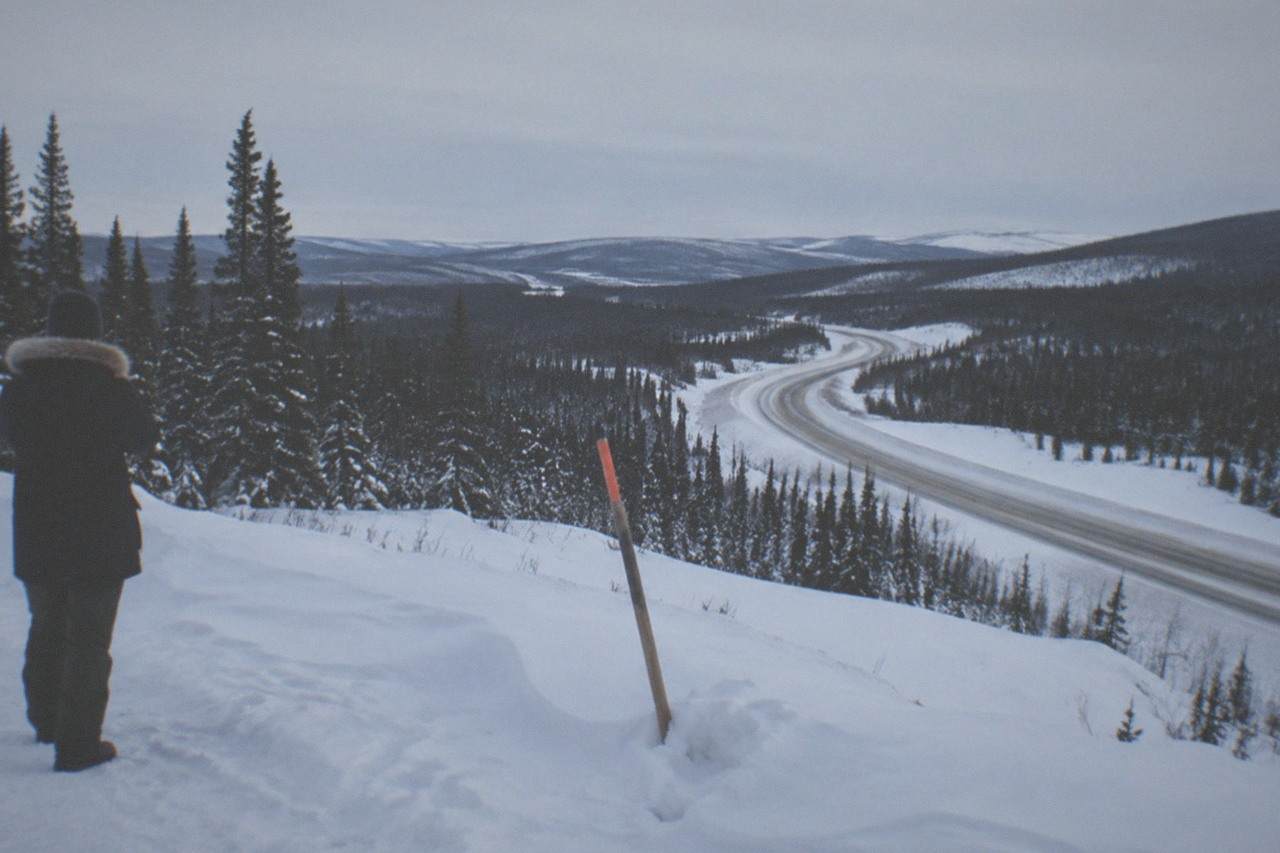
Two of Alaska's biggest cities anchor opposite ends of the road corridor most winter visitors eventually drive, and the Interior half of that corridor behaves differently from the coast. Anchorage sits in a maritime-influenced zone where winter storms arrive wet and leave fast. Fairbanks sits inland, under cold air that pools in the Tanana Valley, and the National Weather Service office there spends the winter issuing one advisory after another for Interior highways. That contrast shapes the whole drive, and it is the reason the same trip can feel routine in July and punishing in January.
How Long Does It Take To Drive From Anchorage To Fairbanks?
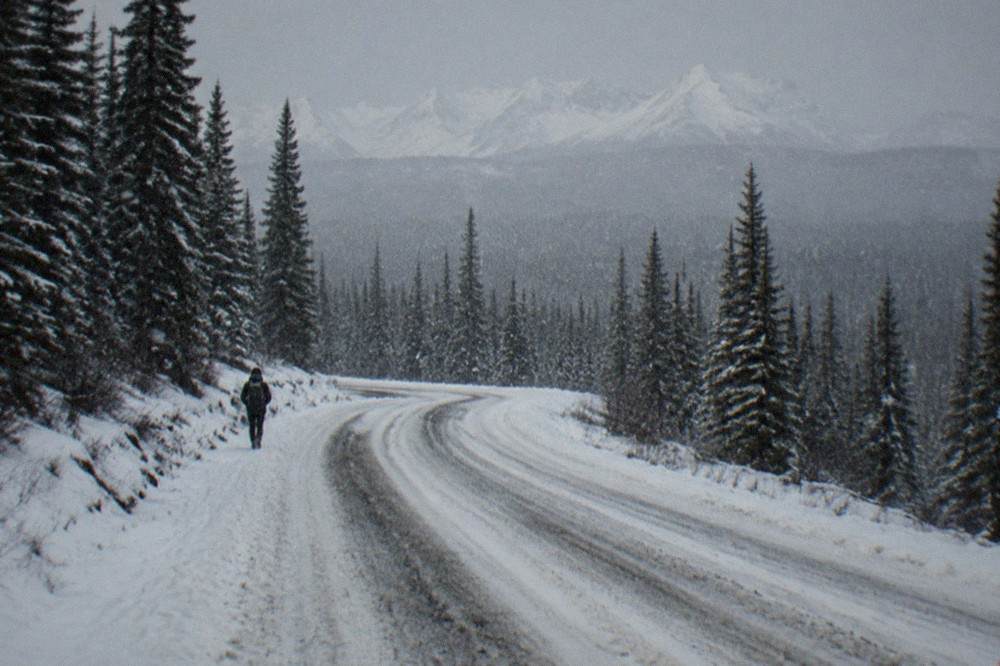
The Anchorage to Fairbanks drive is a full-day commitment in any season, and Drive time varies with weather and road conditions, so budget a full daylight window in winter. What is verified: winter advisories for Interior Alaska highways routinely flag snow, strong gusts, and reduced visibility, so checking live road conditions before departure is standard practice.
Plenty of trip-planning pages print a confident number for this drive, rounded to the hour. This page takes a different approach. The sources behind it, including the National Weather Service Fairbanks office and the Bureau of Land Management's Arctic Interagency Visitor Center, describe Interior Alaska highways in terms of conditions rather than clean averages, and honest framing beats a number that a single storm can invalidate.
The practical takeaway for planning is time allocation rather than a stopwatch figure. Travelers who drive this corridor in winter routinely budget an entire daylight window for the trip, build in a stop, and treat arrival time as an estimate rather than a promise. In summer, the same drive is a long but relaxed day. Between late August and late April, aurora season in the Fairbanks area, the calculation changes: daylight shrinks to a few hours around the solstice, and every hour of darkness becomes potential viewing time rather than driving time.
That last point matters more than most first-time visitors expect. Fairbanks' aurora season runs August 21 to April 21, per Explore Fairbanks, the official destination marketing organization, and the city sits under the auroral oval at about 64.8 degrees north. A common approach is to drive north while daylight lasts, arrive in Fairbanks by evening, and let the aurora tours handle the night hours. Guides like our Fairbanks winter driving conditions overview go deeper on the road side of that plan.
For travelers whose real goal is the northern lights rather than the drive itself, there is a shortcut worth considering: fly or ride into Fairbanks and book a structured aurora night instead of piloting a rental car through advisory country.
Each of those three options handles the night differently. The Chena Hot Springs combo moves you to a resort with heated pools. The Arctic Circle trip spends a full day on the Dalton Highway and hunts aurora on the return, around 3am (see Arctic Circle Worth It). The lodge and yurt viewing option puts you behind large north-facing windows with hotel transport included. All three beat white-knuckle night driving on an unfamiliar Interior highway.
What Do Winter Weather Advisories Mean For The Anchorage To Fairbanks Highway?
Winter Weather Advisories are the National Weather Service's routine warning product for Interior Alaska highways, and they flag three recurring hazards: snow accumulations of 2 to 8 inches, gusts reaching 35 to 50 mph or higher, and visibility dropping to half a mile or less. Drivers should treat any active advisory as a reason to slow down, watch bridges, and check road conditions before leaving.
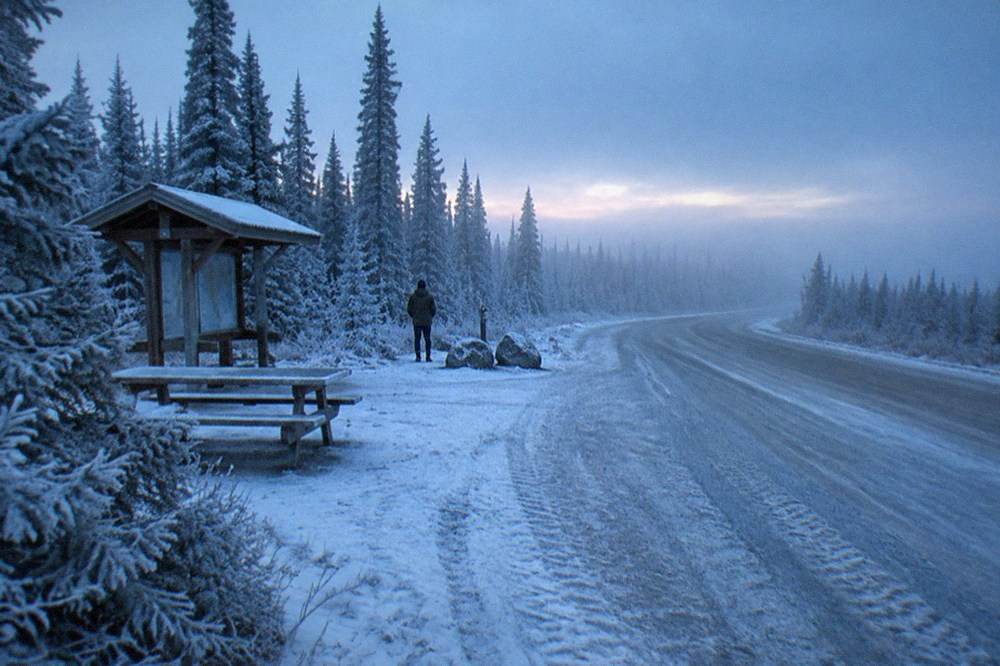
Advisory language from the Fairbanks forecast office, issued repeatedly through December 2025 for the Interior and surrounding corridors, reads remarkably consistent: snow accumulations, blowing snow, gusting winds, slick roads and bridges, and reduced visibility. The office's recommended actions are equally consistent. Slow down. Use extra caution on bridges and overpasses, which ice first. Check the state's live road-condition line before committing to a route. Travelers can do exactly that at 511.alaska.gov, the state's official road-condition resource cited by highway references for the Interior.
The Tanana Valley adds a local wrinkle that coastal drivers rarely deal with: temperature inversions. Cold air pools in the valley while wind stays light at ground level, which produces the sustained subzero cold Fairbanks is known for, and refreeze on any surface moisture after a storm passes. An advisory can technically expire while the road underneath is still glazed.
For drivers continuing north or west of Fairbanks, the hazard profile escalates sharply. The Dalton Highway, the route to the Arctic Circle marker, is open year-round but carries snow, ice, blowing snow and refreeze black ice as standing hazards, with Atigun Pass at roughly 4,739 feet the classic trouble spot. The Bureau of Land Management's Arctic Interagency Visitor Center guidance adds a fact many renters learn too late: most major national rental-car companies prohibit driving the Dalton or void insurance coverage on it. Only specialty and local Fairbanks operators typically allow their vehicles on that road.
The table below compresses the recurring advisory themes into a planning reference.
| Advisory theme | What the NWS typically flags | What drivers should do |
|---|---|---|
| Snow accumulation | 2 to 8 inches in affected areas, sometimes more | Delay departure or add hours, do not push a schedule |
| Blowing snow and wind | Gusts 35 to 50 mph or higher, especially in passes | Expect sudden visibility loss, grip the wheel |
| Reduced visibility | Down to half a mile or less | Slow to a crawl speed, use low-beam headlights |
| Slick roads and bridges | Ice on bridges and overpasses first | Extra caution at every bridge, no cruise control |
| Refreeze | Wet surfaces icing after a storm or after dark | Treat any wet-looking road as ice |
None of this means the drive is reckless. It means the corridor demands the respect any northern winter road demands, and the drivers who struggle are usually the ones importing a freeway mentality from a warmer state.
How Cold Does The Drive From Anchorage To Fairbanks Actually Get?
Anchorage winters are comparatively mild, but the drive ends in Interior Alaska's cold core, where monthly normals show the deep freeze: January in Fairbanks averages highs around 1 to 2F and lows around 16 to 17 below zero, and the winter of 2025 to 2026 was the city's coldest on record, averaging nearly 14 below zero from December through March. Plan clothing and vehicle prep for the Fairbanks end, not the Anchorage end.
The temperature swing over the length of this drive is one of its least appreciated features. A traveler can leave Anchorage in conditions that feel merely brisk and reach a valley where exposed skin complains within minutes. The sourced monthly normals for Fairbanks, drawn from long-term climate data, tell the story in five rows.
| Month | Average high (F) | Average low (F) | Notes for drivers |
|---|---|---|---|
| November | 12 to 14 | 2 to 4 below | First sustained cold, early ice |
| December | 4 to 5 | 12 to 13 below | Deep darkness, hard freezes |
| January | 1 to 2 | 16 to 17 below | Often the coldest month |
| February | 12 to 13 | 10 to 11 below | Cold holds, daylight returns |
| March | 25 to 27 | 3 below | Warming days, refreeze nights |
The record winter deserves its own sentence. The National Weather Service confirmed the 2025 to 2026 season, December through March, as Fairbanks' coldest on record, with an average temperature of nearly 14 below zero, edging out the previous record holder by a slim margin. The last above-freezing reading at the airport before spring came on Halloween 2025. A winter that severe does not change the drive's rules, but it does show the floor.
Cold changes the drive in concrete ways. Fuel gelling and tire hardening become real concerns, engine warm-up time eats into the morning, and a breakdown stops being an inconvenience and becomes a safety event. Anyone driving the corridor in the deepest cold should carry blankets, food, and a fully charged phone, and should not assume quick help on every stretch. Our what to wear for a Fairbanks aurora tour guide covers the clothing side in detail, and the same layering logic applies to a long drive that ends in the Tanana Valley.
How Short Are The Winter Days On The Anchorage To Fairbanks Drive?
Daylight at the Fairbanks end of the drive bottoms out at roughly 3 hours 41 to 42 minutes on the December solstice, with sunrise near 10:58am and sunset near 2:40pm, then lengthens to about 10 hours by late February. Longer nights mean more potential aurora viewing hours, not a higher chance of clear sky, and the two should never be confused.
Solstice math is worth internalizing before any winter drive north. Departing Anchorage in what feels like late morning means the Fairbanks end of the route is already closing in on dusk. Drivers who plan around a nominal clock figure, rather than around the actual light window, routinely finish the last stretch in full darkness on ice-glazed pavement. The safer pattern is to treat midwinter daylight as the drive's budget: leave early, arrive by early afternoon, and stop driving when the light goes. The rest of the planning pages sit on Fairbanks Aurora Borealis Tours.
The darkness has an upside, and it is the reason so many people make this drive at all. In Fairbanks, every hour of winter darkness is aurora opportunity, and the season window, August 21 to April 21 per Explore Fairbanks' official aurora season page, spans the darkest stretch of the year. A commonly cited figure repeated across destination sources holds that visitors staying three or more nights during the season see the aurora roughly 90 percent of the time, weather permitting, with displays visible on about four of five clear nights. It is a widely reported figure, not a guarantee, and cold clear weather is exactly when the drive is hardest.
That is the central tension of an Anchorage to Fairbanks aurora trip: the best viewing conditions and the best driving conditions are rarely the same night, and often not the same week. The drive rewards patience.
Is The Train From Anchorage To Fairbanks A Better Option Than Driving?
The railroad between Anchorage and Fairbanks is a real, scenic alternative that removes winter driving entirely, though it consumes a full travel day and needs booking ahead. For travelers whose goal is aurora rather than road-tripping, pairing a train or flight arrival with a booked aurora tour usually beats arriving exhausted at the wheel.
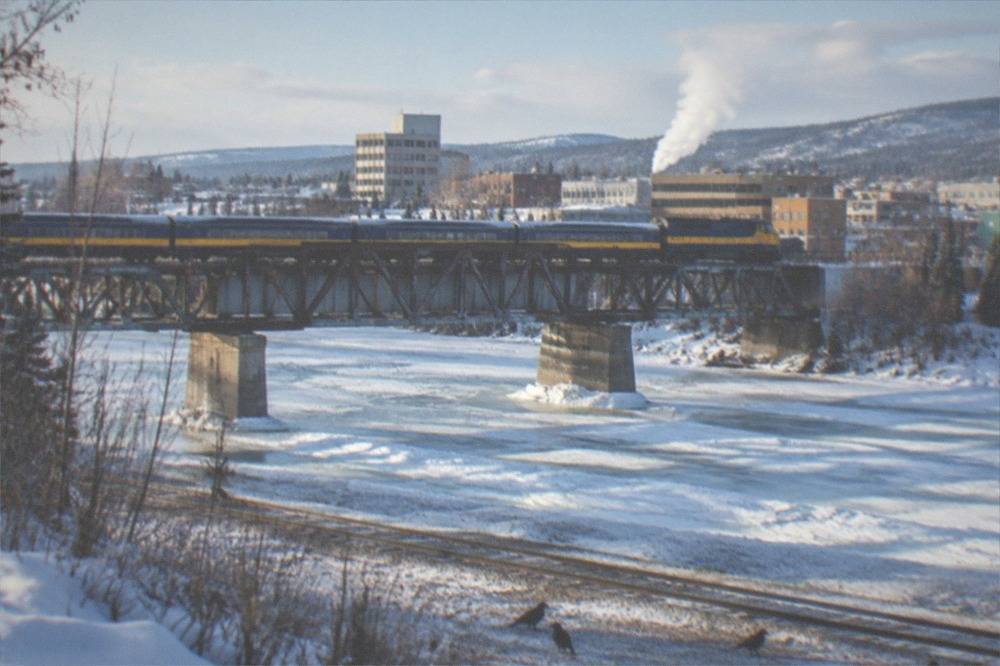
The train question comes up constantly, and it deserves its own page rather than a footnote here; our write-up at is the train ride from Fairbanks to Anchorage worth it covers the ride experience in full. The short version for drive-planners: the rail route follows its own corridor, serves meals onboard, and lets a traveler watch the Interior pass by without touching a steering wheel or reading a single advisory. The trade is control. The train runs on its schedule, not yours, and in deep winter that schedule compresses along with everything else.
For many aurora visitors the decision tree looks like this. If the trip's purpose is the drive itself, glaciers, and mountain scenery along the way, drive. If the purpose is the northern lights and Fairbanks is simply the base camp, then fly into Fairbanks, or ride the train one direction, and spend the nights on structured tours instead of highway shoulders. Fairbanks supports a remarkably large local aurora tour market precisely because so many visitors arrive this way.
The tour formats range widely, and the table below shows three of the most requested styles with their verified listing figures.
| Tour style | Experience | Rating and reviews | From price |
|---|---|---|---|
| Hot springs combo | Chena Hot Springs Resort visit plus aurora viewing | 4.5 from 1,342 reviews | $275 per person |
| Full-day Arctic Circle trip | Dalton Highway drive, Yukon crossing, aurora hunt near 3am | 4.5 from 171 reviews | $330 per person |
| Lodge and yurt viewing | Heated lodge and yurt with north-facing windows, hotel transport | 4.5 from 34 reviews | $160 per person |
Note what is not in that table: a cancellation column. Cancellation terms vary listing by listing, and only some carry free cancellation, so the live listing is the place to confirm terms before booking rather than this page.
Why Do So Many Aurora Travelers Skip The Drive To Fairbanks Altogether?
Because the aurora is a night activity and the drive is a day activity, and combining a demanding winter drive with a midnight viewing session pushes fatigue past the safe point. Travelers who fly or ride north arrive rested, and the Fairbanks tour ecosystem supplies the vehicle, the guide, and the dark-sky locations, which is why packaged aurora nights outperform self-driving for most visitors.
The math of a winter aurora trip is unforgiving. A viewing night runs until the small hours, especially on tours that chase clear sky or hold position for a display. The morning after is not a driving morning. Anyone who spends the previous day crossing the Interior at the wheel then stands outside until 2am has stacked two demanding tasks on one body, at temperatures where fatigue has physical consequences.
The tour economy solves this neatly. Take the flagship Chena Hot Springs combo, which pairs the resort about 60 miles northeast of Fairbanks with an aurora viewing component: rated 4.5 across 1,342 reviews, from $275 per person. A guest rides out in a tour vehicle, soaks in the heated outdoor pool, and leaves the driving to someone who does the route weekly. Our dedicated Chena Hot Springs aurora tours guide breaks down the format, and you can Check availability on the operator's live listing.
The Arctic Circle option sits at the other end of the ambition scale. It is a full-day Dalton Highway run to the marker at milepost 115, roughly 194 to 200 miles from Fairbanks, with a return aurora hunt around 3am, from $330 per person and rated 4.5 from 171 reviews. The listing carries free cancellation and it is likely to sell out, so it pays to book early. It is the single best answer to the traveler who wants both the Brooks Range road and the lights without renting a vehicle prohibited from the highway anyway.
For travelers who want to stay closer to town on a modest budget, the lodge and yurt option from $160 per person keeps viewing behind glass, with transport from major hotels included and free cancellation on the listing. Between these formats, almost every visitor type is covered without a rental car ever entering the equation.
Is 2026 A Good Year To Make This Trip For The Aurora?
Yes, with honest framing: Solar Cycle 25 is past its sunspot peak, which reached a smoothed maximum of 160.9 in October 2024, but geomagnetic activity, the more direct aurora driver, has remained relatively elevated into 2026. Significant storms are expected to become less frequent after 2026 as the cycle declines toward its next minimum, so the near term still rewards the trip.
Solar-cycle framing is often oversold one direction or the other. The sunspot count fell to about 99.8 by February 2026, plainly off the peak, yet the first eight months of 2026 averaged a planetary Ap index of 12.6, above 2024 levels. Coronal holes keep feeding auroras even as sunspots decline. What that means for an Interior Alaska trip: the underlying activity is still favorable, and Fairbanks' position under the auroral oval means the city sees displays even at the modest Kp values of 2 to 4 that would leave mid-latitude cities dark.
None of that changes the two variables that actually decide a viewing night, sky cover and darkness, and neither cares about solar physics. The University of Alaska Fairbanks Geophysical Institute publishes its daily aurora forecast built on the Kp index, and pairing that forecast with a local cloud forecast is the standard nightly ritual for aurora chasers in the area. The drive up from Anchorage, the train, or the flight are all just ways of delivering yourself to a place where that ritual works.
So the honest answer to the year question is quiet confidence. The cycle is easing down, not off. The window through the next couple of seasons remains a good one, and the Fairbanks end of the corridor remains one of the most reliable viewing bases in the northern hemisphere, with a widely reported four-out-of-five clear-night display rate during the season.
For the drive itself, the planning summary is short. Confirm the road situation at 511.alaska.gov the morning you leave, budget the whole daylight window, carry real winter kit, and do not schedule a tour for the same night you arrive. Do that, and the corridor between Anchorage and Fairbanks becomes what it is for most travelers who prepare for it: a long, beautiful, completely manageable day.
Common Questions About Driving From Anchorage To Fairbanks
How Long Does It Take To Drive From Anchorage To Fairbanks?
No specific mileage or hour figure is printed here because none was verified against an official source. Treat the drive as a full-day commitment in any season, and budget the entire daylight window in winter, when advisories for snow, gusts and reduced visibility can extend it further.
Is The Anchorage To Fairbanks Drive Dangerous In Winter?
It is demanding rather than dangerous when prepared. Winter Weather Advisories from the National Weather Service Fairbanks office routinely flag 2 to 8 inches of snow, gusts of 35 to 50 mph or higher, visibility down to half a mile or less, and icy bridges. Slow down, skip cruise control, and check 511.alaska.gov before leaving.
Should I Take The Train From Anchorage To Fairbanks Instead Of Driving?
For travelers whose goal is the aurora rather than the road, the train or a flight is usually the better call. The train removes winter driving entirely in exchange for its own schedule. Many aurora visitors fly north and spend their nights on guided tours instead of arriving exhausted at the wheel.
How Cold Does The Fairbanks End Of The Drive Get?
January, often the coldest month, averages highs around 1 to 2F and lows around 16 to 17 below zero, and the winter of 2025 to 2026 was Fairbanks' coldest on record at nearly 14 below zero on average. Prepare for the Interior end of the drive, not the comparatively mild Anchorage end.
Can I See The Northern Lights The Same Night I Arrive In Fairbanks?
It is possible but risky after a long winter drive. Aurora season runs August 21 to April 21, and a widely reported figure holds that a three-night stay sees the lights roughly 90 percent of the time, weather permitting. Arriving a day early and booking a tour for the second night is the more reliable pattern.
Do I Need A Rental Car For Aurora Tours In Fairbanks?
Mostly no. Tours in the Fairbanks area typically include transport from major hotels or central meeting points, with the exact pickup shown on each live listing. One exception worth knowing: most national rental-car companies prohibit driving the Dalton Highway or void coverage on it, so Arctic Circle trips are best done with operators who run that road.